
What do honeybees, penguins and chimpanzees have in common? Their behaviours can help people move and live more sustainably. This is the basis of The Humanimal Theory, developed by Around You and TIER Mobility with Alyssa Y. Stark, a biomimicry scientist at Villanova University in Pennsylvania.
“To behave like an animal” has come to mean acting dangerously or recklessly but it really means going back to our roots.
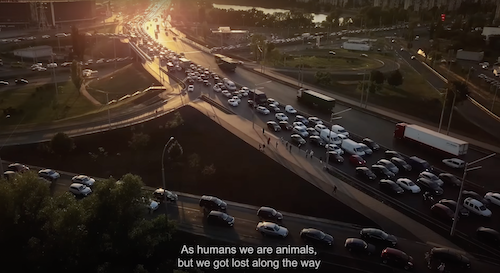
The Humanimal Theory reminds us about basic behaviours in a sustainable lifestyle that humans seem to have forgotten. Animals are experts at being conscious and eco-friendly and should be of great inspiration to us. In fact, we should copy many of their behaviours, according to Dr. Alyssa Y. Stark, who specialises in biomimicry, functional morphology and animal behaviour.
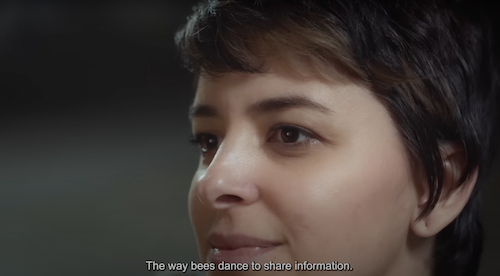
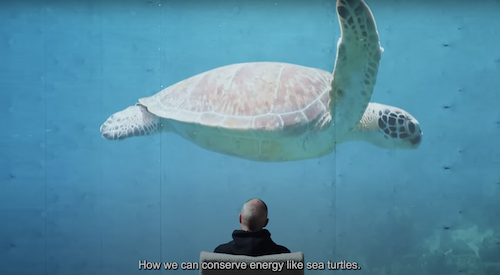
The theory is supported by ten examples of sustainable behaviour that humans could follow to live more sustainably. If a single person takes public transportation instead of driving 20 miles to work every day, they could save up to 3.1 kg of CO2 per day.
“A lot of the answers that we’re looking for already exist if you look outside the window and learn from nature and animals. Our goal with this campaign is to strengthen the position of TIER as the most sustainable alternative, but also to inspire people and create real change,” stated Pia Mader, art director at Around You.
“We simply cannot keep on living the way we do; it’s just not sustainable. Animals continuously adapt to new conditions and with global change happening, we need to make a change as well. Biomimicry could be a good guidance to a sustainable lifestyle, and hopefully this theory will be an eye-opener,” added Ailin Huang, Head of Sustainability at TIER.
As part of the campaign, TIER invited a group to take part in the theory in filmed group session hosted by Alyssa Y. Stark. Jon Kortajarena and Lucien Leon Laviscount are some of the ambassadors behind the campaign.