
“Save the species or it will go extinct,” is a message that’s very familiar. Familiar messages get overlooked. So DDB New York changed the message to save the Sumatran tiger.
DDB’s message is intriguingly different. It’s “share this song or it will go extinct.” The campaign is for The Smithsonian’s National Zoological Park and Conservation Biology Institute for Earth Day.
At its core is an old school record of an unreleased song called Sumatran Tiger, by an indie rock band, Portugal. The Man.
John Gourley of Portugal. The Man, commented, “Growing up in Alaska, we were surrounded by wildlife and the beauty of the natural world. We learned that we couldn’t take these things for granted. Thus the message of this project was very personal to us as a band, and we jumped at the chance to use our music to spread the urgent message of a species in danger of extinction.”
400 lathe-cut polycarbonate records will degrade after a certain number of plays. So if they’re not digitized and shared through social channels, the song will eventually disappear like the 400 endangered Sumatran Tigers that are left in this world. The 400 records were sent to music artists, bloggers, wildlife conservationists and social media influencers. Breeding the song socially will help save it from extinction while raising awareness about the endangered Sumatran tigers and need for conservation efforts.
Updates on the social conversation are being featured on a purpose-built site website, which also displays more about the initiative and how people can help to keep the song ‘alive’.
“Announcing this initiative on Earth Day is a powerful way to share our on-going commitment to securing a future for not only wild tigers but other endangered species,” said Pamela Baker-Masson, associate director of communications at the Smithsonian’s National Zoological Park and Conservation Biology Institute. “As scientists explore new and innovative ways to conserve wildlife, so must we partner in new and unexpected ways to build awareness and inspire action. Simply put, our job is to save species and ensure a sustainable future for the world we share with all animals.”
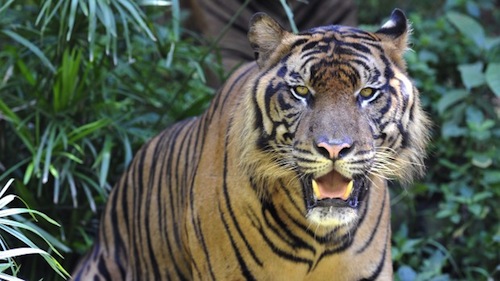
Fewer than 400 Sumatran tigers remain in the wild – in the forests of Borneo and Sumatra. They are the smallest surviving tiger subspecies and are listed as critically endangered by the International Union for Conservation of Nature. The two major threats to Sumatran tigers are habitat loss and poaching. In addition, deforestation increases the chances of tiger–human conflict. The Smithsonian’s National Zoo and Conservation Biology Institute supports conservation efforts, like the Global Tiger Recovery Program, which is working to double the number of wild tigers by 2022. Together with the GTRP, the Smithsonian hosts courses to train people charged with patrolling tiger ranges to monitor for potential conflicts and ultimately help protect tigers.
The National Zoo’s Sumatran tigers are part of the Association of Zoos and Aquariums’ Species Survival Plan. The SSP makes breeding recommendations for tigers in accredited zoos to preserve their genetic diversity. Those tigers serve as an insurance population for the approximately 400 wild Sumatran tigers. The National Zoo has bolstered the Sumatran tiger population in human care to date with 15 cubs.