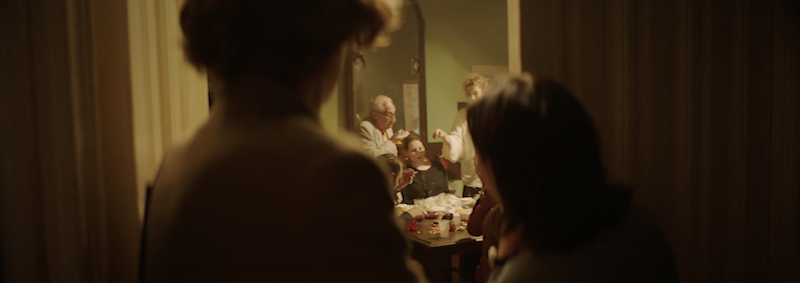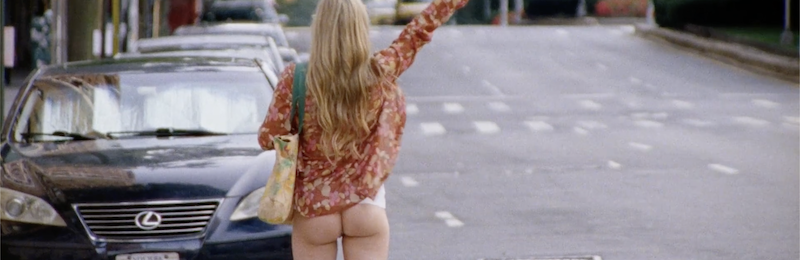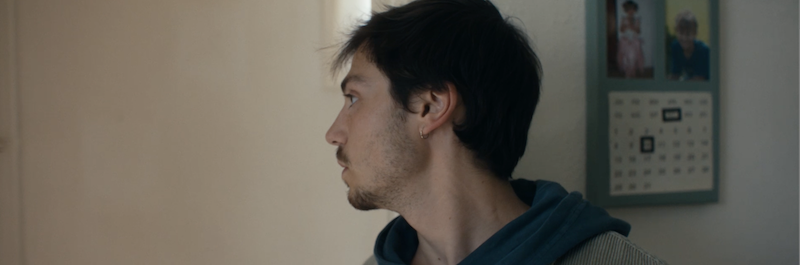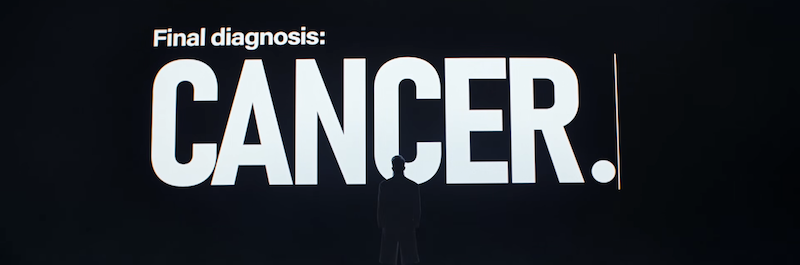
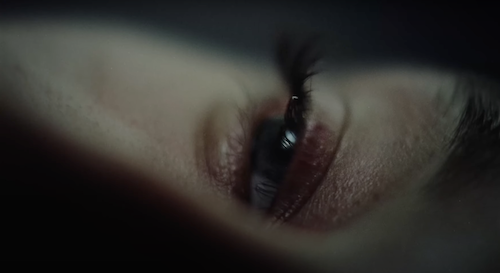
Everybody Knows is a statement by a group of artists from Russia, Ukraine and Belarus all of whom have fled their home countries in the wake of the war. Directed by Russian-Ukrainian filmmaker, Daria Geller, Everybody Knows is a short film, a music video and a political action about a terrible reality that many are now too afraid to speak about openly: so long as Russian society remains apathetic to what is being done in its name there can be no peace, and nothing will change. Set to the words of Leonard Cohen, the film shows us what happens when everybody knows, but no one does anything.
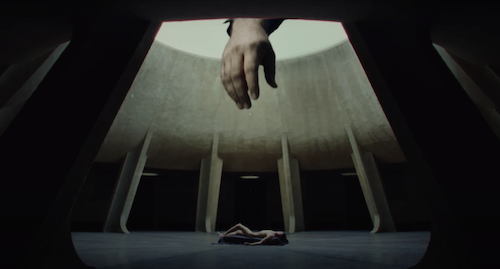
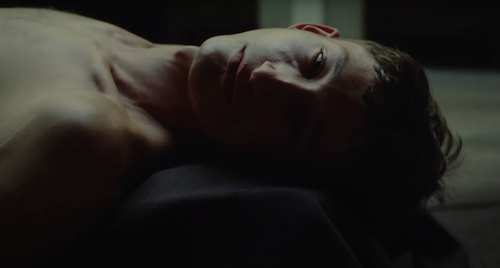
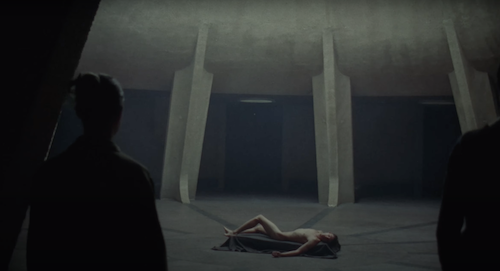
It was shot on 16mm film using only natural light. The film’s seamless long shots set against a motionless dark colour palette enhance its eerie feeling of stillness. As these images repeat again and again, the repetition deepens our understanding not only that everybody knows that things will seemingly never change – but that they don’t even care.
The film was produced by independent production company, No Man’s Land, co-founded by Geller with her partner, Yuval Orr.
Publicist and festival strategist, Niccolo Montanari, went behind the scenes of Everybody Knows with Daria Geller for The Stable:
Niccolo Montanari: At first glance, Everybody Knows may come across as a music video. But it’s way more than that. You have stated that this is “a short film, a music video and a political action about a terrible reality that many are now too afraid to speak about openly”. Can you expand on that?
Daria Geller: I don’t think this is about a terrible reality where many are now too afraid to speak about openly. The terrible reality is that the system is built to make you believe it’s one and only narrative which a lot of people are not thought to question. And it’s very important to question, the truth is born in a dialogue with ALL the others and yourself. Then there will be no doubt you will speak it. And by speaking the truth – I don’t mean posts on Instagram or social media, I mean speaking it directly to our children, to our friends, just starting a real conversation in any form.
I remember this lesson from a documentary I did once for a mixed school in Israel, where they constantly repeated this one line: We study here in both Arabic and Hebrew, as it is harder to see the other as an enemy when you start understanding their language. This is powerful.

NM: From a directorial point of view, how did you work with your team to ensure they were on board and shared your vision?
DG: Actually I was amazed by how many people wanted to be involved, especially as this is a totally independent project. I was prepared to face a lot of negativity as the question is very complex and I, of course, can’t speak for everybody, so I had a detailed treatment with images and quotes from the song to show everyone. But surprisingly even if some people thought of how this story was not being a perfect portrayal in their mind of the situation- they still supported me. They trusted and shared my vision. This gave me the power to move forward. It felt almost therapeutic.
I’m based in Tel Aviv, and I saw this influx of immigrants and a lot of creative folks, artists, and filmmakers among them. So in the last one-and-a-half years I got to know many talented people that shared the same concerns, fears and needs to do something. I wanted to have a team that cares about the concept, so more than half of the team are new immigrants mostly from Russia, but also Belorussia and Ukraine.
NM: How do you think viewers will react to it? What kind of impact would you like the project to have?
DG: The truth is that I don’t know. This kind of work should be open to interpretation and I wouldn’t want to necessarily share a message on how the video should be read. This is a movement and a reaction to what is happening in Russia, but also worldwide. We wanted to send a signal to everyone out there and say: “Look, this is how we feel. We feel the system is stupefying us, and we had the urge to speak up.” The final fix will not come from above, it has to come from us. Hopefully someone will feel the same and it will spark a conversation.
I believe if stories of this war will be heard from every corner – it’ll make people think and talk. That’s what I hope people will do and that’s what we need more of. Only this brings change.
NM: What are the challenges you faced in exploring such a sensitive topic?
DG: Obviously, and rightly so, some of the people involved were concerned for their safety. This is also why we did not want the emphasis to be solely on a particular individual. Instead, our aim was to shed light on the broader apathy within Russian society, the knowledge of what was happening, and the need to raise awareness.
Surprisingly not so many people disagreed with the concept. The opposite: almost all the Russian artists I spoke to supported it and happily joined the team. So many people came and helped that the main challenge for me personally was not to let them down.
NM: What’s next for you?
DG: I’m really excited about creating more projects like this, especially for Russian musicians. I think when you tackle serious topics using popular mediums it reaches a wider audience.
Apart from that, my life partner, Yuval, and I are working on building an art residency in Italy through our production company, No Man’s Land. It’s a way for us to provide a space for artists to thrive and express themselves within a diverse creative community.
You might also like