Jack Cotlevski, awarded Brazilian director and cinematographer and the founder of Chroma Films, feels no confusion about AI. He has developed the Hybrid Cinema Method to organise filmed and generated imagery while preserving human authorship and directorial control. Cotlevski work spans music videos, commercials and branded films. His music video, Pequeninos, received Best Music Video at the New York International Film Awards in 2025.
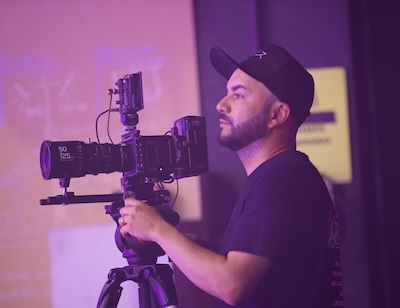
Cotlevski founded Chroma Films in 2014. Its work brings together cinematography, performance, production design and post-production, using emerging technology selectively when it strengthens the concept and remains consistent with the captured image.
How can generative imagery expand a commercial while preserving directed performance, camera logic and creative control? Cotlevski answers that here for The Stable:
The Stable: Obviously you were making films before AI. What frustrations has AI solved for you personally?
Jack Cotlevski: The greatest change has been access to visual scale. In that sense, AI has helped democratise certain kinds of filmmaking. Ideas that once required extremely large budgets for constructed sets, practical effects and extensive VFX can now be approached by combining carefully directed live action with generated elements.
That does not mean replacing the shoot. For me, the actors, performances, camera intention, lighting and physical details that carry the scene still need to be captured with discipline. AI becomes useful when it extends what was filmed rather than attempting to replace the entire production.
It has also helped with time and iteration in post-production. A director can explore visual possibilities, test transitions and solve specific problems more quickly. The important point is that speed is not the creative objective. The objective is to make an ambitious image achievable while preserving the human decisions that give it meaning.
The Stable: What matters most to you when you are working on a project?
Jack Cotlevski: What matters most is achieving on screen what we intended during development. Every project begins with something that must be communicated, whether it is an emotion, an idea, a relationship, a period of history or the identity of a brand. The finished images need to express that with precision.
For me, directing is the process of protecting that intention through every stage. Performance, framing, camera movement, light, production design, rhythm and post-production must all point towards the same emotional and narrative purpose. A technically impressive image is not enough if it does not make the audience feel or understand what the project was designed to communicate.
This is also why I do not treat AI as an isolated department or a visual effect added at the end. If generated imagery is involved, it must be considered from the planning stage so that it remains consistent with the performance, cinematography and editing.
The Stable: Why did you develop the Hybrid Cinema Method, and how does it facilitate production and craft?
Jack Cotlevski: Because productions were beginning to combine live-action footage and generated imagery without a clear directing structure. The tools were advancing quickly, but the fundamental questions remained: what must still be filmed, what can be extended, who makes those decisions, and how do we preserve continuity, performance and authorship?
The method organises those decisions into a director-led workflow. It helps the team define the purpose of each generated element before production, capture the human and physical material that the scene cannot afford to lose, and evaluate generated results according to camera logic, light, movement, performance and editorial continuity.
The purpose is not to make production revolve around software, it is to keep the story and the director’s intention in control of the technology. When the boundaries are established early, the production can use generative imagery for scale and flexibility without sacrificing the craft that makes the scene believable.
The Stable: Examples where outstanding work came from human plus tech?
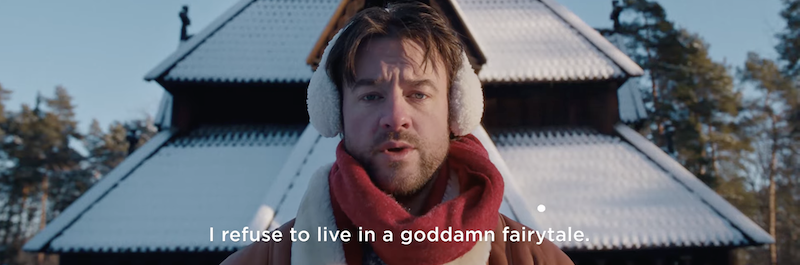
Jack Cotlevski: A clear example is a commercial I directed for CCV Chevrolet. The film moves through different periods in the company’s history. We filmed the human performance and the core environments, then used generative techniques selectively to extend the world and create transitions that would have been extremely expensive through traditional production alone.
In one sequence, a contemporary Chevrolet Captiva transforms into a Chevrolet Monza from the 1980s as the film travels back in time. Later, the historical Monza transitions into a current Equinox travelling through the present day. We also reconstructed period atmosphere, vehicles and visual details around the filmed material.
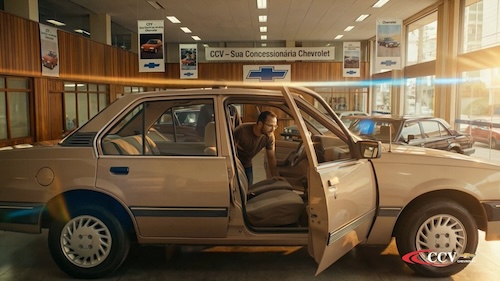
The sequence works because the technology is anchored in live-action decisions. The movement, perspective, emotional timing and editorial intention were established by the production. The generated work expanded the scale of the transformation, but it did not invent the purpose of the scene.
Another example of the human side of my work is Pequeninos, a music video for Mauro Henrique. It was built through performance, atmosphere, framing and restraint, and it later received Best Music Video at the New York International Film Awards in 2025. That project reminds me that technology changes, but emotional precision remains the foundation.
The Stable: Why did you launch Chroma Films? What does it add to the production industry’s resources?
Chroma Films began from a practical need. I was a musician and played in a band. We travelled to perform, but we did not have anyone documenting the work or creating our music videos. We borrowed a friend’s camera, I began filming, and I discovered that the process connected with an interest in cinema that had been with me for years.
What began as a solution for my own band became a profession and then a production company. That origin still shapes Chroma Films. I understand the experience of being on the other side of the camera, the vulnerability of performance and the importance of translating music, emotion or a client’s intention into images.
Chroma Films adds a director-led approach that connects cinematography, production and post-production rather than treating them as separate technical services. The company was founded in 2014 and has developed work across music videos, commercials and branded films. Our aim is to give productions strong visual ambition while keeping the process personal, controlled and attentive to performance.