
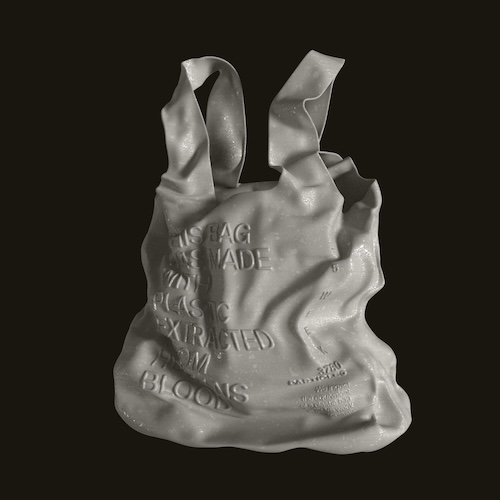
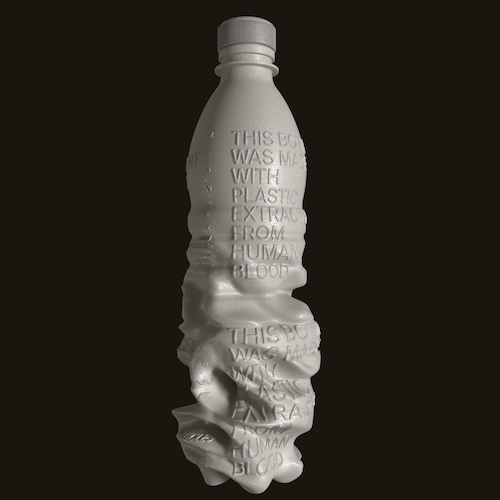
Brazilian Biotech company, OKA, and agency, DM9, are making microplastic ingestion real for everyday people with Plastic Blood, an exhibition of items created with the plastic extracted from human blood. While most people are familiar with the problem of plastic in our oceans, the new awareness campaign brings to light an largely invisible problem, that there’s enough plastic in our blood system to reproduce everyday household items.
OKA extracted microplastics from over 1,000 discarded bags of blood (450L) and used them to 3D-print familiar everyday plastic items such as cups, straws and bottles. The disturbing 3D-printed items then became a new exhibition, that opened in Sao Paulo and is currently touring Brazil, culminating at COP30 in Belém this November.
Research shows that we ingest around 30g of microplastics weekly, up to 25kg in a lifetime, through water, food and contact with plastic packaging. However, it remains largely unspoken that plastic is slowly poisoning the human body – despite increasing research around the potential links to major causes of death including dementia, cancer and neurodegenerative disease. OKA is aiming to radically reframe the idea of plastic pollution from the usual conversation about plastic in our oceans, to the much more sobering image of plastic in our veins.


OKA Biotech, based in the Amazon, offers a timely and urgent solution to plastic pollution, 100% biodegradable, compostable packaging made from yuca starch. It’s native to the region and part of the local diet and economy. The zero-waste innovation nourishes the soil or feeds animals once discarded.
Erika Cezarine, CEO, OKA stated, “It is my belief that the invention of plastic is one of the greatest flaws in human design. With this campaign, I want to take the issue of plastic blood pollution from the art gallery to the global stage. We must enter the public discourse to raise awareness about this public health crisis.”
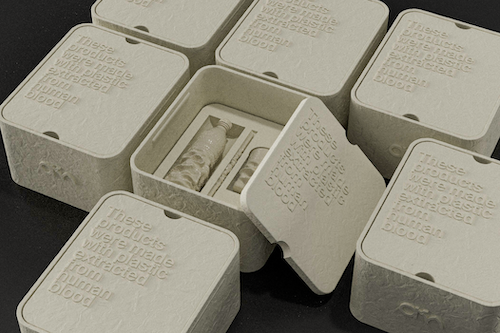
Laura Esteves, vice president creative, DM9, added, “Our creative challenge was to turn a microscopic, invisible issue into a physical, emotional, and media-worthy experience. Plastic Blood reimagines plastic pollution not as an environmental issue – but as a human health crisis. This shocking transformation captivates and disturbs, forcing people to confront what lives inside them because of everyday plastic use.”