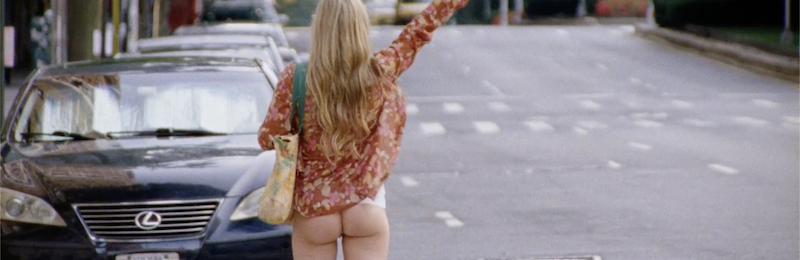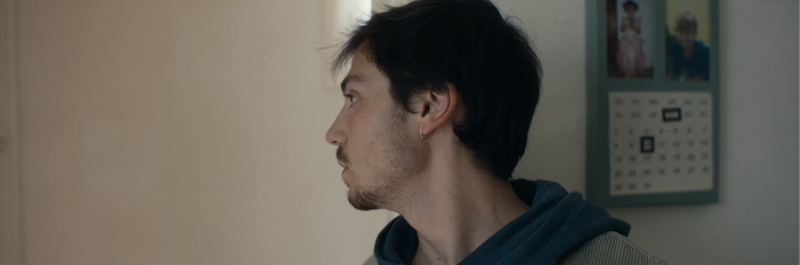

Director of photography and cinematographer, Tom Revington, is rarely seen without his camera. His talent has enabled him to turn an obsession into a career. Revington has already worked on big name brands that range from The UN to Fanta, Becks to Johnnie Walker, Nowness to adidas and the BBC to Visa, cramming more than 200 projects into a six-and-bit years of experience so far. He is equally at home making commercials, music videos and long-form content, always striving to create emotive imagery that captures viewers’ imaginations. Publicist & festival strategist, Niccolò Montanari, interviewed Revington for The Stable, exploring how and why he creates, how he got to where he is and how he uses his special talent for lighting.
Niccolò Montanari: Can you tell us about your journey as a cinematographer? What inspired you to pursue this career path, and what were some of the major milestones along the way?
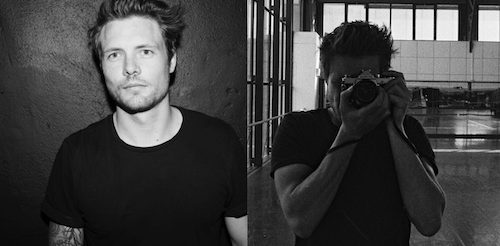
Tom Revington: I guess pretty early on I realised I was one of those arty kids. I enjoyed sports and school but I felt myself drawn to art and music. I was heavily into music and played in bands and toured a few countries and in that I carried a camera around. My first camera was a beat-up old Canon AE1 I found in a junk box. My dad loaded it up with film and taught me the basics. Since then, I’ve had an obsession with looking through a lens. Capturing moments. Telling stories through a lens. At university I started off with Fine Art because I knew I wanted to do something creative. I just wasn’t sure of the specifics until I did a short block on film. I instantly fell in love and realised it’s a combination of all the things I love doing. I wanted to be involved any way I could.
This quickly led to a bunch of zero budget music videos that grew to almost zero budget music videos then up from there. It’s such a great way to cut your teeth. I made so many mistakes and really learnt the hard way. Packing my car full of kit, groping in anyone to help out. Not sleeping, doing gear runs and editing myself I’d do like total one-man band shoots while studying at Varsity. I learnt so much having to edit and grade and light and do gear checks. I never did the official loader to AC route, but I did plenty of self-assisting along with a bunch of other roles.
Eventually music videos grew into smaller commercials which grew bigger. I was very lucky to make friends with good directors who did great work.
My friend, Fausto Becatti, and I shot a few smaller spots that really did well and turned out great. He’s a fantastic director. There have been a few that have really been amazing to work with. Then just after Covid, I decided to move to the UK where my family is and from there I fell in love and moved to LA. So I’m kinda just going with the flow and being grateful for doing what I love.
NM: Your use of light is particularly noteworthy. Can you talk about your approach to lighting, and how you use it to enhance the story being told on screen?
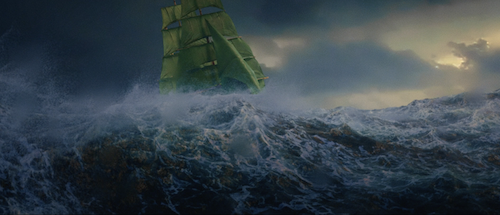
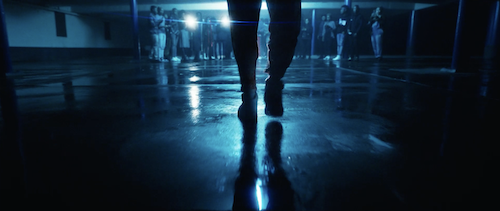
TR: I really lean towards naturalistic lighting mostly or an enhanced version of that. I really don’t like feeling the lighting in a scene. Unless you know the story needs it. I guess I like to try to keep things as simple as possible and work in a way that a director has as much performance time as possible. It’s all a balance. That’s why I like to keep things as simple as possible.
It’s kind of pointless to have the perfectly lit and framed shot if it’s the only shot you can get. The story has to come first. As DPs I think we can tweak lighting and camera to infinity and beyond; we’ll never truly be happy…will we? I don’t know. Maybe that’s why everything is lit in such a moody way these days.
I guess the lighting has to underline the story. So that’s what I ask myself… am I lighting this to tell the story in a visually relevant and interesting way and make our day or am I lighting this for a good looking Instagram post and it’s actually not what the director wants and we’re 4 hours over… because that’s a di*k move.
NM: Can you share any tips for aspiring cinematographers? What skills and qualities do you think are essential for success in this field?
TR: Don’t. Give. Up.
That and also don’t be a d*ik. Respect and kindness go a really long way. Life’s too short to be an asshole and it’s way more fun when you’re not.
This industry isn’t easy so any way you can make it easy for anyone else, it will come back in bucket loads. Pay it forward and be kind, grateful and patient.
NM: What do you consider to be your greatest achievement as a cinematographer, and why? Can you share with us the campaign(s) you are most proud of and why?
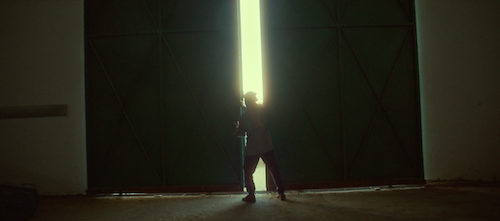
TR: Greatest achievement? Probably the one time Roger Deakins replied to one of my questions on his website about a lighting question. Jokes. I don’t know, there have been moments where I look up and go damn… I’m really doing this. Like 4 years ago I didn’t think I’d be here doing this but here I am doing it.
I shot a great Facebook campaign with the fantastic director, Georgia Tribuiani, in Mexico that came out fairly recently. That was an amazing project to be on. She’s a real artist and a wonderful human being. That was a ton of fun.
There is also the really fun Fanta spot I shot with Meji Alabi. We’ve worked a few ties together and always end up doing something fun.
Then there’s a wonderful spot that I shot with Jonathan Pearson for the UN. That was special as it was just four of us kicking around the Sahara desert for a week or two. Gruelling shoot, but so worth it and amazing experience with awesome humans.
I’m repped by Gersh in the states and WPA in the UK. When I got that rep, I think that was huge for me. I’m super grateful for the people that have helped me get here.
NM: Finally, what advice would you give to young filmmakers who are just starting out in the industry?
TR: I think as cliche as it sounds … follow your gut and make sure you love what you’re doing. Because when it’s a 16-hour day and crazy call times and you have zero sleep or energy the only thing that’ll get you through is the love and passion of it (and an unhealthy amount of caffeine).