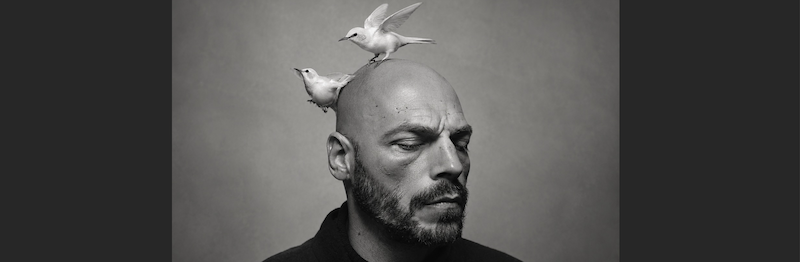
When Great Guns director, Meena Ayittey, and director, Greg Rattazzi, came across a photo of drag artist and activist, Belinda Qaqamba Ka-Fassie, on a trip an idea came to them. They wanted to tell her story in a film that would explore of identity, acceptance, and the role of motherhood in South Africa’s LGBTQ+ community. Earlier on their trip, they had witnessed a group of boys, around the age of 12-13, naked from the waist up and walking into a forest. They were told the boys were ‘going to the bush’ as part of a South African initiation process. When they mentioned this to Belinda, she opened up about Ulwaluko – the ritual of male circumcision that many South African boys go through to mark their transition to manhood. As a young person coming to terms with her sexuality, Belinda had found the process very hard – noting that some queer children are traumatised during the ritual, while some never make it back.
Belinda also discussed her involvement in teaching mothers of queer children how to deal with their child’s sexuality – a conversation that sparked the foundation of the film’s narrative.
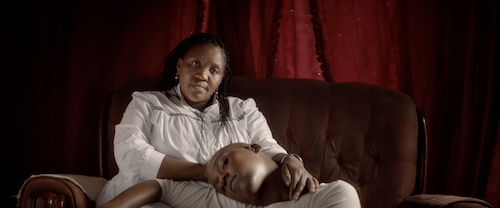
Although her mother had no issues with Belinda’s sexuality when she found out, the first thing she said was, “You can’t tell your father”. Belinda spoke about her struggles at school, facing bullying for being different, and her experiences growing up queer in the small town of Elands Bay. After studying, she moved to Khayelitsha and began developing her stage persona and appearing in drag shows.
South African tradition sees mothers as people whose opinions cannot be questioned. Focusing on this theme, Meena and Greg crafted a poem that captured the essence of a mother as both a guiding light and unifying presence in their child’s life. The duo then made several trips to Khayelitsha, mixing with the locals and forming a close relationship with Belinda and her circle of friends who perform together under the stage name, Black Drag Magic.
And the film began to develop, accompanied by a poem written by Ayittey and Rattazzi.
AND I SHALL RISE
Can you see me?
As I fly high above this earth
A weighty query stains my love,
Deep down affects me since birth
Is it beauty you’re afraid of?
You say we are different, we are not the same
Agreed, yes, but aren’t we all?
Two arms, two legs, two eyes, one blame,
What is different after all?
Close your eyes, feel your mother’s hand
Gentle angel feather across your face.
We come from the same land,
We end in the same place.
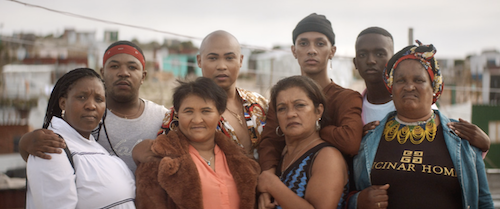
Ayittey commented, “Belinda suggested that her fellow drag queens should also be in the film, as they symbolise how she has an additional ‘family’ which is now also part of her persona. We reworked the script to reflect this, wanting the film to encapsulate both Belinda’s childhood with her mother, and the painful initiation ritual she went through before finding herself accepted by her new family, Black Drag Magic. Rather than being a film about just Belinda, we realised this should be a film about identity – a celebration of being accepted for who we are.”
Meena and Greg also worked with Khayelitsha-based designer, and Belinda’s long-time collaborator, Thobey Cooper, to create the stunning red dress that would both recall a traditional Ulwaluko blanket, and reflect Belinda’s sexuality.
Credits:
Production Company: Groundglass
Director: Meena Ayittey
Executive Producers: Janette de Villiers, Kate Phillips & Sheridan Thomas
Head of Production: Debra Stubbs
Producer: Meike Varga
Production Manager: Jared Malin
Production Coordinator: Hannah Thomas
DOP: Felix Seuffert
Focus Puller & Loader: Leon Smith
DIT: Moses Tau
Camera & Lighting Assistant: Sikelela Qhashane
Wardrobe Stylist: Thobey Cooper
Make-up & Hair Stylists: Maxine Wild & Rubee Lee Lukas
Editing: David Warren @ Nomad Editing London
Sound Design: Andy Humphries @ Bark Soho
Colour: Denny Cooper @ Unit TV
Unit producer: Tania De Sousa
Music: Laura Massoto
Music provided by K7! Music