
The MIXX Awards wild card judge, Pearl, has picked the same winner as the human judges. Days before the actual human judging.
Pearl is the first Artificial Intelligence advertising judge in the world. She was the judge of a special award at MIXX in an experiment to celebrate its 10th anniversary. One aim of the experiment was Pearl was to put the recently established Belgian Association of Marketing, or BAM – which runs the awards – on the map.
“To celebrate our tenth anniversary, we wanted to do something unique,” says Patrick Steinfort of BAM. “Call it a strong addition to our digital award show, if you will!”
Pearl’s judging also aimed to open a debate about the future of award judging, particularly in light of recent criticism. Could AI make judging fairer? Could it help make creativity measurable? And how might it complement human juries? BAM collaborated with DDB Brussels to develop the new way to judge awards.
MIXX Awards: Curious about what an AI judge thinks of your work?
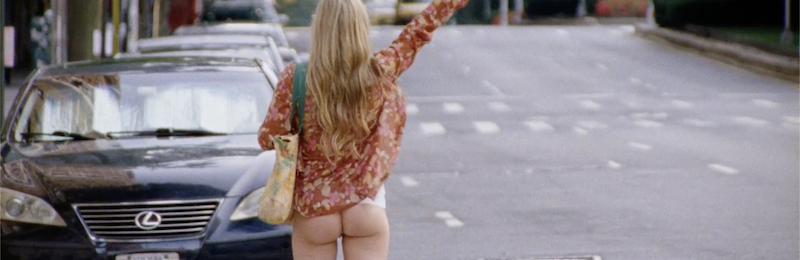
Both Pearl and MIXX’s human jury chose Her Street View by J.Walter Thompson Belgium for non-profit, Touche Pas A Ma Pote – a campaign designed to highlight the street violence, sexist insults and sexual intimidation of women by men in Brussels.
Her Street View lets people discover for themselves what it feels like to walk around the city streets as a woman by letting them walk through Brussels in an interactive way using Google Street View – and be attacked with insults. The website was built by Touche Pas A Ma Pote/Handen Af.
Credits:
Advertising Agency: JWT Brussels
Creative Director: Xavier Bouillon
Art Director: Yagiz Ekren
Copywriter: Yves Cwajgenbaum
Illustrator: Renaud Lavency
The first Artificial Intelligence judge in the world could rightfully call itself the most experienced judge on the circuit. It had thoroughly prepared itself, having gone over 30.000 cases during a three-month period. By analysing and assessing, it had been able to teach itself to choose a winner.
Why did Pearl give Her Street View the highest applause?
“Based on its social relevance, the emotional impact and the project’s excellent reach,” Pearl stated.
How did a robot pick the same winner as human judges?
“Pearl has taught itself how to judge advertising. We just fed it the right data,” commented Jos Polfliet of Faction XYZ, an Antwerp company that specialises in deep learning and machine learning.
“Pearl analysed ten years’ worth of campaigns, and gave each one of the said campaigns a mark and consequently distilled relevant patterns. It selected 41 variables that were important in the last decade. It then proceeded to figuratively take a step back so as to freely and honestly decide. In our jargon, this is called the Blackbox. The computer made a calculation in its own way, by collating all the configurations. After its decision, we were left trying to understand why it had chosen this campaign as the winner.”
Pearl’s decision was guided by three important criteria. It detected a great range of emotions, which is an indicator of originality: this idea stuck out from the pack. Furthermore, Pearl detected that the campaign was centred on a socially relevant topic based on the copy and testimonials. The case results also showed that the project reached a broad audience, which was an indicator of a successful campaign.


[jury’s!?: ed]
Is this the end of the human judge?
“Absolutely not,” Polfliet stated. “That would be crazy. But AI can fulfil a support role. For instance, judges can use Pearl to make sure that no campaigns are overlooked. It is also a great tool to combat fatigue and subjectivity, after all Pearl is rapid and never tired.
“We are hoping that Pearl will be used more often in the future. Its ability will only improve. The more data we can feed it, the smarter it will become. We will soon be putting Pearl to work again. Its role will become more important. But it’s not something human judges need worry about.”
You might also like