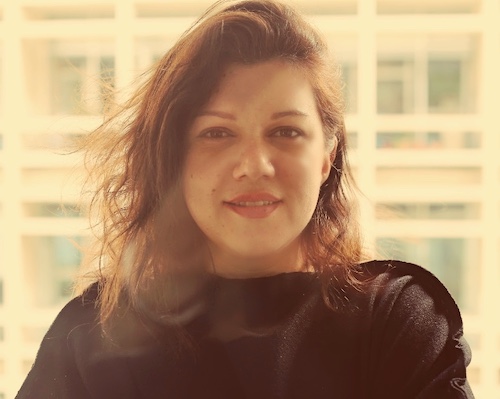
Rana Khoury joined Leo Burnett Beirut nine years ago. For the last six-and-a-half, she has been a creative director seeking out campaigns that would bring real change to the world. That mission extends outside her work. She also jointly leads a social enterprise called Phenomenal Women with freelance creative director, Caroline Farra.
Through their work and activism, Khoury and Farra realised that many survivors of gender-based violence find it difficult to leave dangerous situations when they rely financially on their perpetrators or are taught to believe they can’t survive alone. They launched the social enterprise Phenomenal Women in 2018 to address the problem in a pragmatic way, supporting survivors of domestic violence and rape. The organisation provides women with training and job opportunities in a diverse mix of sectors, from fashion to catering, furniture making, nursing or construction.
Barb Messer spoke with Khoury about what drives her to work with women to change the world around them.
What inspired you to launch Phenomenal Women?
Rana Khoury: Caroline and I have worked on many gender equality and human rights campaigns, and we noticed that economic violence is always disregarded. In Lebanon, only 23% of the labour market is women, which makes many women dependent on their oppressors. Leaving is hard. If that’s the problem, the solution is providing training and job opportunities. And that’s how Phenomenal Women was born.
What do you mean by economic violence?
Rana Khoury: Economic violence is everywhere in the world. It’s exacerbated by gender pay gaps and discrimination and violence against women. But in Lebanon specifically, there is a very harsh economic crisis. In many families, women aren’t allowed to work; there is a lot of cultural bias. Women are not part of economic plans in general, which affects their dignity and confidence.
Can you explain your business model as a social enterprise?
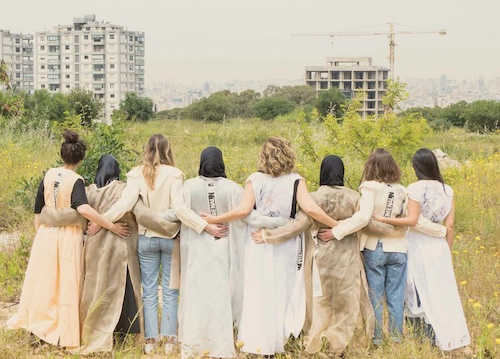
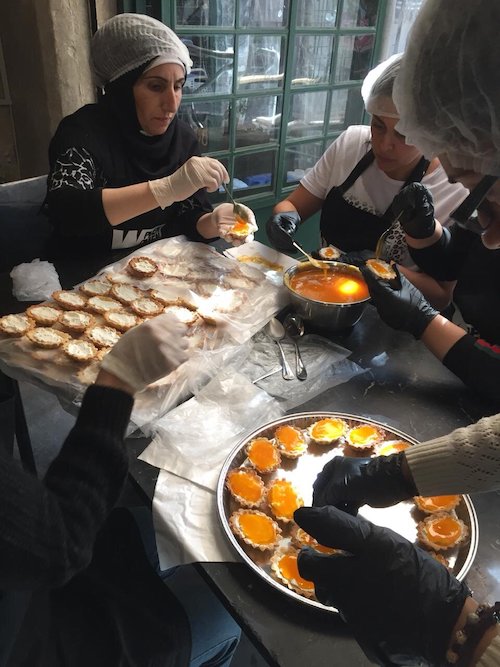
Rana Khoury: We are for profit with impact. Our objective is for women to be partners in our projects: when we sell their clothes, products or services, they take a share of the profit. We train women in all kinds of services, and then link them to jobs through our training partners and mentors. For example, we also work with chefs to train women for catering work, who now cater daily dishes for offices in Beirut. We work with fashion designers to train women to design and sew, and their creations are sold worldwide. This collaboration with Bokja is a good example:
View this post on Instagram
The partnership I am personally most proud of is with Warch(ee), an organisation that helped to train Phenomenal Women in construction, carpentry and furniture making. One of our Phenomenal Women is one of their best employees today.
View this post on Instagram
Can you tell us about other projects underway?
Rana Khoury: I think the huge news this year is the fact that we were selected for the biggest incubator in the world, Station F in Paris, which we are very excited about. It’s a very selective process, but a huge acknowledgement for our start-up to be part of such a prestigious network. We are starting to develop an app that will link women to short or long-term jobs, and sell items created by Phenomenal Women. Our biggest project this year is Pockets, a sustainable fashion initiative where women can buy ready-made pockets to add to their outfits and give them another life.
How do you find the time to run a social enterprise on top of your role as CD at Leo Burnett Beirut?
Rana Khoury: It’s something I want to see grow and totally believe in – it’s my way of making an impact, so I do find the time for it. Having Caroline as a partner helps a lot. When the motivation is there, you don’t mind working after hours.
How many women have you helped so far?
Rana Khoury: We now have over 90 phenomenal women in our database. Typically, we work with small groups of women of around 10 or 15 people for each project, but once we launch our job linking app, it will allow us to scale up more quickly.
View this post on Instagram
Can you tell us a little about your own background?
Rana Khoury: I have always been a political and social activist, even at university where I was president of the Human Rights and Peace Club while studying political science. From here, I began working as a junior journalist. This is where I saw myself going, but after the 2006 war in Lebanon, I applied for a copywriting job at Leo Burnett, and it grew from there. I think my job at Leo Burnett allowed me to not shut down a part of me – it was important to remain an activist, and my work allows this.
The creative department at Leo Burnett Lebanon is filled with many passionate creative leaders and activists. How would you describe the culture there?
Rana Khoury: Leo Burnett Beirut has a unique soul. It is of course one of the best agencies in the region, but it also feels like a warm space with a feeling of equality. We have had our share of fun and collective sadness together. It’s a good space to go every day without feeling crushed by a system or having that feeling that you’re giving so much for someone else.
View this post on Instagram