
Personalised advertising was once a hero. It was going to transform marketing forever and it began with something of a dream run, used by inventive creatives and ambitious brands to create fun games and shiny discounts for people to play with. But marketing got drunk on personalised advertising. And sometimes it went a little mad.
Sure, some of its errors were humorous. Who doesn’t want to be fed dozens of mattress ads the day after you’ve bought one? Who doesn’t want to be cold called by a company you researched online yesterday for work?
Mostly, personalised advertising isn’t so much fun now that “everybody” is doing it.
Privacy is the new hero. Apple has just launched a campaign for its anti-tracking features. And a new ad generator tool called Make Me a Target is inviting people to spread ridicule about personalised advertising.
The website introduces people to the real-life targeting abilities of Facebook by allowing them to work with AI to create an ad for themselves or someone else. Users get to choose from hundreds of the 52,000+ data points that Facebook knows about every user – name, location, job, income, highly specific interests – to get the tool to generate a customised video ad. The fun is making your ad as ludicrous as possible – every ad is trying to sell the same pair of pants.
The idea, for privacy-positive platform, Signal, comes from creative and innovation agency, Technology, Humans and Taste [THAT] and non-profit, Accountable Tech, an organisation that has played a leading role in the campaign to ban surveillance advertising.
The website follows an ad campaign by Signal that was banned by Instagram.
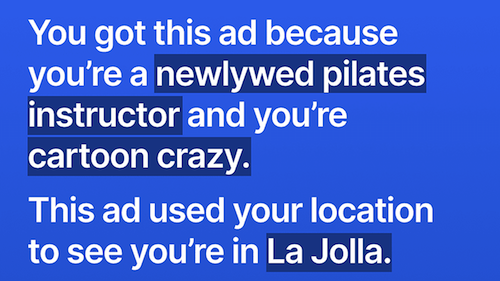
In its blog, Signal commented, “We created a multi-variant targeted ad designed to show you the personal data that Facebook collects about you and sells access to. The ad would simply display some of the information collected about the viewer which the advertising platform uses. Facebook was not into that idea. Facebook is more than willing to sell visibility into people’s lives, unless it’s to tell people about how their data is being used. Being transparent about how ads use people’s data is apparently enough to get banned; in Facebook’s world, the only acceptable usage is to hide what you’re doing from your audience.”