If you could change one thing to make your life in advertising better, what would it be? Perhaps, it’s something to do with technology? To do with pitching? Client relationships? A worker you let leave?…
The brief for The Stable’s Chats is always to tell a great story. These great minds exceeded the brief:
Andy Flemming, freelance & creator, TinyAgency
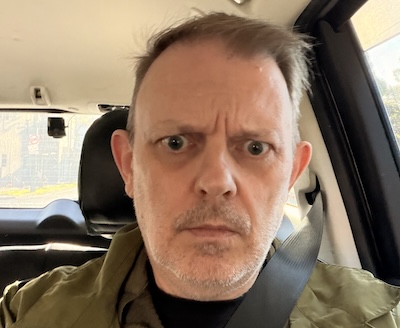
If I could change just one thing, it would be the decision to order the salmon terrine on a Johannesburg shoot. I was tired. I was probably drunk and I thought Johannesburg was near the sea. It’s actually nowhere near the sea. In fact, it’s 5,751ft above sea level and 500km away from the nearest ocean. The next morning, things weren’t looking good. As terrible, terrible things happened in the hotel bathroom, I thought it’s ok. Everything seems to be gone now. I’ll be fine. Everything will be fine. It’s ok. This was about an hour before I needed to climb into a dodgy van for a 5am drive two hours into the South African mountains. A bumpy ride in a van with less than adequate suspension.
Within minutes, I was in serious trouble. I was in the back seat and my stomach was letting me know that it was very, very angry. And then, the unmistakable, horrific and mind-numbing realisation that I was about to shit myself. It was a feeling I can still recall today, years later. Not the stomach feeling, that was awful on its own. Not that. It was the absolute certainty that this precise moment was the end of one life and the beginning of another. I was about to become a legendary story. The kind of story that would outlive my work, my career, my reputation, my life. I’d be a story told around roaring fires, award shows and pubs across the world.
I considered telling the driver to pull over. But why? I’d probably never make it to a tree and everyone had a phone. With cameras. I would have become a meme. A pathetic, sobbing crawl captured on an endlessly repeating gif.
The situation was made infinitely worse by my fellow passengers. If they were a bunch of lads we could, you know, laugh it off. They’d rip into me and it’d all be ok. They’d just open the windows to let some air in and we’d laugh all the way to the shoot then drink beers after and probably laugh about it again. Lad stuff.
But the passengers weren’t lads. They weren’t burly art directors from Geelong or Birmingham. The art director sitting next to me was a cool European who wore long, metal claws on her fingers and the account director sitting next to her used to be a famous model. These were immaculate people. Stylish people. The kind of people you thought might judge you for wearing the wrong type of shoe. And I was going to be the guy who shat himself right next to the both of them.
I somehow worked out that by raising myself OFF the back seat by a couple of inches, I could clench with every muscle in my body. That, combined with total commitment and sheer willpower meant that I floated above the seat for the whole two hours to the mountains. Yes, the dam nearly broke when we started going over rocks but I still consider it one of the most incredible things I’ve ever accomplished.
When we arrived at the shoot, I slowly shuffled to the single portaloo and witnessed the world, the universe and everything in it fall out. I was a Saturn rocket without the flames.
After getting some serious pills from the shoot medic, my stomach went from very, very angry to mildly annoyed. I’d made it through. I’d survived. Shortly after the first shot, the producer went off to the toilet and returned angrily saying it had been ‘cordoned off with red tape.’
Yeah. That would have been the salmon terrine.
Wez Hawes, creative partner, OUTSIDE IN
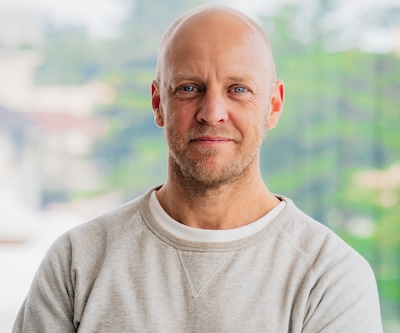
Bring back lunches. Not even long lunches. Just lunches. And I don’t mean a hastily eaten 7/11 egg wrap at your desk that stinks the place out. I mean a proper full-hour – or more – to hang with your creative partner or work mates at a cafe or park. Or to simply go for a run without having to break the 10k Strava record around the Botanical Gardens in order to get back and showered for 1.30pm.
Guilt. Free.
So without someone (normally from outside the creative department) saying, “Not busy then?” when you get back.
I’ve lost count of the number of times I’ve had to explain (normally to someone outside the creative department) how creatives need space, and how most ideas aren’t conceived sat at a desk, in an office, in front of a Mac.
Actually, I’m writing this at lunch, and it’s just given me an idea.
Watch this space…
Ant Melder, creative partner, Cocogun
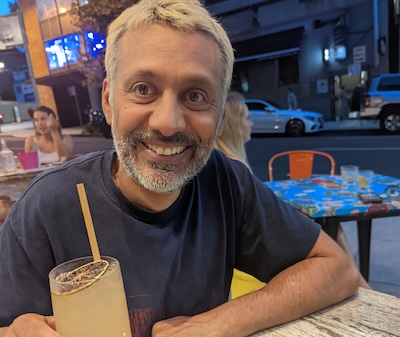
In the Oasis concert documentary, Don’t Look Back In Anger, Liam Gallagher talks about how The Stone Roses’ legendary 1990 Spike Island concert inspired him to form Oasis and change his life. I was at Spike island too, and went away similarly inspired to make a dent in the universe. Sadly, lacking Liam’s rock star swagger, I vowed to turn my passion for writing into something tangible, to make a dent in the universe, while staying true to myself.
Cut to London 1997 and things haven’t gone to plan. The universe remains undented by my ambitions, my career’s taken a few wrong turns and I’m scraping a living as a freelance copywriter. I’m late on rent and avoiding the landlord’s calls.
I get a call from a highly revered agency who were doing work for British American Tobacco on the quiet. This could be a foot in the door at a great agency. But as a deeply socialist, anti-corporate idealist, it goes completely against my principles.
I think about it for a few seconds. About my principles. My empty diary. The foot in the door. The late rent.
I say, “OK.”
Cut to a briefing at BAT’s HQ on the Embankment. It’s a sinister place. Movie levels of cliché evil. The atmosphere. The people. The brief itself. Ugh.
That evening I take the coward’s way out and send the project manager an email telling her I won’t be able to do the job. She calls me immediately. To say she’s not happy is an understatement. My foot’s now not so much in the door as had the door slammed hard on it and removed.
Down the years I’ve often reflected on this incident. On the moment when I said “OK”. On the sense of crippling dread-guilt-hypocrisy that enveloped me as I walked into BAT HQ that day and sat through that briefing. Less a prick of my conscience than a great big stake driven straight through the middle of my soul. By me.
It was a huge mistake to have said I’d do the job. But the experience taught me a valuable lesson. About who I am – who I really am vs the version I want the world to see me as. And years later, when I worked at DDB, I found the lesson concisely articulated by the great Bill Bernbach: “A principle is not a principle until it costs you something.”
Tomas Gianelli, Executive Creative Director, DUDE London
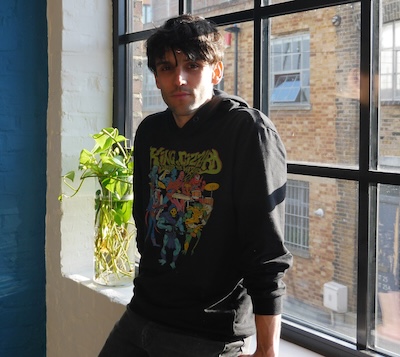
If I could change one thing…
…have more bad meetings.
We’ve all been there. Shook hands. Patted each other on the back. “That was a great meeting,” we say. Then the work comes out. And we want to sink through the floorboards. Because behind even the worst ad you’ve ever seen, there was probably a great meeting. That’s why I’d like to have more bad meetings. The kind where we might not “sell” the work, but learn something that makes it better. Where we challenge each other. Disagree. Propose something crazy. Or stupid.
And nobody panics.
Because a good meeting shouldn’t always end in agreement. Sometimes everyone should leave a little uncomfortable. And the work comes back a lot better.
But there’s a reason why it’s getting harder to afford bad meetings. As an industry, we’ve shifted from long-term relationships to project-based ones. So, when everything is a pitch, inevitably, we don’t have the luxury of having a bad meeting. One bad meeting can mean there’s no next meeting. So we become desperate to win. And afraid of taking risks. We say what we think people want to hear. And that’s when the work starts to suffer.
Good work needs trust. And trust needs time. When everything is a pitch, we’re increasingly building relationships around projects rather than building relationships with people. Maybe we don’t need better meetings. Maybe we just need more trust to have bad ones.
Vinne Schifferstein Vidal, Co-Founder, MC&V
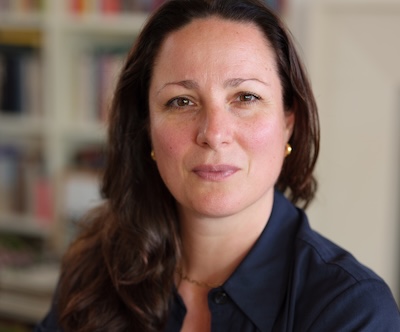
If I could change one thing: fewer kingdoms
I’ve spent most of my career moving between different parts of advertising – client, agency, production, different countries, big networks, listed companies, small businesses and now my own company. And if I could change one thing about the industry, I think I’d get rid of some of the kingdoms we’ve built around ourselves.
Advertising loves putting people into boxes. Creatives have the idea. Strategy owns the thinking. Production executes. Agencies compete with production companies, production companies compete with each other, and everyone becomes remarkably protective of which part of the process belongs to them.
Some of the best experiences of my career have happened when those lines disappeared. When the producer also was the suit, like at Monks. When someone technically “junior” knew far more about something than everyone else in the room, like when digital was on the rise. And over the past three years, working closely with AI artists has made that even more obvious to me. I entered a community where people were learning something completely new together, sharing what worked, helping each other and making extraordinary things without waiting for the industry to decide what their job title should be.
It has made me wonder how much better advertising could be if we were all a little less concerned about defending our patch.
So, if I could go back and change something, I’d probably have crossed those imaginary borders even more often and much earlier. I’d have worried less about who was supposed to approve the way we worked, and who does what. After more than decades in the industry, I’m fairly convinced that most of the interesting stuff happens in the gaps between the boxes anyway.
Nonthaporn ‘Pulp’ Ketmanee, Senior Creative Director at Leo Hong Kong
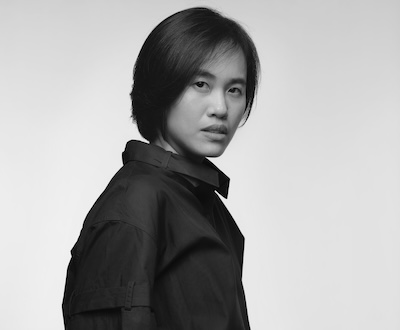
I entered advertising very late. By the time I arrived, many of my peers already had years of experience, a portfolio of work, and a deep understanding of the industry. I was 29 and still figuring out the basics. So I spent much of my career catching up. Learning the craft. Understanding the business. Proving that I belonged.
If I could change one thing, I would ask for more time. Not more years. More usable time. Time to invest in myself. Time to mentor others. Time to learn things outside of advertising. Time to build things that might contribute something back to the industry that gave me a career.
Ironically, AI is the closest thing I’ve found to that change. Not because it comes up with ideas for me. It doesn’t. The best ideas still come from people, curiosity, experience and life itself. What AI gives me is time. It takes care of some of the tasks that used to consume entire days, allowing me to focus on what matters most to creatives: imagining what comes next. Sometimes I wonder what I might have built if I’d had that time ten years earlier.
Lukas Lund, Creative Partner, Worth Your While
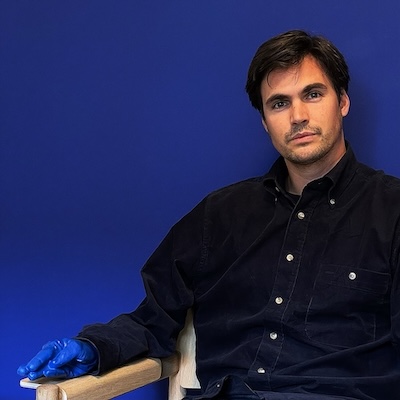
If I could change one thing in advertising, it would be the ongoing quest to change things in advertising. This unquenched urge to reinvent ourselves all the time. Through technology (promise I won’t make this about AI), optimisation of processes and new stupid medias being the most important thing to prove your idea on. Because somehow this horniness for change gets in the way of us actually allowing ourselves to enjoy our (mostly) wonderful job. We’re being paid to be creative after all. And I’m sure most of us would do something pretty close to advertising anyway, if we weren’t doing advertising. Because no matter how you look at it, we’re in the industry of ideas. And that must never change.
I’m not saying I haven’t been pulling my hair out over being in an industry that stole my time and squeezed me of every drop of creativity. So, I joined an independent. And I’ve of course also been super frustrated of simply feeling like a tiny cog in a huge machine. So, I joined an independent.
So here I am. At an independent. Doing work Worth Your While. And still, this feeling of wanting to change things is buzzing around like a half dead fly in an otherwise delicious chicken soup. How can we be even better? Faster. Do more. Work less. Spend more time with our families. And build an even greater agency culture. And we’re back. At wanting to change our advertising jobs. Even though we already have it all. So, my big change, is to change less. Hold on tight to the things that I love so much about this job. And let go of wanting to change it all.
All this being said, better budgets and better timings are welcome. And the killing of great ideas is not. Obviously.
Iwona Mnich, Managing Director & EP, Papaya Films
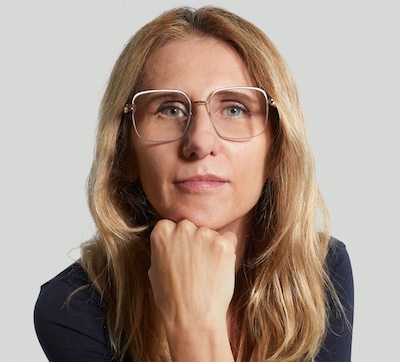
I’d stop talking so much about craft. Not because it doesn’t matter – it obviously does. But somewhere along the way, we started mistaking talking about it for doing it.
I’ve spent nearly thirty years in production. That’s a very long time to worry about details. The right lens. The right location. The right light. The right second in the edit. But I’ve realised craft isn’t always the thing you see on screen. It can be the thing you never even clock as a decision.
This year I judged both Cannes Lions and Kinsale Sharks, which meant weeks of watching hundreds of entries before the festivals even started. And when you watch that much work in such a short amount of time, something shifts. You stop being impressed by the things you’re supposed to be impressed by.
The films that actually stayed with me were rarely the technically dazzling ones. There’s always a lot of noise around the huge set, use of celebrity talent, the impossible shot, the VFX. But more than once, the best piece of craft in the room was a decision nobody would have even called a decision. Not deliberately, anyway.
A shot that’s almost ridiculously simple. A performance that doesn’t feel performed. Something left out that could have been added. A cut that happens half a second before you expect it. You don’t sit there thinking, what incredible craft. You just feel like someone made the right call. And I think that’s because craft is bigger than what happens behind the camera. It’s a casting decision. Restraint in a script. A producer asking the uncomfortable question at just the right moment. Knowing when an idea needs protecting rather than improving.
And now AI is making it possible to do more work, faster than ever. The temptation is to play all your cards up front. But craft was never about that. It’s about knowing what the work needs. And then having the discipline not to give it anything it doesn’t.
Marcus Brown, Founder & CEO, The Great Pitch Company
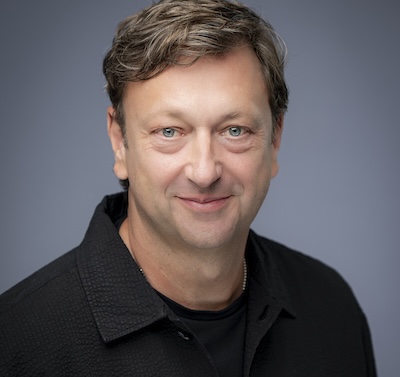
I once worked on a pitch where a colleague hid under the meeting-room table. He had a good singing voice, and at precisely the right moment, he was invited out to sing the end line for the commercial. Quite a commitment to an end line.
But that’s what I remember about pitching early in my career. The excitement. The imagination. The slightly ridiculous things people were prepared to do to bring an idea to life. Pitches were so much fun to work on. Perhaps my enthusiasm was inevitable, given where I started.
At university, I marketed our theatre group’s annual show, selling out a local theatre and earning a job as its press and marketing officer after graduation. I then joined Kellogg’s to learn sales, followed by Saatchi & Saatchi, where I discovered advertising. An early pitch, for an internal competition, saw our graduate trainee team win against the others and gave me a taste for the excitement of new business. Moving from account handling into new business brought everything together: theatre, sales and advertising. Bringing people together, finding the story and making an audience feel something.
Of course, pitching has its ups and downs. I’ve experienced both. And I know that making it enjoyable takes more than asking people to be enthusiastic. It’s hard to feel excited about an opportunity if the process leaves you exhausted or feeling that your time and ideas have little value.
If I could change one thing, I’d make pitches the best part of our industry again.
That’s our mission at The Great Pitch Company. We help people win pitches, and we want the experience of pitching to be worth something too.
A pitch can be a treasure chest of imagination, exploration and daring ideas. It gives people who might never otherwise work together a reason to connect. It’s a stage for storytelling, with room to amuse, inspire and captivate. For that to happen, we need pitches that are fair, fun and sustainable for agencies and their people. We need to give people the conditions in which they can enjoy doing something extraordinary.
I’d love more people starting out today to discover the excitement I did. And, years later, to have a story they still enjoy telling.
Mine happens to involve a colleague under a table.
Blake Enting, Creative Director & Partner, misterwolf
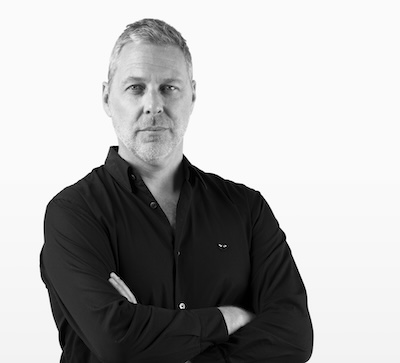
Sometime in the 1990s, a friend and I invented an award. We called it the White and Pasty Award. The rules were simple. In the middle of winter, when we were working completely insane hours and had run ourselves into the ground, we’d each take a Polaroid of ourselves. We’d put the photographs side by side and decide who looked worse. That person won.
At the time this seemed completely reasonable. Funny, even. Looking back, two young designers literally competing to see who could push themselves closest to breaking point seems completely bonkers. We’d absorbed an idea that has followed me through much of my career – if you really care about the work, you give it everything.
My first job reinforced it, long hours were expected and extra was normal. Over the years, across different companies, it got progressively taken to another level – work speeding up, jobs arriving already on fire, plans abandoned, teams expected to drop everything and deliver. As time went on, the pressure stopped feeling exceptional and simply became a structural part of the culture – and that’s the problem. We’ve spent decades teaching creative people that extreme deadline stress isn’t a failure of the system, but part of what serious creative businesses do to succeed.
My teams and I became very good at it. Creative SWAT teams. Drop us into an impossible situation, give us the hospital pass and we’d find a way through. When talented, committed people continually rescue impossible situations, they make dysfunctional situations look functional. The work gets delivered, everyone celebrates, and nobody sees the actual cost. I’ve seen that cost in burned-out teams, unused annual leave, damaged personal relationships. I’ve experienced it myself, once pushing so hard that I collapsed.
But there’s another side to this that matters.
Making anything genuinely worthwhile is hard. It takes years to become good at design and advertising, and even then you’re never done. Technology changes, culture changes, the tools change underneath you. So I don’t want the correction to unhealthy work culture to sound like an argument against hard work itself. They’re not the same thing. Creative people don’t need protecting from effort. Their effort needs protecting from being wasted.
Pressure isn’t particularly good for creativity, though it can be good for focus. Constraints can be incredibly useful. Sometimes you just need to get the bloody thing done. But when there’s no room to think, experience takes over. You recognise the shape of the problem and reach for something you already know works. With enough experience, you can produce something polished and convincing at extraordinary speed. That’s not creativity, that’s expertise.
Real creative leaps need something else. They need enough space to question the obvious answer. To walk away. To have an unrelated conversation. To sleep on it. To realise you’ve been solving the wrong problem. A brain without room for reflection isn’t particularly well equipped to invent something new. It falls back on what it already knows.
So if I could change one thing about our industry, I wouldn’t ask creative people to care less, work less or try less.
I’d stop romanticising the emergency.
Sometimes great work happens under extraordinary pressure. But perhaps that’s because creative people are extraordinarily good at overcoming pressure, not because they need it. The work should be hard because we’re trying to do something difficult. Because the idea isn’t good enough yet. Because the craft isn’t there yet. Because we’re curious enough to keep pushing and passionate enough to care about the difference.
After 36 years, I’m still personally obsessed with design. I still disappear down rabbit holes. I still work longer than I probably should when I’ve found something I can’t put down. I hope I never lose that. The difference is whether that intensity comes from the idea or from the deadline. These days, we run our studio differently. Calmly, wherever possible. Reduce ‘noise’. Minimise disruption. Not because we expect the work to be easy, but because the work is hard enough already. I think businesses that genuinely value creativity can do three things to give it a better chance:
Plan for thinking, not just doing.
If every hour is accounted for before the creative process begins, you’ve left no room for creativity. Build reflection, exploration, play and iteration into the process rather than treating them as inefficiencies. If possible, build a day or two break between the work and the presentation – distance allows objectivity.
Protect creative effort from avoidable chaos.
Deadlines are real. Emergencies happen. But poor planning, late decisions and unclear briefs shouldn’t routinely become someone else’s creative challenge. Don’t spend your best people’s energy solving problems that didn’t need to exist.
Make the work hard for the right reasons.
Push the idea. Challenge the obvious answer. Debate it. Refine it. Obsess over the details. Demand more from the work – not simply more from the people making it.
Because creativity doesn’t need comfort. It needs space. Keep the obsession. Lose the martyrdom. Give your creative teams their best chance to create amazing.