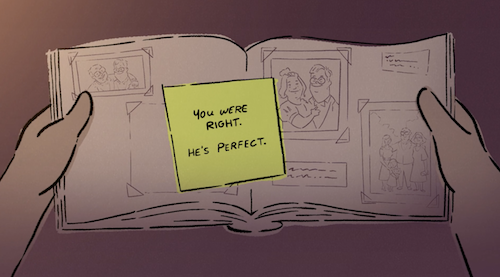
There have been many clever ideas promoting the ability of those with Down Syndrome, but this very simple, very honest story by animation studio, Tonic DNA, for intellectual disability charity, L’Arche, is one of the most powerful yet. The film, Freebird, created for World Down Syndrome Day, March 21, was written and directed by Joe Bluhm and Michael McDonald. It’s the coming-of-age story of a boy with Down Syndrome who learns to navigate the world with a loving mother, an absent father, a classroom bully, and a life-long crush.
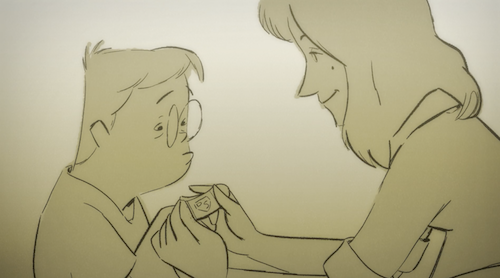
A teaser for the film debuted on March 21, ahead of the full four-minute short set to launch on April 19.
Tonic DNA was approached directly by L’Arche Canada with a script for the film. Originally, it was intended to be a live-action short but the risk of coronavirus required the team to translate the script to animation.
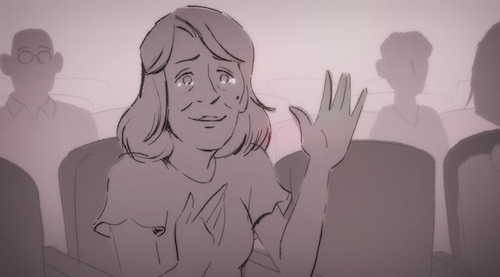
The film’s narrative was built on years of oral histories from those with Down Syndrome, highlighting moments familiar to those with the disability that are so rarely depicted on screen. Working with actor and LGBTQ activist Nicholas Herd, who also has Down Syndrome, the team moved away from problematic notions of pity and fear that often shape public discussions, and instead recognised how the story of Down Syndrome sounds very different when actually told by someone with the disability. Freebird is part of L’Arche’s Free to Be campaign.
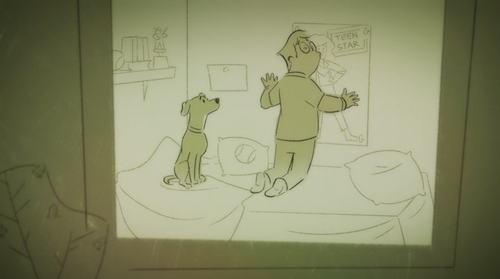
With L’Arche providing animation references and real-life stories, Tonic DNA worked to find a style that would preserve the emotional and character-driven aspects of the story while ensuring there was no distraction from the narrative – finding strength in simplicity and working within a short timeline. The challenge was to ensure that the storytelling remained evocative while interweaving the narrative with the film’s soundtrack, Jordan Hart’s track, Freedom, which had been part of the process from the beginning. L’Arche too was looking for a style that reflected the core message of its activism – why does the world assume that a disabled life is not profoundly beautiful?
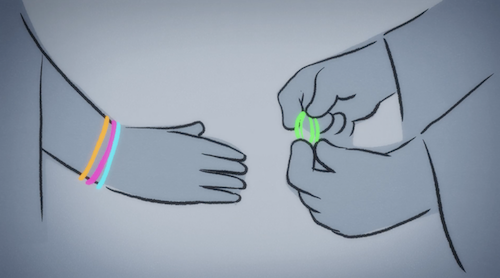
Michael McDonald, national communications director at L’Arche Canada, commented, “In an industry so captivated by CG and 3D, what if we were to ‘disable’ the aesthetic to the bare minimum? In our initial search for style references, we were really drawn to the minimalistic tradition of abbozzi; the preliminary sketches for great works of art. People with Down Syndrome are often treated as such, as under-developed, rough sketches of what should have been a ‘full-fledged’ human being. Could we explore that through the tradition of the rough sketch and come out on the other side with something whose beauty would be deepened by its simplicity, by the fact that it refuses the flashiness of artistic sophistication?
“From our first meeting, Joe [Bluhm] has taken the animation in such incredible directions. Bodies with Down Syndrome have different proportions than those without Down Syndrome, and Joe and Tonic took the time to get these dimensions right – the gestures, the expressions, the non-normative proportions – and it was all done with such integrity. It’s one thing to dream about the perfect aesthetic to tell this story, it’s another to make a flat world feel round or to match the 42 muscles in the human face with the expressive power of a well-placed line, and yet, once Joe said ‘yes’ and Tonic sharpened their pencils, that’s exactly what they did.”
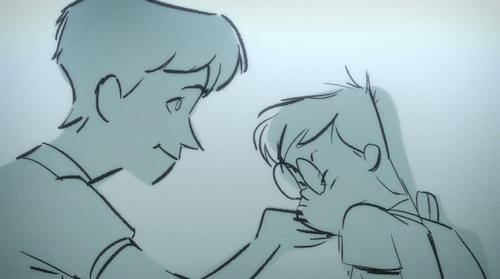
Joe Bluhm, director at Tonic DNA, added, “Although the timeline was challenging, the concept and narrative was amazing. I was completely moved by the script and the cause, instantly envisioning something free and loose. Knowing that this was a robust story, with half a lifetime of narrative, we couldn’t cut out any of it, yet couldn’t build every detail of the world. Fortunately, my gut feeling was to do something that felt light, familiar, and loose enough to evoke an idea that the story is still yet to be written for many of the people that the narrative speaks to. Tightening up and constraining things is not the answer – letting things be loose and open is. So a light, slightly vintage style felt right. And letting colours flow, letting textures flow, and getting glimpses of these memories being told to the viewer through an ephemeral form seems fitting.”
Credits
Executive Producer: Stefanie Bitton
Producers: Jennifer Nadeau & Mariana Durán
Directors: Joe Bluhm & Michael McDonald
Illustrator: David Rémy Goldstyn
Character Design: Joe Bluhm & Michael Renaud
2D Animation: Guillaume Blackburn, Malcolm Sutherland & Celia Bullwinkel
Compositor: Myriam Arsenault