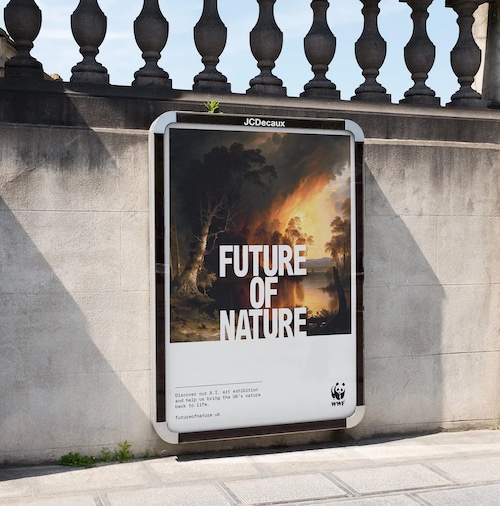
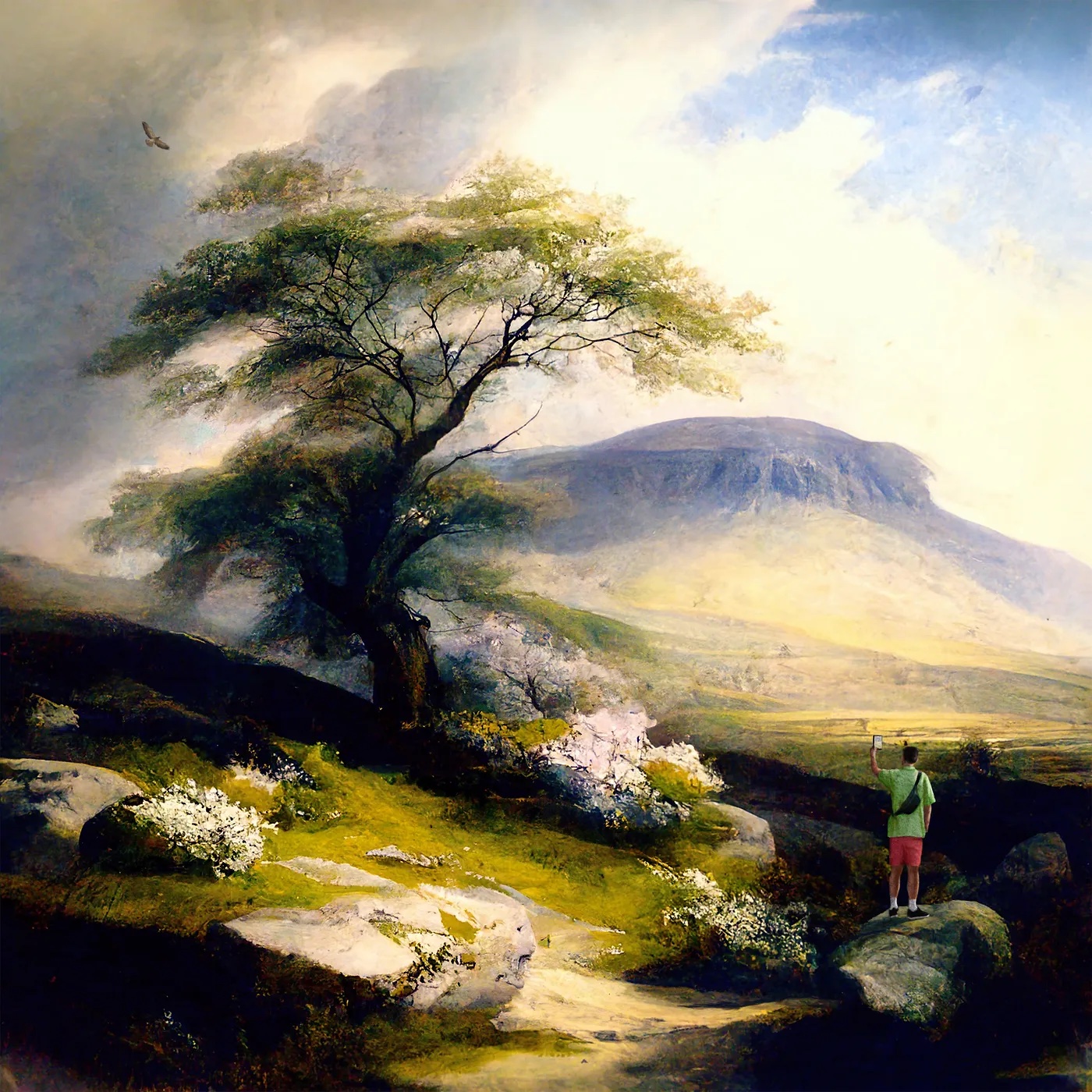
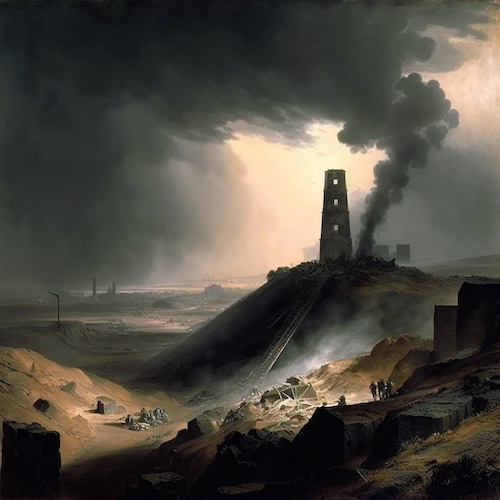
A new free exhibition in London revives the art style of British Romantic painters such as Turner and Constable. But it is not a look to the past. The exhibition curated by WWF and Uncommon Creative Studio is two series of artworks representing two futures for UK nature – one if we continue its path to destruction, and the other if we act now to save it.
The exhibition, Future of Nature, and created by AI, is running April 20 -22 for Earth Day at 180 The Strand in London and a virtual version of the exhibition will be available between April 20 — May 7 at https://futureofnature.uk/.
The paintings imagine how the historical British Romantic art movement might witness and record the future of our natural world. While the paintings themselves are not real, they show genuine possibilities.
We are in the top 10% of the most nature depleted countries in the world. A quarter of all our mammals are at risk of extinction; over the last 50 years we’ve lost 38 million birds from our skies; 97% of our wildflower meadows have disappeared since the 1930s; and 92% of the UK’s seagrass meadows, which can absorb carbon more efficiently than tropical rainforests, have been lost in the last century. If harmful activities are left unchecked, the situation will only deteriorate further. However, the science is clear about what we need to do to turn things around.
The exhibition is designed in two halves with over 20 unique images, imagining what the future of nature in the UK might look like if we continue to destroy it, or if we choose to protect and restore it. Each image is dated with the year it portrays and is accompanied by a description of real-world scenarios the subject matter faces today.
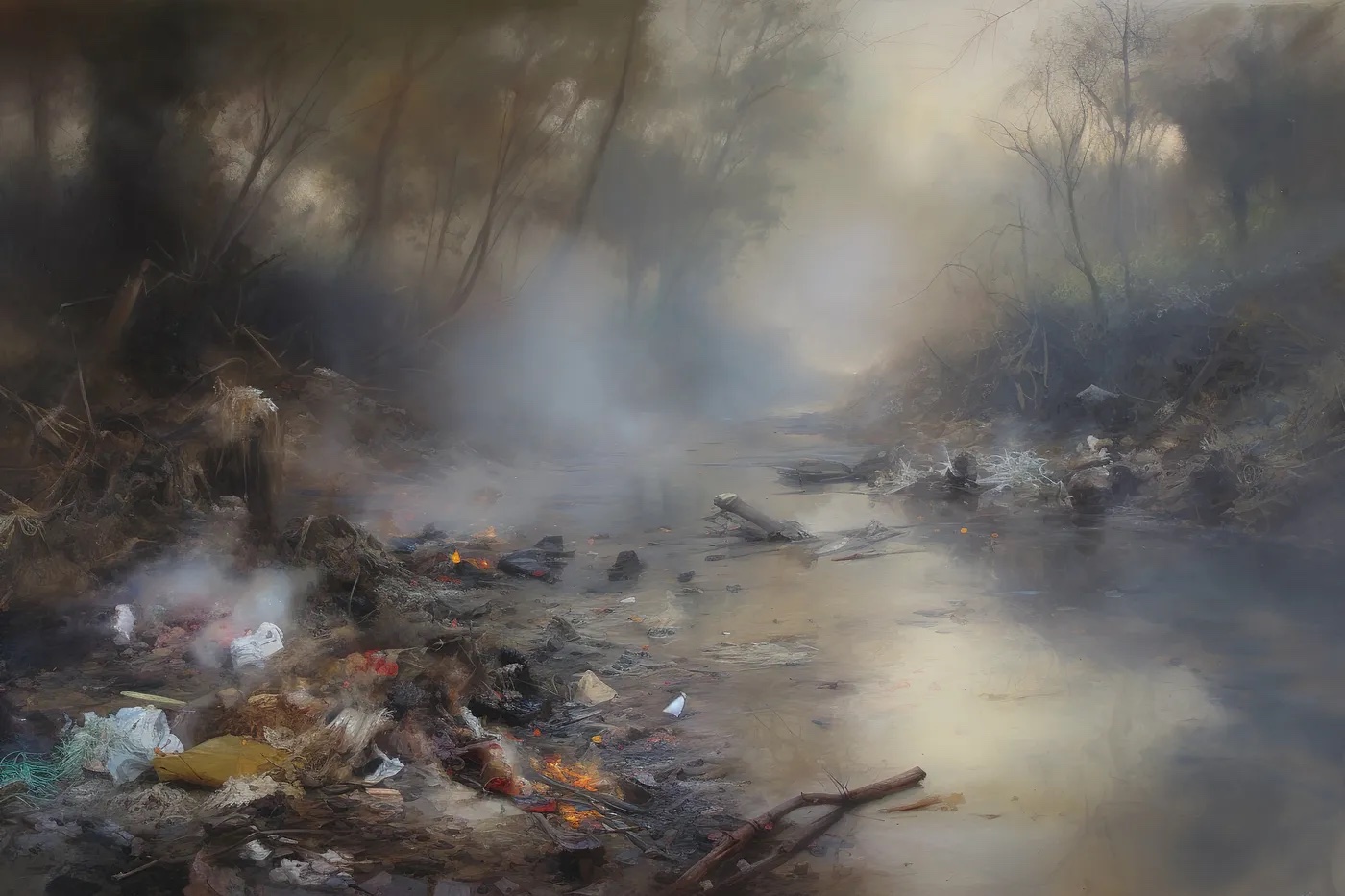
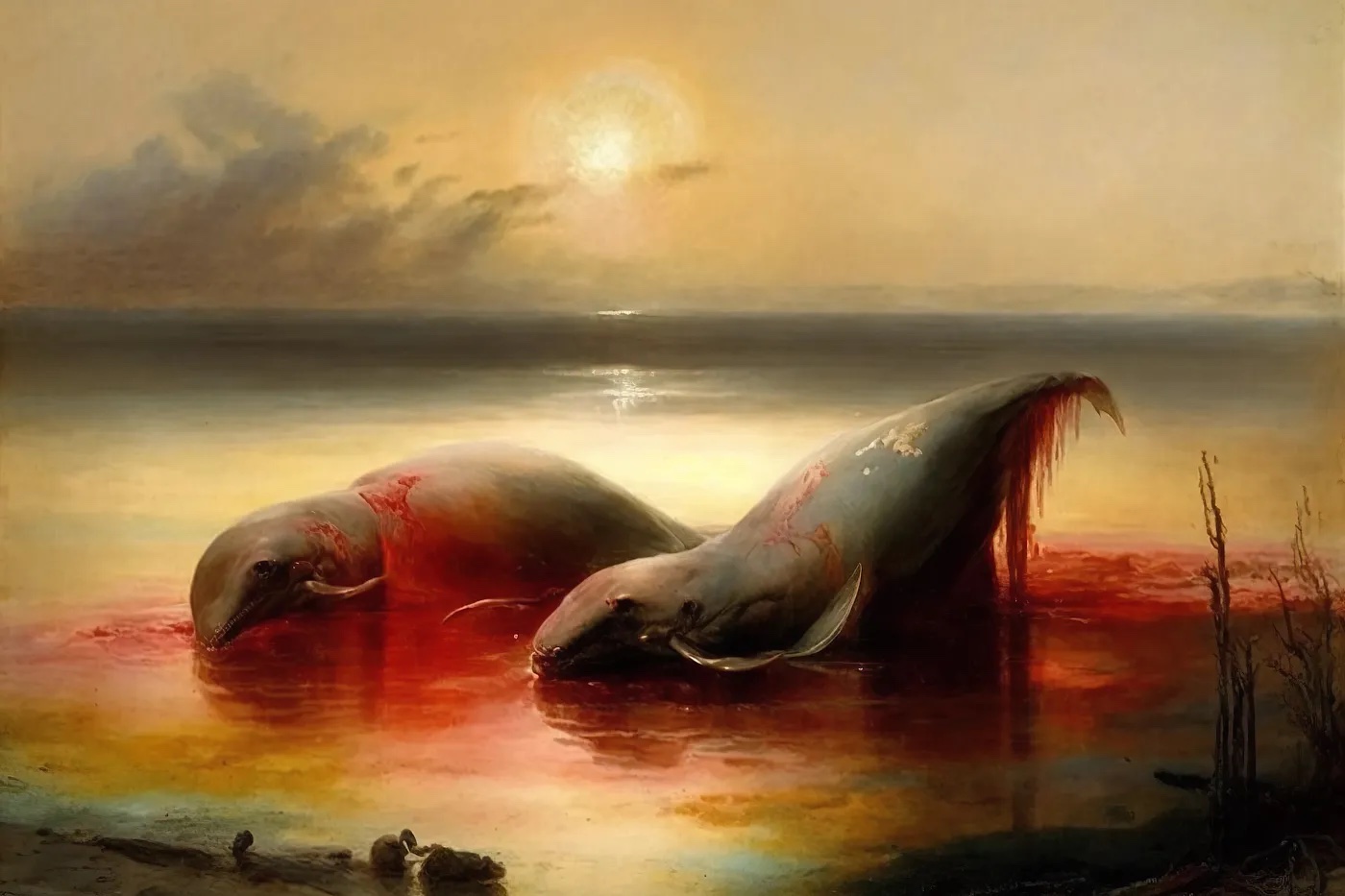
Images depicting a bleak future for UK nature include a burning ancient woodland titled Highland Wildfires (2034), an overflowing landfill titled Sussex Landfill (2067), and more distressing imagery of the three porpoises killed daily in the UK in Innocents (2023).
Images that show a more hopeful future include a rambler in the Yorkshire Dales titled Spring in Ingleborough (2023) and a green landscape full of renewable energy sources titled Turbines (2075). These alternate realities show us that we have a choice.
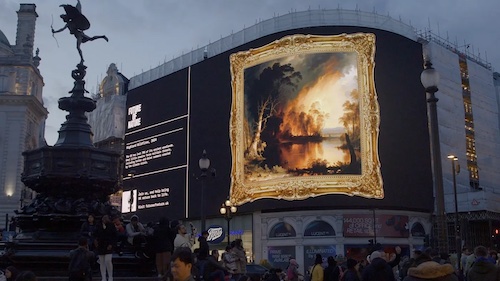
The exhibition is being promoted on the screens at Piccadilly Lights and DOOH across London in the run-up to the exhibition opening. As well as digital, social and press promotion via The Guardian.
The exhibition at 180 The Strand is on for a limited period between 20–22 April. Free admission between 11am — 5pm.
A virtual version of the exhibition will also run between 20 April — 07 May at https://futureofnature.uk/
Lisa Lee, executive director of communications at WWF, stated “These powerful AI images show the dangerous path we are heading down and how urgently we must act to restore nature at home. The UK is one of the most nature-depleted countries in the world. Our rivers are dying, our native birds and animals are in sharp decline, and we are degrading our land.
“We can all make a difference, but we need action from the Government and business to divest from fossil fuels, stop pollution and end harmful farming practices.”

The exhibition supports WWF’s work and encourages the public to make a difference by:
- Supporting the People’s Plan for Nature. Created by people from across the UK, it calls for urgent, immediate action from everyone to protect and renew nature for future generations.
- Donations to WWF will help the organisation to protect, nurture and replenish cherished UK wildlife and our nation’s threatened land, rivers and seascapes.
- Individual action really can add up to achieve great things. By making better choices for our world, we can all help bring nature back. Download WWF’s My Footprint app today to find out how.