Someone is being abused on public transport. You feel uncomfortable but you don’t know what to do. The new campaign by Transport for London (TfL) and VCCP makes you realise that what to do is very simple and very easy. You just act like a friend of the victim to intervene safely.


Act Like a Friend aims to change passive observer behaviour – to empower passengers to intervene safely when they witness hate crime, sexual harassment or offences on the network, while reinforcing the message that criminal behaviour has serious consequences.
The campaign launches in the UK during National Hate Crime Awareness Week (October 11-18). Running alongside it is Tackling Crime, a complementary strand that reminds perpetrators that enforcement is active, visible, and effective.
Act Like a Friend is built from research that showed people often feel paralysed without a clear, simple action. It presents easy, intuitive ways bystanders can defuse the situation by supporting the victim, rather than confronting the perpetrator – whether that is pretending to already know the victim, starting up a friendly conversation with them, or simply asking them if they are okay. By reframing bystander action as something as natural as “being a friend”, the campaign creates a safer space for travellers. It builds on TfL’s ongoing bystander intervention messaging first launched in 2022, which encourages Londoners to intervene when it’s safe to do so.
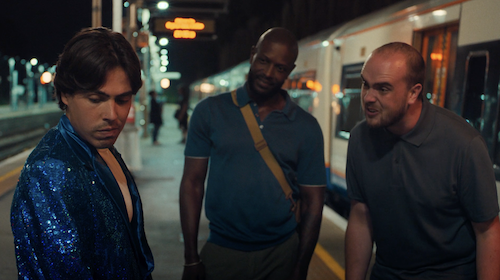
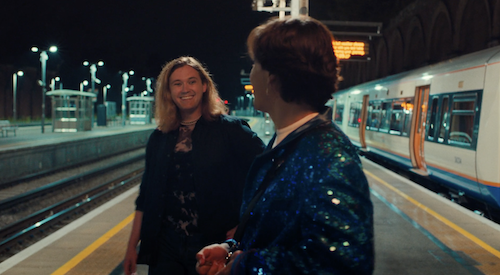
The 120-second hero film was developed from real stories and directed by Edem Kelman, a filmmaker with a background in compelling human story-telling. My Accomplice and VCCP’s content studio, Girl&Bear, led production across the hero film and cutdowns for digital, broadcast on video on demand and social.
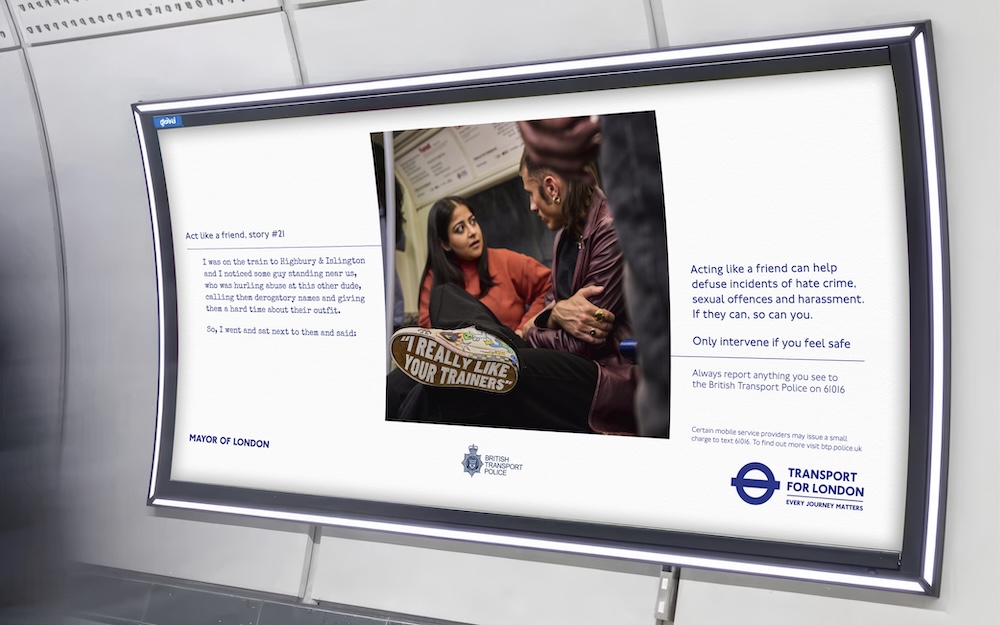
The film is supported by a wider multi-channel rollout spanning digital out-of-home, out-of-home, online video, social and targeted activations, with media developed by WPP Media’s Wavemaker. Partnerships with Crystal Palace FC, Fulham FC and Tottenham Hotspur will extend the message into local communities. Out-of-home executions present three additional true bystander stories, using the same conversation starters Londoners shared in real incidents to show support to fellow passengers.
The campaign kicked off with a preview event on October 8 2025 at the London Transport Museum featuring a Q&A with bystanders, victims and policing and Violence Against Women and Girls (VAWG) stakeholders. This was followed by a full cinema launch at general screenings across Pearl & Dean and Digital Cinema Media (DCM) sites.
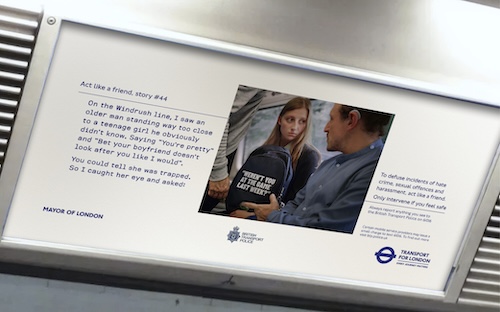
The campaign, running until November 24, supports TfL’s wider strategy to improve safety across the network, which includes enhanced station lighting and CCTV, active enforcement in partnership with the Metropolitan Police and British Transport Police, and ongoing collaboration with community and advocacy groups. To mark National Hate Crime Awareness Week, TfLis also partnering with Protection Approaches – a national charity working to prevent identity-based violence and to deliver more free active bystander training session for the public, funded by Mayor’s Office for Policing and Crime’s (MOPAC) Shared Endeavour Fund. Throughout the week, TfL will also host a series of hate crime awareness events across the network. The work strikes a balance between showing TfL’s role in enforcement and encouraging Londoners to play theirs.
Miranda Leedham, head of customer marketing & behaviour change at TfL, stated, “We know that Londoners want to help when they see someone being harassed or abused. This campaign gives them a simple, effective way to do just that – by acting like a friend. Alongside this, we’re reminding everyone that criminal behaviour on our network will lead to real consequences. Together, we can make London’s transport safer and more inclusive for all.”
Zoë Stock, creative director at VCCP, added, “This campaign taps into something most Londoners can relate to: wanting to help but not knowing how in the moment. We needed to give people a behaviour that is simple, safe, but most importantly natural. Sharing real ways other Londoners have ‘acted like a friend’ reminds us that we all have the capacity to do the right thing— if we’re equipped with the right knowledge.”