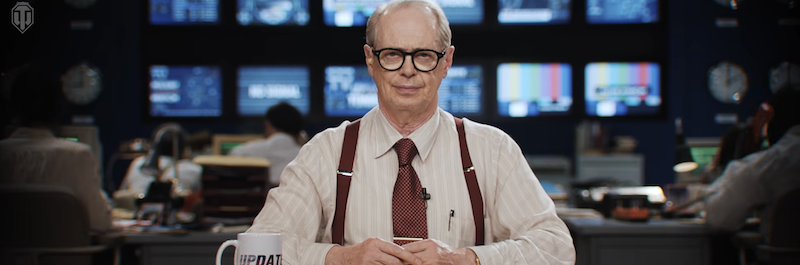

Were Alan Morris and Allan Johnston, aka Mojo, two of the most culturally important voices in Australian history? Russel Howcroft thinks so. Certainly, they’re indicative of the boy culture that existed in advertising in the ‘70s, ’80s and early ‘90s and has only just begun to fade into history.
Russel Howcroft is the catalyst for a film that celebrates Mojo and is meant to reflect the “golden era of Australian advertising”, pitching the idea of the documentary to the ABC last year. How Australia got its Mojo will go to air on the ABC at 8.30pm on Monday October 1.
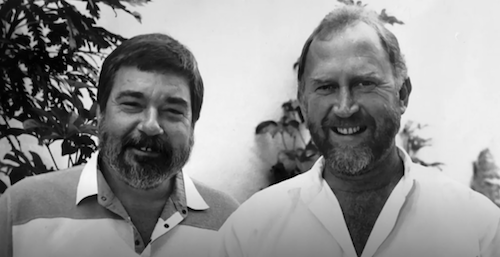
l-r: Alan Morris & Allan Johnston
The one-hour documentary has been produced by Gruen’s TV production company, CJZ, with Heckler creating the opening title sequence. It will be hosted by Howcroft.
“My pitch to the ABC was that the two most important cultural voices in Australian history aren’t Banjo Patterson and Henry Lawson, they’re Alan Morris and Allan Johnston,” Howcroft stated
“Of course, I said it with a bit of a smile, but I thought it would be an interesting proposition to do a documentary about the cultural impact these two had on the country. I wasn’t just talking about an ad agency that was successful, but how two unpretentious geniuses re-wrote the rule book and changed the way we thought about ourselves and how they helped take a new Australian identity to the world.”

Mojo’s ad style was colloquial and irreverent. That, without question, aligns with how the world sees Australia. Nearly every commercial was accompanied by a jingle. These became ingrained in Aussies’ heads and did build fame for a number of brands. The agency was crowned Advertising Age International Advertising Agency of the Year in 1988. That was as triumph for Australia, which was a little fish in a big sea.
Morris and Johnston first teamed up at Sydney agency, Hertz Walpole, in the mid 1970s before they established their own consultancy, which they named Mojo.

They had immediate success with Meadow Lea’s, You oughta be congratulated, and then Tooheys beer’s, How do ya feel.
By the late ‘70s and ‘80s Mojo had become a creative hotshop in Australia with its campaign, C’mon Aussie C’mon, for World Series Cricket, and the Australian Tourism Commission’s Put another shrimp on the barbie spots with Paul Hogen, getting their fifteen minutes of fame on the world stage.
Other famous campaigns include Hit them with the old Pea Beau, I can feel a XXXX coming on, I still call Australia home and A week without the Weekly’s not the same.
Mojo showed that being down-to-earth and leading with a jingle worked hard. Prior to Paul Hogan’s tourism ads, Australia was number 70 on the list of countries that Americans wanted to visit, for example. After the campaign, Australia ranked #7.
“They had a unique style and clients wanted it,” Howcroft stated. “There is lots and lots of evidence of the hugely powerful impact they had for brands.”
Heckler executive creative director, Luca Ionescu, had one of his first freelance jobs working at Mojo. Under his guidance, Heckler’s title
sequence for the film has been designed to reflect the cultural and creative influence the pair had on some of the country’s most recognisable brands and will include references to Qantas, Meadow Lea, World Series Cricket, Tooheys and Winfield.
“It is a celebration of Mojo and their golden era of advertising,” he commented. “The concept brings to life those iconic ads in a title sequence that nods to the era and the vintage style. We have kept that nice humorous, tongue in cheek, retro feel to it. It has been such a great project to work on with CJZ and I hope as many people as possible are able to watch just how important Mo and Jo were on our advertising and culture.”
Ionescu added, “They were iconic in developing the Australian voice. The humour, satire, that laid-back casual element of their advertising, made it interesting and enjoyable to all audiences. They really developed what Australian advertising was of that era and I don’t think before them anyone owned it quite like that.”

Howcroft concludes, “When you have a look at their work, it is most definitely a ‘70s, ‘80s early ‘90s cultural impact. I suspect their advertising style wouldn’t fly now, but it absolutely worked its socks off during those decades. Of that, there is no doubt.”
Alan Morris passed away in 2007 but the documentary includes contributions from Allan Johnston, as well as interviews with former tourism minister, John Brown; Paul Hogan, Ita Buttrose, John Singleton and insiders from the Mojo agency.