The self-promo of the decade, perhaps. Without question, compelling evidence of what AI can achieve with human creativity as its master. American Haiku has finished a short film begun sixteen years ago, powered by technologies that didn’t exist when it began.
In 2010, Hurt recorded narration for a short horror film that was ultimately shelved after years of funding setbacks, leaving his previously unheard performance in the vault. Nearly 16 years later, American Haiku founder and CCO, Thom Glover, revived the project with director and AI artist, Michael Hess, using generative AI to finally bring Awful Dreams to life.
But rather than use AI to recreate the realism the filmmakers originally envisioned, they leaned into the technology’s imperfections – its distortions, hallucinations and unpredictability – to create a nightmarish visual language that would have been impossible to achieve when the film was first conceived. The result is an unusual collision of archival performance and emerging technology – a film anchored by Hurt’s voice, but visually shaped by AI in ways that embrace its limitations rather than conceal them.
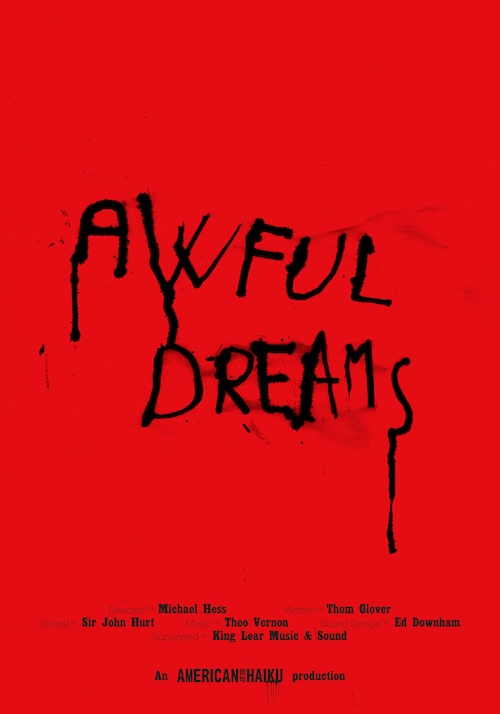
Originally conceived as a practical-effects horror in the vein of John Carpenter’s The Thing and Alien, the project stalled after repeated funding setbacks. The script, written as a gothic poem in blank verse, tells the story of a butcher plagued by a nightmare in which the animals he has slaughtered return as a single, grotesque entity, hellbent on his demise. Despite early momentum and Hurt’s involvement, the film was never produced. The materials were eventually shelved, including the actor’s recorded narration. That changed in 2024, when Glover connected with director and AI artist Michael Hess.
Rather than revisiting the project as originally intended, the pair chose to rebuild it using generative AI tools, embracing early versions of the medium’s unpredictability as a creative asset to generate disturbing imagery. Where many AI-driven films aim for realism, Awful Dreams leans into the technology’s tendency toward distortion and hallucinations. Bodies shift unnaturally. Forms blur and collapse. The imagery resists coherence, creating a sense of unease that aligns closely with the film’s premise.
Hurt’s voice anchors the piece, adding weight to a production that bridges multiple timelines. The actor died in 2017. His performance exists now within a project shaped by new tools and techniques. That tension sits at the centre of Awful Dreams, a project that’s archival and experimental, human and machine-made.
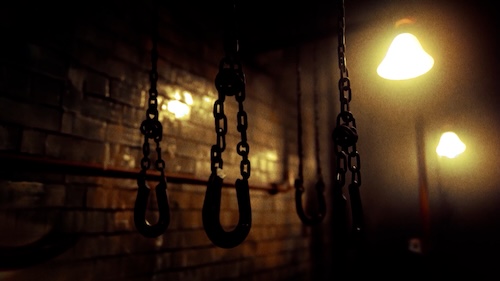
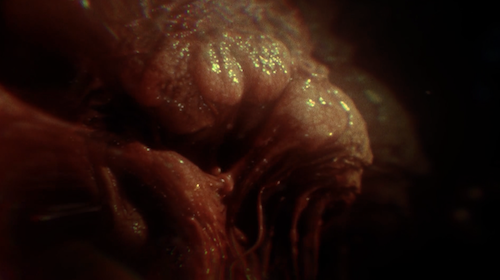
At a time when AI in filmmaking is often framed around efficiency or replacement, American Haiku’s approach suggests a different path. Instead of smoothing over flaws, the film uses them to heighten its central idea, drawing on the discomfort that comes from images that feel neither fully alive nor entirely artificial.
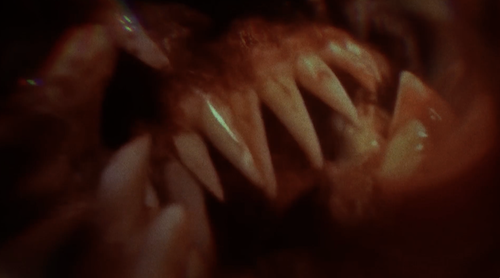
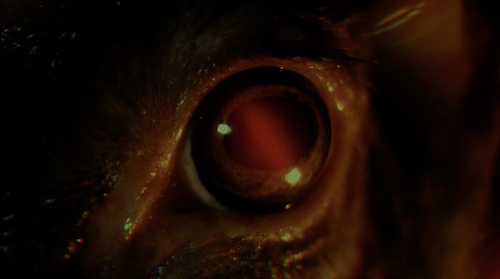
The project has had significant success on the festival circuit, where it attracted attention not only for its use of AI, but for the unusual circumstances of its creation.
“Awful Dreams is a project we tried to get off the ground in multiple different ways for many years,” stated Thom Glover, “but it found its true expression in the nightmare-ish qualities of early AI models.”
“Most AI films are trying to show how close the technology can get to reality. We were much more interested in where it breaks,” added Michael Hess, director of Awful Dreams. “There’s something deeply unsettling about imagery that almost makes sense but doesn’t quite resolve. That tension became the visual language of the film.”
“This project sits at the intersection of old and new in a way you rarely see. A script from 2010, a performance from Sir John Hurt, and a production process that only became possible recently,” commented Mateo Suarez, executive producer of Awful Dreams. “For us, it’s less about what AI replaces and more about what it enables. This is exactly the kind of idea that benefits from that shift.”
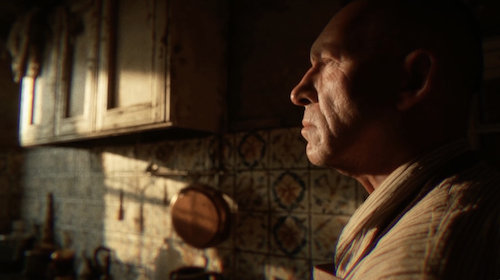
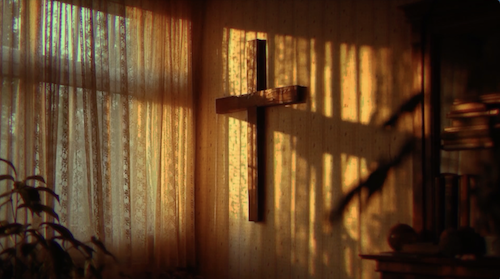
Another power of AI + human demo, and self-promo wrapped neatly together – this time plus environmental creds: