
Andy Fackrell gave up agency life a year and a half ago. Now he does the work he wants to do, with people he wants to do it with. That work involves his two passions, sport and great work for good.
Fackrell spent a lot of his career in agencies, including five and a half years at Wieden + Kennedy Portland on Nike followed by ten years at 180 Amsterdam where he was involved in the launch of its hugely successful Impossible is Nothing platform. “We became the third most awarded agency at Cannes in just our second year for our category changing adidas work,” he notes.
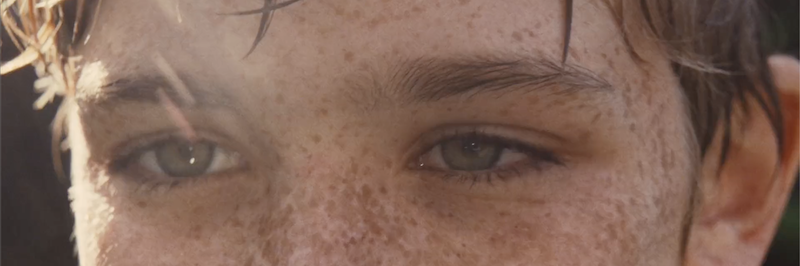
“Because I had a huge Kurosawa crush.” [Andy Fackrell]
In 2011 he went home (to New Zealand) to become ECD at DDB Auckland and in 2014 moved to Sydney to become regional creative director of DDB Asia Pacific. Fackrell’s last agency gig was a year and a half at R/GA’s Hustle, where he was reunited with Nike. He now calls Sydney home, but works wherever he wants to. That’s mostly Sydney and Amsterdam.
FREE
He says he’s not full-time freelance. “I pick and choose projects that interest me. I sort of took a bent that I knew enough people who worked for clients so that I could do that without having to go through agencies.” What interests Fackrell are the environment and sport. His most recent campaign, Superfrau, combined both. He didn’t go through an agency to get that job either. He has been working with Swiss running brand, On, for about a year as a creative liaison between the company and its athlete ambassadors. He picked up that role through an ex-180 Amsterdam colleague, Feliciano Robayna, who is now the head of sports marketing at On.
His introduction to the job was casual. “We’ve got this woman athlete. She’s training for the Tokyo Olympics. We’ve never done anything with her,” Robayna told him. Then he added, “We’ll have to wait a bit until she’s had her third baby though.” Fackrell’s interest ignited immediately. “The story pretty much wrote itself after that,” he recalls. Fackrell’s story underlines On’s belief that An athlete or a mother. You shouldn’t have to choose. Currently, in professional sport, a woman who has to take time out to become a mother is penalised. Many big sports brands by pay female athletes less – or not at all – when they pregnant and nursing.
“A lot of my work has come through my relationships from 180 Amsterdam,” he explains. “None of them have been directly through agencies. They’ve been through the design department at adidas and with On’s sports marketing, for example, so it has just been a different dynamic. I’d been wanting to get away from the set-in-stone agency structure. And the relationships between advertising agencies and clients have become political, making it difficult to get good work out. Anything that lets me get good work out interests me. That has always been about good relationships with the client. I know all the people I work with now really well and there’s a great level of trust, which is really lovely and rare. It has all come through knowledge and staying connected.”
“Because I got to hang out with these two dudes.” [Andy Fackrell]
GOOD
Fackrell’s philanthropic ardour was born earlier. “When I came back to New Zealand after Amsterdam, I became aware of the environment in the news and began reading articles about plastic in the ocean and so on. Luckily, being the ECD at DDB there I could pick and choose what I wanted to work on and who I went out to get.”
One of the first things he chose to work on was a project for Greenpeace after reading a story in the Sydney Morning Herald called, The Sea is Broken.
“I phoned Greenpeace and asked them to tell me more about it. Then I said, ‘Can we do something for you?’” Fackrell got the producers of popular cartoon series, Beached Az, involved knowing that he could play off its success to raise as much awareness as possible. They brought a beached whale, that had died from eating too much plastic, back as a ghost to explain the ocean’s plight.
Fackrell’s hugely successful work for Kerry David’s Los Angeles charity, OverAndAboveAfrica, was born at a dinner in L.A., with Amsterdam PR guru, Kerry Finch. “She chucked me next to this woman and said, ‘You should meet Kerry David. She’s just done an environmental start-up. Andy’s just written a book about endangered animals. I think you two should connect.’ We got talking and then I told her I was going to make a film for her startup.”
He didn’t at that time know how he was going to do it but wrote the story, which he based on his book, Wilbur’s Wild Friends. “Then everyone wanted to help make it,” Fackrell states.
How Ex-180 Amsterdam creatives, Andy Fackrell and Sam Coleman, hope to save Africa’s animals
The film was made for “next to nothing,” he adds. “The great thing about it was that it didn’t have a very big media buy. It was largely played out in social media and in film industry channels but it got a tremendous result. Nearly everyone who worked on it signed up to put money towards it. Subscriptions went up 1000% in the week the film came out.”
AGELESS
If you’re an ad person carrying an ad person’s age stereotype in your heads, you probably want Fackrell to be thirty-something and might imagine that he is in his early forties at most. He’s not. The Stable had to ask him about his experiences with ageism. Conquering ageism is its freelance thing. “Ageism seems to occur less in the film industry. I feel advertising is the pinnacle of ageism,” Fackrell answers.
“Once you hit 50, it suddenly springs on you that you’re the only 50-year-old in the room and you wonder what happened? If you’re the ECD, it kind of makes sense but you think about all the good talent you’ve worked with that has disappeared now. Then, when you’re trying to solve a problem and clawing your way to get a solution, you miss those people who have been there and done that. I find it disappointing. I avoid it by not really working with agencies and not having to deal with it so much.”
“Because I can’t grow up.” [Andy Fackrell]

Fackrell wrote and illustrated his book, Wilbur’s Wild Friends.
“What do you think you’ve gained as you’ve matured,” I ask?
“Being self-selecting. I think your filter is way more tuned. You can delete stuff very quickly so you don’t have to go through the first round of waste bucket work. You’ve seen so many solutions to problems. You’re not so beholden to what other people think is a cool idea either. You let that stuff go. Now you’re looking more for a solution that helps the client rather than trying impress award judges and your ECD.”

by Candide McDonald, editor.