
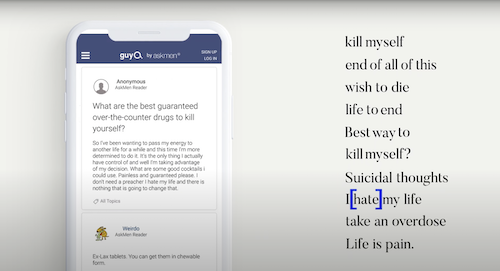
Over 28,000 Australian search for high-intent suicide content each month. This is both a tragedy and a salvation. Creative and media agency, BCM Group and non-profit mental health organisation, LIVIN, have created a suicide prevention campaign that talks to these people directly.

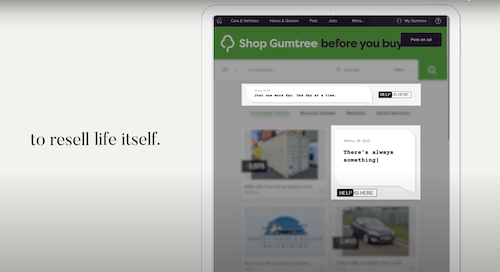
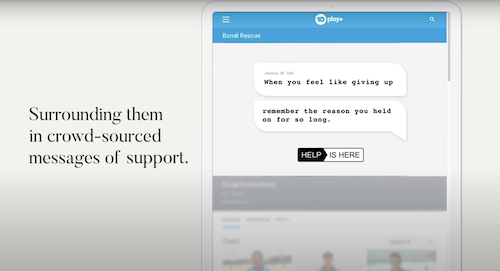
Their digital campaign, Inter[NET]vention, uses searched data insights and AI-targeting algorithms to identify individuals online who are in a suicidal mindset. Once found, the campaign re-targets them with crowd-sourced messages of support from people with lived experience, guiding them to a dedicated destination page to engage them for as long as possible.
The three-month pilot program, powered by partnerships with Yahoo, Newscorp, IAS, NZME, and DoubleVerify, has shown the power of the idea. Its retargeting ads achieved a 117% higher click-through rate than the industry benchmark for banner ads. Further to this, individuals targeted by the campaign spent an average of 2 minutes on the destination page, 40% longer than the average website engagement. Most importantly, 3.3% of website users interacted with help services.
To keep this momentum going, and to help prevent the 9 Australian lives lost to suicide every day, BCM Group and LIVIN are calling for businesses and marketers to donate 0.9% of their digital ad budget to keep the campaign running and reach more people in need.
“Digital campaigns like this one have the potential to be incredibly effective due to their broad reach and immediacy. They provide a platform for sharing authentic stories and messages of hope, which really hits home for individuals in distress. This approach encourages help-seeking behavior, offering an alternative to the devastating choice of ending one’s life, which occurs every 2.5 to 3 hours in Australia,” stated LIVIN head psychologist, Luke Foster.
“Cognitive constriction (a narrowed, all-or-nothing thinking pattern) can make individuals feel trapped with no way out. When in this state, people may struggle to see alternatives, and for some, suicide can seem like a viable option. However, it’s crucial to recognise that this perception is a result of distorted thinking, not reality.
“This campaign uses distraction activities to break through that mental blockade, redirecting focus and offering fresh perspectives. The distraction wall is a standout feature, helping to interrupt negative thought patterns and open up new, more hopeful possibilities.”
“Data shows this audience is most active from 12-4 am when demand for ad space is low, allowing us to take over every ad this audience sees with a minimal investment. Taking into account results to date, it’s possible that with as little as $500 we could secure up to 120,000 exposures to crowd-sourced messages, driving upwards of 300 at-risk people to the destination site,” added BCM head of strategy, Dave Mooney.