The world is watching a US election with trepidation. One of the candidates does not know where the “gutters” are when it comes to either his behaviour or vendettas and one of his favourite vendettas is US migration. That candidate’s previous term as US president began his process of expelling migrants. He has promised that it will continue.
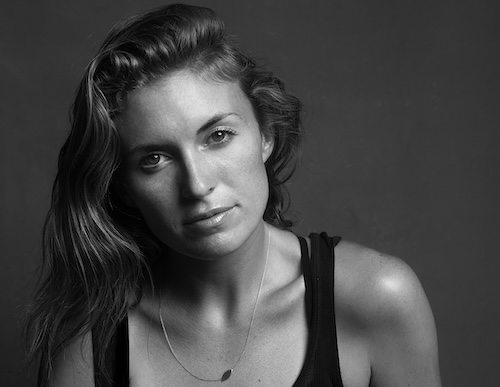
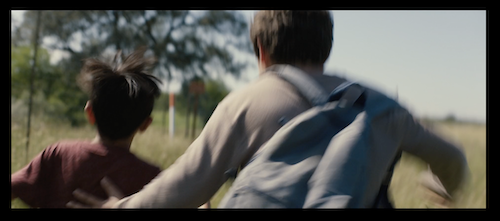
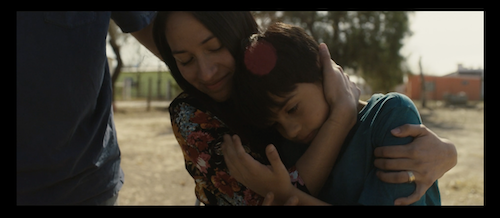
Director, Rachel McDonald [represented by Biscuit, Asymetric, Rabbit, TPFilm], has created a short film, Hermanos, that reveals the atrocities happening at the US border. It is deeply personal and socially relevant. The film has already had its first big win – at the world’s most important showcase for filmmaking craft, Ciclope. McDonald is also a commercials and music video director, with a large haul of awards acknowledging her expertise.
Niccolo Montanari, editor-in-chief at Curation Hour and founding member of Berlin Fashion Film Festival and conero film + adv, interviewed McDonald for The Stable, exploring the film’s importance and how it adds fuel to the calibre of her commercials work.
What inspired you to portray this particular story, and why did you feel it was essential for you to tell it?
Rachel McDonald: The story of Hermanos is really rooted in an emotive place. Back in 2019, I was watching news coverage of families being separated at the US-Mexico border. One specific story that really hit me hard was about a father and his young daughter who had died tragically in the Rio Grande while crossing. That image haunted me, and I couldn’t shake this feeling of helplessness and outrage. These were families risking everything to protect their children only to be met with incomprehensible cruelty. I wanted to make their stories known but only in a manner which would emphasize their humanness and strength rather than being reduced to statistics and headlines. It means a lot to me that I’m sharing stories which highlight our common humanity. Hermanos felt like a way to honour these families but at the same time put a stake in the ground for compassion around our immigration policies.
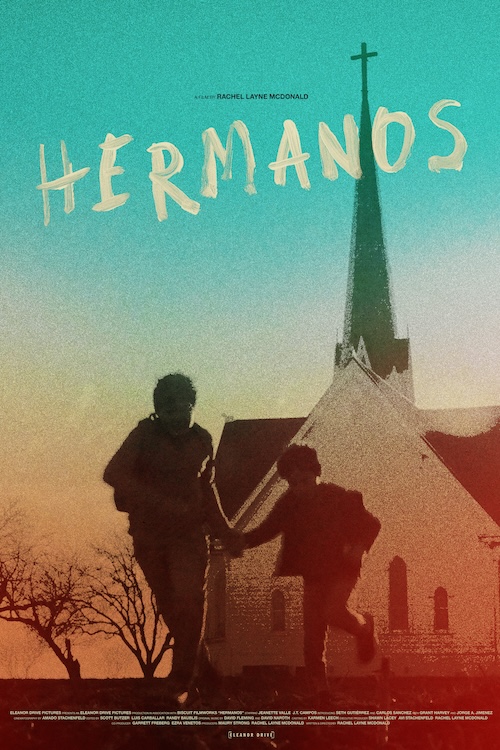
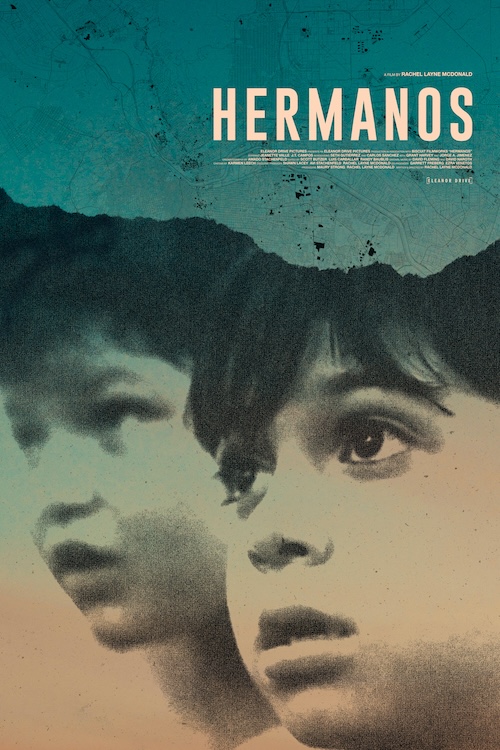
Hermanos focuses strongly on the bond between siblings in the context of the horrendous circumstances and immigration policies. Why was it so important for you to centre this film on the importance of family relationships, and how does it reflect the broader immigration narrative?
Rachel McDonald: Family is one of the most common experiences we all share. Regardless of our origin, the bond that we have with our loved ones perhaps makes up the strongest force in our life. By focusing on the sibling relationship in Hermanos, I wanted the audiences to be reminded of that simple truth – these families are a lot like ours. They are parents and children, brothers and sisters, all doing what they can to stay together and protect one another. In having the centre of the story be about the brothers, I really hope to show the emotional stakes of the immigration policies in a very personal manner. This is representative of the greater immigration narrative because it can show that, at its core, immigration is not just a political issue; it’s a human one. Among the many painful aspects of the crisis at the border, only some were the separations of families. I wanted that heartbreaking reality to be impossible to ignore in this story.
You began working on Hermanos in 2019, completing the post-production in 2020 during lockdown. Did the constraints of that tumultuous period impact the storytelling and overall direction of the film in any unexpected ways?
Rachel McDonald: Lockdown definitely shifted things for Hermanos in unexpected ways. When I started writing it back in 2019, I felt this searing urgency to get the story out into the world as quickly as possible, especially with all the news emerging from the border. Then the pandemic hit and post-production ground to a halt. That feeling of urgency had to be put on hold. I believe that time spent during the Covid-19 pandemic allowed me to reflect even more on the emotional depth of the story and how we are all so fragile. The future is unpredictable for all of us, and everyone needs to have more compassion for those less fortunate than ourselves.
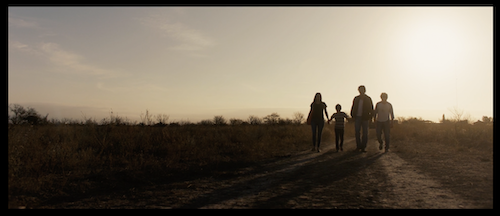
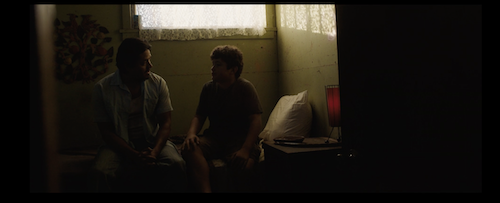
Your body of work includes commercials, music videos, documentaries, and narrative films, with global campaigns for major brands like BMW, Mercedes, Ikea, Toyota, and many others. You’ve earned recognition from Cannes Lions, Webby Awards, LIA Awards, and several other prestigious platforms. How do you navigate the balance between your independent creative projects and your work in commercial directing?
Rachel McDonald: I find it crucial to keep my independent creative projects ongoing otherwise my creative fire will dim It’s always finding the balance between that independent creative work and the commercial work. I’m grateful for both opportunities to express myself creatively. Commercial directing allows me to flex a different set of muscles. It’s fast-paced, collaborative, and usually comes with its own set of creative constraints. Within those boundaries, though, there is always room to bring something personal or artistic to the table especially in the way of storytelling and visual style. In contrast, my personal projects are where I delve into the stories that hit so close to home or tackle social issues that I hold dear, such as Hermanos. This is all about finding projects that get me going, both commercially and creatively and challenge me to grow as a storyteller. The discipline of commercial work helps me stay sharp and resourceful and it has given me the opportunity to collaborate with so many wonderful and talented crew members.
As the US 2024 elections approach quickly, immigration policy is at the forefront of political discussion. What conversations, thoughts, actions and feelings do you hope Hermanos film will ignite, especially given the current political climate?
Rachel McDonald: I hope Hermanos reminds us this is not just a policy debate. We are discussing topics that affect real people and real families suffering, literally gambling everything to make a better life for themselves.. As we near the 2024 election, immigration is without question at the forefront of discussion, and I hope Hermanos does something to shift that conversation back towards humanity. It’s so easy to get lost in all the political rhetoric, but when you see it from the view of a family, on a brother who just wants to protect his sibling, it’s no longer about statistics and just simply impossible to ignore.
Congratulations on Hermanos being a winner at the 2024 Ciclope Festival for Best Short Film. What does this recognition mean to you as a director?
Rachel McDonald: It is a great honour to be recognised by the Ciclope Festival, knowing the calibre of talent they had in their competition. This recognition is important to a director in that it simply vindicates our work, showing it will have resonance extending beyond the immediate production team involved. For me, it’s about the reach to a broader audience more than the accolades. It’s about ensuring that Hermanos reaches more people. The more viewers the better the chances of it having a greater impact and hopefully reigniting humanity around this topic. Meanwhile, I am proud of the entire team who worked without tiring to bring this story to life through an independent film. Being one of the winners at Ciclope honours that hard work and dedication, too.
Rachel’s finesse as a teller of stories is highlighted in the awards her short films have won. These include Thirst, starring Melanie Griffith, that made its world premiere at the Locarno International Film Festival (2014) and won at the Emerging Cinematographer’s Awards. Her Behind the Post film for the One Love Foundation earned multiple awards including a Silver Cannes Lion and continues to be used as part of the organisation’s curriculum for recognizing and preventing relationship abuse. Her documentary short, Dancing Warrior is making its world premiere at Mountain Film Festival in Telluride (2024). The film follows a Lakota youth horse racing team as they support each other and compete in the traditional sport of Native American relay.