The Stable: Why photography? What is the passion for you?
Cory White: That’s the impossible question to fully answer. Some things just happen organically and intuitively. I know it’s photography for me because every day I need to take photographs.

TS: What do you think makes you stand out as a photographer?
CW: In reference to standing out, I think that’s near impossible these days. That place is held for a very small group of incredibly talented people who have a gift that 99% of us don’t possess. Ask me that question if I get signed by Magnum one day and I’ll have an answer.

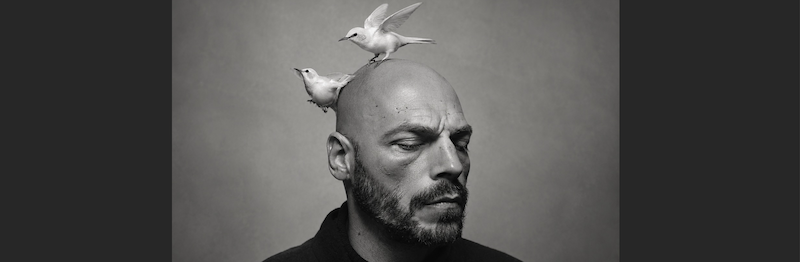
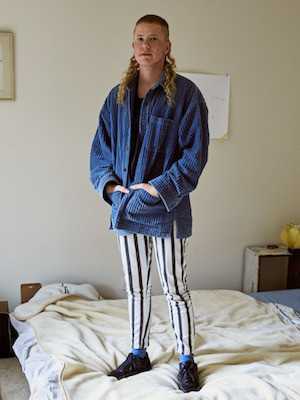
White did stand out, however, when he took his book to The Monkeys. The agency commissioned him immediately for a series of portraits for its Everyone Matters campaign for Australia Post.
“Working with the team at the Monkeys was refreshing,” White notes.
“They are willing to take risks and have a crack and that’s exciting as a photographer. They were also totally supportive and into my ideas and have worked really hard to protect the creative concept, which is really reassuring.”
As you’d expect from both White and The Monkeys, the work is not the usual fare.
“Newsflash, we were not in the game of doing the ‘matching luggage’ stills to TVC thing, so that was a huge coup. And full credit to the creatives for such a great and humble idea. I side-stepped the TV creative and created a suite of stand-alone portraits – about thirty-five in just three weeks around the country, that offered up a visual pastiche of modern Australian portraits with a no frills style. Despite the restrictions of time and budget, we hit the ground running and with a researcher on board. I made a ludicrously exhaustive wish list of subjects that we managed to find and photograph.
“I was shit scared that we’d come under scrutiny for not representing and underdelivering the everyone part, so I tried my hardest to build the suite with integrity. And a touch of comedy.
“There were numerous standout shots in the mix. For example, Mayan, a brilliant and warm young Sudanese fella who just graduated from his Psychology degree. Mayan moved to Australia over 10 years ago with his aunt. He spent the next seven years from age 12, negotiating the Australian immigration system just trying to get his mother into the country to live with him. In answer to your previous question, this is why I photograph.”



TS: What is the best thing that anyone has said about your work?
CW: Recently I had a creative director tell me that he liked the authenticity in my imagery and that my work is brutally honest. I think what he meant was that I don’t use tricks, or unnecessary post to make a shot work. Every time someone hangs a print on their wall or commissions me to shoot a campaign that’s the best compliment.

TS: Of all your work, what pieces are the most important to you and why?
CW: I recently revisited some portraits of indigenous musician, Geoffrey Gurrumul Yunupingu, that I photographed a few years ago. He passed away recently and after seeing the documentary about his life, it reminded me how insanely privileged I was to photograph him in such an intimate setting. He played the guitar and sang for us in an old mansion in St Kilda and it sounded quite other-worldly. It’s taken me years to realise I should print these portraits and hang them.
However, at risk of sounding twee, frames I shoot of my family will inevitably be the most important. And that’s the thing with photography, it’s a flattened incarnation of a moment in time that can’t be repeated but can be kept.

TS: How has your style and/or work changed as you’ve matured as a photographer?
CW: I’d say I’ve been searching for slower more simple and atmospheric shots. Images that happen in an instant but require more thought and premeditation. Observational photography favours patience but relies on being able to see things quickly and to hunt. It’s really exciting work. I feel like it has positively affected my portraits too. Maybe I took a while to realise that the moment you take a picture should be the end of the process, not the start. I’ve got so much to learn about documentary and observation though. And I’ve definitely gotten more obsessive about richness of colour too.

TS: What’s your best kind of working relationship?
CW: I don’t like too much creative freedom. It’s confusing and I prefer to have to have parameters to give something motivation and direction. If the creatives trust you and rely on your experience and craft, then you know the shoot’s in a good place. If communication is direct and honest, the better the shoot, ut that’s all obvious stuff. I like to use street cast or real talent as they are called, as my commissions don’t really suit traditional agency models.
I rely on my crew for sure. I have a bunch of A-grade assistants who pretty much do all the hard yakka. Let’s be honest. But you have to look after your people, pay them as much as you can afford, give them super, and hope they still want to have a whisky after a shoot. If you are still friends outside of work with your crew that’s a pretty good sign.

TS: What projects are you currently working on?
CW: I’m currently working on a couple of ongoing personal projects that I hope to publish next year. One is a book project that centres on where I live near the bay in Melbourne. Loosely, it’s an exploration of the remnants of the nostalgic suburban existence told through observations and portraits. I’m shooting it all on colour film, which is a really nice way to slow the process and listen to big old camera make sexy noises.
I also recently made the leap into Leica M territory for my observational series. I’d avoided it for years but finally caved. So now I have a camera on me at all times that’s not only my new favourite tool but a bloody beautiful design object in its own right. I can’t imagine shooting observational work without one now. I’m also about to release a small zine of street images I shot in Tokyo during a snowstorm, so street work and observational documentary is definitely important to me right now.
I’m constantly negotiating how my craft might allow me to do something positive somewhere, somehow, some day soon.

White is represented by The Kitchen Management. View his portfolio here.