Michele Aboud has had a remarkable career as a portrait, beauty & fashion and lifestyle photographer. In recent years, she has applied the same meticulous attention to detail that goes into her photographic work into developing her skills as a director.
Aboud’s photograph of Baz Luhrmann is part of the National Portrait Gallery of Australia collection.
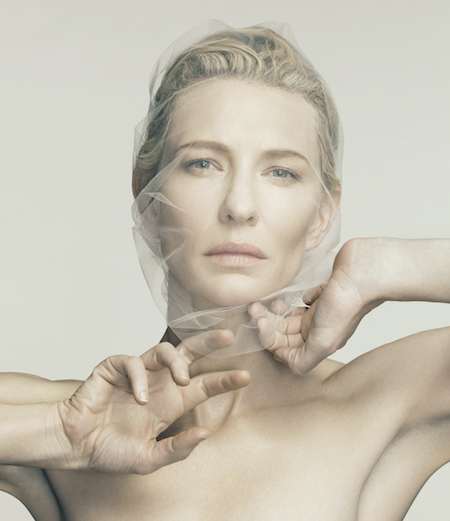
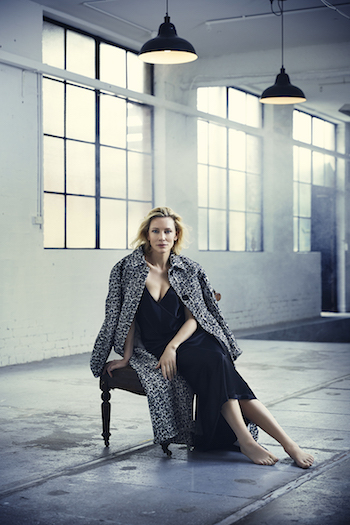
She spent hours with Deborah Harry (no minders) and her dog shooting for the ASPCA in famous diner, Florent, in the Meat Packing district of NYC and has created one of the most iconic images ever made of Cate Blanchett for the Sydney Theatre Company.
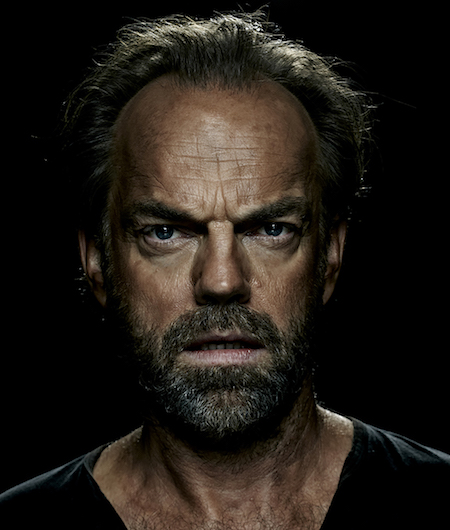
She has also been commissioned to shoot Deborah Harry, Cate Blanchette and Hugo Weaving. She was a finalist for the National Portrait Gallery Canberra Photographic Portraiture Prize in 2018 and the Moran Photographic Prize 2019. Her work has been shown in 22 international exhibitions including The Nelson Mandela Arts for Aids Orphans in Toronto, the Taylor Wessing Portrait Prize, National Portrait Gallery in London and in the Art Gallery of New South Wales in Sydney.
Aboud has worked for more than thirty brands, ranging from L’Oréal, Esprit, Jagermeister, Galliano, Jaguar and Lindt to Marks & Spencer, David Jones, Myer, Levi’s, Paypal and Penguin Books. She has been commissioned by every major agency – Clemenger BBDO, DDB, Grey, Havas, J Walter Thompson, Leo Burnett, McCann, Ogilvy, Publicis, Saatchi & Saatchi, Special Group & TBWA – and nearly two dozen publications, ranging from Harper’s Bazaar, Vogue and Time to Oyster, Rolling Stone and Wired.
Early this year, she was invited to judge the ADC Annual Awards, in its first year as a stand-alone advertising craft awards programme.
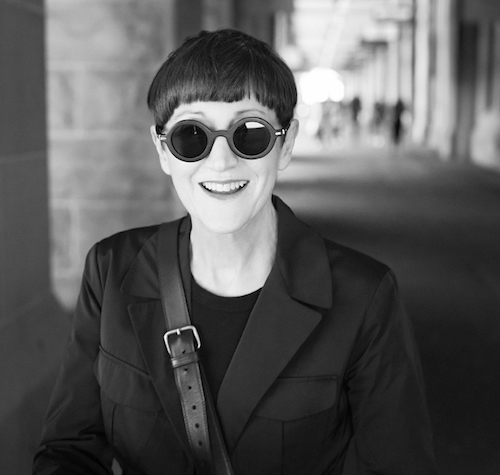
Michele Aboud
Michele Aboud has a very distinctive way of seeing things. It grabs your attention and draws you into her stories. Naturally, my first question to her was “Where does that come from?”
Michele Aboud: If I were to say I was born with it, it would far too simple. I knew during my teens my career would be in a creative field, it was a matter of finding what that would be. So, taking a few steps back from that point, two things prepared me aesthetically. One was electing to study art at high school and the other being shown at a young age how to think laterally to produce an image with a more interruptive meaning, one that makes people stop, look and think. The last point is invaluable and has been a mainstay in my approach to any shoot and now with any film.
The Stable: What did you bring with you to motion from your experience as a photographer?
MA: It’s a given that whatever I do will look great, that’s in my DNA. The purpose of a script has become paramount to me. As an observant photographer, I find it such a natural process to “look around the corner,” so to speak. I’ve spent a near lifetime reassuring people in front of the lens. There is nothing more satisfying than capturing the essence of someone – while keeping a close eye on the quality of light and the flow of the shoot with the client.
BUT, I can make decisions quickly if things need to change. And I know how to get things back on track. That comes with experience (and the wisdom experience brings). At that critical moment, experience knows to “just do it” and don’t second guess.


TS: What are the most important elements of a film for you?
The core of the script, its purpose, is right at the top in terms of importance. Then how the narrative plays out – there needs to be a true connection with the audience. From that place, crafting the emotional story is a considered process. I love how all the senses can be activated through the choice of a lens, time of day, location and post considerations. Editing is also so important. The pace of the narrative can be altered so many ways, a great editor is gold.
TS: What are the most important elements of a shoot? How do you like to work?
MA: Collaboration. That’s what makes a shoot work. Makes it fun. Makes it hum nicely. Then, number one, prep. Number two, prep. And number three, prep. You can’t do enough pre-production. Talent, lighting, location, colour palette, grading, sound etc all come into play. With photography I pre-visual the end result and work backwards ticking the boxes of all details required. I do this with film but editing and sound are two elements that add so much in the post consideration. It’s important to be clear with the shot list, covering off as much as possible, more is more.
The other important element is to feel the purpose of the script. Once you know what to pursue then your direction is clear.
TS: What have you gained or changed as you’ve matured as an artist?
MA: I love where I’m at creatively, still challenging myself, and definitely amping up the output. My passion for what I do is unquenchable. It’s that child-like enthusiasm I’m blessed with.
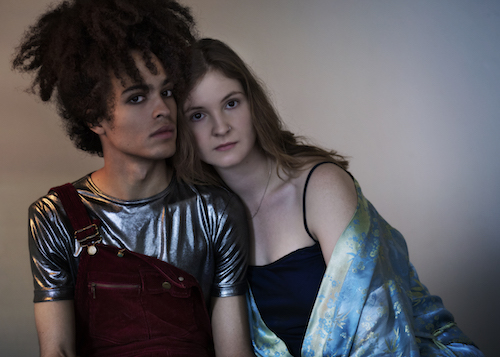
My personal portraiture and my casting is, in a sense now, a spontaneous decision. I’ll see someone I’m interested in shooting, I have a moment of shyness then I approach them, I introduce myself, hand them a card and say, “if you’re interested in shooting with me please let me know”. My world is full of the most interesting teens and 20-somethings, I love hearing how they think and feel. I’m the age of their parents but am completely equal.
TS: Take me behind the scenes of your favourite work
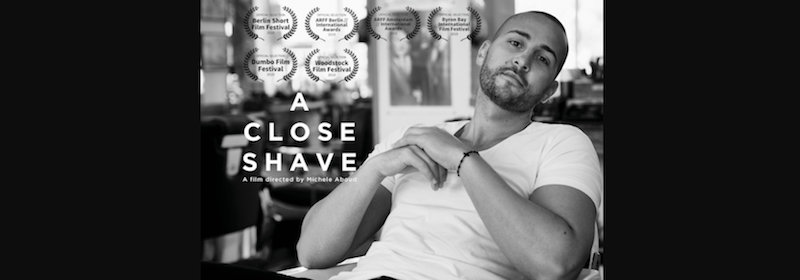
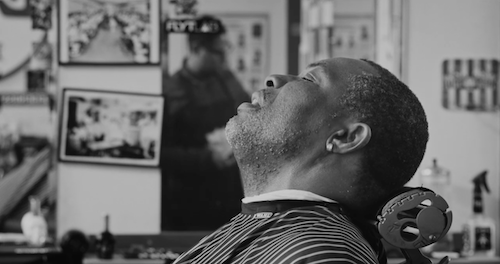
MA: A Close Shave. The question, “Have you had a close shave in life?” evokes a visceral emotional reaction. My film uses this question to provoke meaningful responses from men from very different walks of life.
I used a neighbourhood barbershop as a safe space, to bring in three local clients to discuss their toughest challenges in life, in the most intimate and rawest form possible.
Firstly, the aim was to create a project from a more purposeful place. I regularly travel to a friend’s place in Turella, often by train. TraveLling this way can be inspiring. I love seeing the surrounding environments when looking out the window. There is a barbershop close by, I had a portraiture idea for the clients, but the shop’s interior was too sterile. I started a Google search for a more authentic interior and found Legends Barbershop straight away. I reached out to the owner who agreed to meet, I then put my idea forward. All the time Bruce was just listening and looking at me.
He was into it, great! Location, done! Liza, his wife is the perfect natural producer. Between the two of them, they introduced me to a few of their clients who were willing to be involved. At this time, the intention of the film was to hear how men are feeling within society now. Were they comfortable within their gender “skin”. BUT, as I was walking across Park St in the city, the words, A Close Shave, came to me, wow, it was then so clear what the true intention was, it was vulnerability.

Synchronicity took over. My DOP, Anton Perry, and I work closely together. We decided that not shooting a wide shot would mean that the viewer wouldn’t be let off the hook with comfortable distractions.
We set up three cameras and shot in one take. Only the cutting from one camera to another offers relief from the intensity of the stories being shared.
We had great footage, and then the editing of Christopher Baron from The Hive delivered its magic – the most moving account of how Tracy, Andrew and Josh dealt with life-challenging circumstances. Bruce was there, gently holding them in his chair. And I still feel so much gratitude to all of these beautiful men.
So far Close Shave has been selected by three European film festivals. Amazing!
You might also like