Creativity is messy. It pulls in an array of information bites from here and there to build something surprising. Every creator has their own way of doing that. Commercial creativity also operates within a world of confines, that begin with a strategy, brief and purpose.
Conor Hoey, co-founder and CEO of First Concepts understands all this. He is a creative himself, an artist who could have been an illustrator or a designer had he not turned left into tech at Amazon Fresh. Conor Hoey’s First Concepts is a system that helps creatives get to their goal – that “something surprising” – more efficiently. It organises all the ideas creatives generate, the cultural references that enrich them, the judgement calls made, strategy, brief and purpose…so that these can work together to inform creative projects. Nothing gets lost and it works with a shared context and “taste” framework. There is no need to rebuild from fragmented tools and systems even when working on multiple projects or pitches.
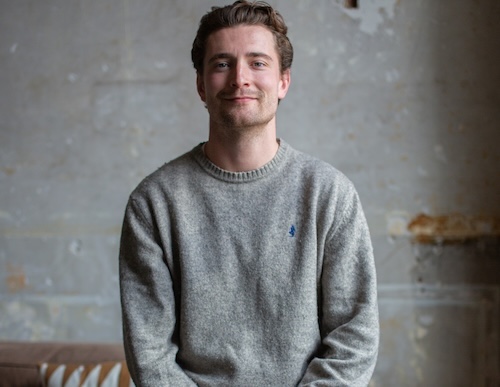
First Concepts began at an Antler residency, where Hoey met his co-founders. An AWS Startup Pitch Competition win followed at the Upscale Conference in Málaga, Spaim. Now First Concepts has US$1m in pre-seed finding led by Araya Ventures, Antler and leading industry angels, plus a roster of top US and UK agency clients.
Hoey took The Stable through the development of this system that helps creativity to be the best it can be.
Where did the idea come from?
Conor Hoey: I was working in big tech for many years, so working with a lot of advertising agencies, internal creative teams, internal brand teams. Even from the outside, I could spot a lot of inefficiencies with the creative workflow. Every new project we did felt like starting from scratch, and every team used different sources of truth to consolidate. I wasn’t looking at it thinking, “I’ve got an idea that’s going to solve it,” at that point in time, but there was a reflective moment at the beginning of last year where the pieces started coming together. The key motivation, funny enough, was more personal. I’m very driven towards working on things that I’m personally passionate about. I’d spent the last 10 years working as a portrait artist and was traditionally trained in fine arts. One of the key insights I had was that you can be really creative and have amazing ideas, but it can be massively constrained based on your proficiency and how well you use the tools. I realised there must be so many amazing ideas that people have, that they just can’t show. So First Concepts was born from those two understandings – how do we try and make it so that people are never constrained by proficiency in use of tools, and also, how do we make sure that creative teams aren’t starting from scratch with every project. It’s the shared brain that gets you started faster and keeps the creative flow intact.
The cherry on the cake was that this thinking led me to leave Amazon to go and pursue it. But as part of it, I was selected to join a VC residency in London called Antler, and through that process, I met my amazing co-founders, Polina Sali, and Marin Godechot, who were aligned to the problem and the idea. Without them, First Concepts wouldn’t have come to where it is. There’s something about the perfect matching of, three individuals that just lights a spark and makes thing happen.
How does it work? What does it do for creatives?
Conor Hoey: Firstly, it’s not another tool. It’s not like, “You’ve got 50 tools, here’s the 51st tool that’s going to solve all your problems”. It’s a deeply enrooted system that lives in your browser across a web app & browser extension. At the beginning of their project, creatives upload their briefs or write about what their project is that they’re working on. From there, it sets the foundation of the project context. So, anytime you’re working around constraints or objectives, which set the foundations for key insights that you might want to concept off, you’re no longer switching between tabs or tools like Google Drive, local files or emails to find that information. It’s ingrained in the browser. It’s like a skeleton structure that translates and moves context, depending where you are on the workplace. So, for example, if you want to quickly whip up a few images on an idea that you had, you can ensure the cultural references and the visual inspiration have been fully analysed and identified. That way, when you’re generating, they remain consistent with not only the visual style, but also the brief that you’re working with.
It’s fully tool agnostic; that was another big thing for us. We didn’t want to force creatives to change the way they worked. They continue to work the way they work. As they do that, everything is being registered and understood and shared with the team. So, for instance, if you are a strategist pulling in some key insight, I’m not waiting for the Wednesday meeting to hear that insight, or that one line in the huge strategy deck to try and figure it out. First Concepts is a central nervous system for creativity, organising all the different tools and all the different workflows being used, and communicating the results as needed. Secondly it champions creative work, especially good creative work. I still sit in rooms with some of the best CCOs and ECDs in the world and see how they work. You’re never going to replace that lived experience, that intuition, that way of piecing together ideas to come up with something that people can understand. First Concepts is a system that can capture that spark in the moment and make sure, as it moves across the workflow, it doesn’t dilute.
You’ve made it sound easy. No creative, no entrepreneurial, process is. What challenges did you have to conquer?
Conor Hoey: So many. So we didn’t tackle everything at once. During development, I spent a lot of time speaking with CDs, ECDs, CCOs, to first validate the problem – hear what they were saying, understand where the pain was the highest.
Then the hardest thing to overcome was probably that initial stage of getting something into people’s hands to see how they used it – what kind of validation it gave us. And then, when you can build anything, it’s hard to decide what to build. So, Marin, Polina and I sat down and worked out that creatives are wasting up to 40% of their time managing context and they’re working across more tools now than ever. Timelines have shrunk dramatically, and at the same time, clients are expecting a higher level of output. First, we built the simplest front-end browser extension to validate the problem. It would analyse visual styles, but compared to what we have now, it was rudimentary. Getting that first version out was probably the hardest though. But from there it has kind of felt like momentum builds one after another – we get the product out, we speak to a bunch of creatives, that gives us feedback to build from, which leads to a better product, which then leads to more interest from high-level agencies…
You got some pretty impressive seed funding, so how did that come about?
Conor Hoey: The Antler residency was a massive help. That almost provided us with a blueprint of fundraising and what VCs look for. Initially, we didn’t want to raise that much. We’d set out to do a bridge angel round and we brought in some industry-leading angels. It was looking pretty healthy, but through Antler, we were always talking with VC funds, mostly to keep our name out there for future fundraising. But then on Christmas Eve, I met with Araya, the VC fund that ended up leading a round. Even though we’d hit our target, they wanted to be involved. On December 27, I received an email that said, we love what you building; is there any way we can find a way to get into this round, which we were able to make happen.
What’s now and next for First Concepts?
Conor Hoey: For this year, we’re super focussed on award-winning independent agencies in the US and the UK. We’re already working with some really, really awesome ones. The reason we fundraised was to make some key hires. We’ve already got an offer accepted for a founding applied AI engineer, who will be working on the creative memory layer – the compounding asset that means the more you use First Concepts, the better it gets. That’s the key USP for us. And we’ve found a brilliant product designer so that we can build and scope features faster. The biggest things that we care about are product stickiness, retention, product love, and genuine usage. Optimising those is the main goal for this year.
What does this whole thing mean for you personally?
Conor Hoey: Well I think it’s that I love the work we get to champion and we get to see. I’m a strong believer that some of the creative & advertising campaigns that come out really define and shift culture. I’m massively into films, massively into music, massively into skateboarding – a lot of subcultural communities. I feel like, I get to be in a position that allows me to be in the rooms with the people that are shaping culture. And I feel to some degree like I’m supporting that.
That’s the massive thing for me – not the big exit, nor the money, but the idea of being able to impact culture in an industry, in a net positive way, where you’re making creative lives better.
Cover image by Timothy Dachraoui at Unsplash