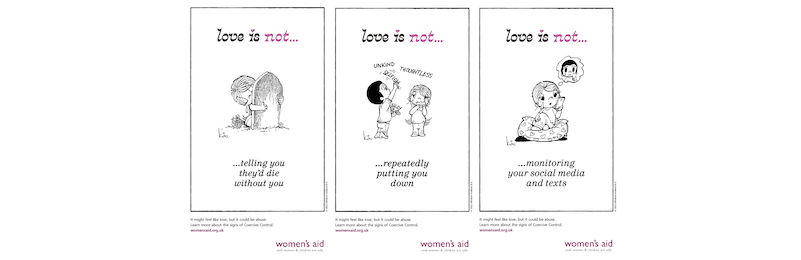
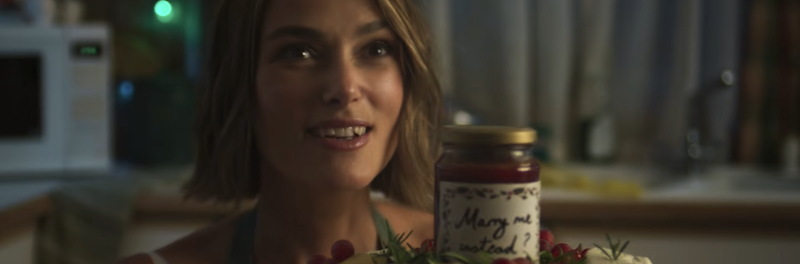
At last, the problem of coercive control has been brought to the fore. It has been quietly damaging women for a very long time. Engine Creative has launched the pro bono campaign, Not Model’s Own, for Women’s Aid.
Coercive control is domestic abuse. It’s a pattern of behaviours used to control, manipulate or frighten another person. It’s a common form of domestic abuse. It is often not recognised.
While coercive control has been illegal in the UK since December 2015, records of offences have been steadily rising. There were 24,856 coercive control offences recorded by the police in England and Wales in the year ending March 2020, an increase from 16,679 in the previous year. Within the first two weeks of lockdown, there was a 41% increase in users visiting the Women’s Aid Live Chat site.
Coercive control is difficult to identify as it is a series of behaviours that build and escalate over time, leaving emotional rather than physical scars. It makes victims second-guess themselves and their experiences as they become dependent on the perpetrator. Common examples of coercive behaviour include isolating survivors from family and friends, taking control of aspects of everyday life such as where someone can go and who they can see and humiliating or degrading behaviour.
The aim of the campaign is to build awareness of coercive control across the UK to help young people understand what it is. Greater awareness and understanding of the behaviours that make up coercive control means that it will be easier to identify, prevent and prosecute.
The Not Model’s Own print and outdoor campaign takes inspiration from fashion advertising and editorial in glossy magazines. In fashion campaigns, the model’s clothing is selected by stylists and the brands worn are name-checked. On first glance, the creative looks like any fashion ad. Reading through the credits reveals the truth.
The campaign will run in women’s magazines and in selected fast-food outlets.
Christopher Ringsell, creative director at Engine Creative, stated, “Drawing young women in with aspirational fashion shots and then letting them realise there is a sinister vulnerability behind the glossy look will hopefully raise awareness of coercive control and help the viewer question anything that does not feel right in their own relationship.”
Farah Nazeer, chief executive at Women’s Aid, commented, “Coercive control can be difficult to identify within a relationship, if you don’t know what the signs are. A pattern of different forms of abuse with wide-ranging tactics can make it difficult to define, when you are being controlled and manipulated by a partner. Perpetrators slowly isolate survivors from support, deprive them of their independence and regulate their everyday behaviour, gaining more and more control.
“This campaign is vital in raising awareness of coercive control to help survivors, and those around them, recognise the signs of abuse. If any of the signs highlighted in this campaign are familiar to you, Women’s Aid is here for you, please reach out for expert support.”
Credits:
Agency: Engine Creative
Creative Director: Christopher Ringsell
Creatives: Jo Moore & Antonia Clayton
Senior Strategist: Katherine Morris
Account Management: Marianne Roberts & Eve Bui
Agency Producer: Chelsea Chapman
Designer: Aaron Pacey
Photographer: Sean De Sparengo
Production Company: Curious Productions
Producers: Lee Sands & Harley Brooks
Hair & Makeup: Helen Asher
Stylist: Annie Swain
Retoucher: Rob Lanario
Models: Isabelle Liddall, Lauryn Bryan & Melinda Aszepesi
You might also like