Adland is beginning to come to terms with the idea that AI and humanity can work together. That AI’s greatest power is unleashed when it’s an ally to human creativity. All of this sounds like a lot of catchphrase clichés that you’ve heard over and over. The industry has been enjoying an orgy of AI conversations all year.
Fernando Machado came to MAD STARS with a session, How Artificial Intelligence and Creativity Can Fuel Innovation. Although the title seemed to promise little new, that was a trick. Machado took a packed room through the riveting evolution of NotCo and how it is using AI and human creativity not just to feed the world with plant-based products but to fulfill founder and CEO, Matias Muchnick’s dream make the world better.
It’s not an ad story but there are both magnificent advertising and brilliant marketing ideas in there. That’s to be expected. Machado, aka “the master of pushing creative boundaries”, is ex-chief marketing officer and now senior marketing advisor for the company.
Let’s begin the story with an understanding of AI’s role. There are 40,000 plant species in the world. That’s 400,000 possible ingredients to make plant-based food. If a company worked with just 1,000 of them, there would be 2.6 x 10²³ possible formulations – more than the stars in the Milky Way or (apparently) grains of sand on Earth. Not possible for humans. Very possible with AI.
NotCo set out from the beginning to replicate (actually improve) all the animal products we love to eat, using plants, reinventing the food industry and reducing the impact of food on the environment. To save the world, undaunted by any challenge, with the mantra #whynot. The mantra stands for NotCo’s mission to always try to do something different, which Machado noted, is what all brands should try to do.
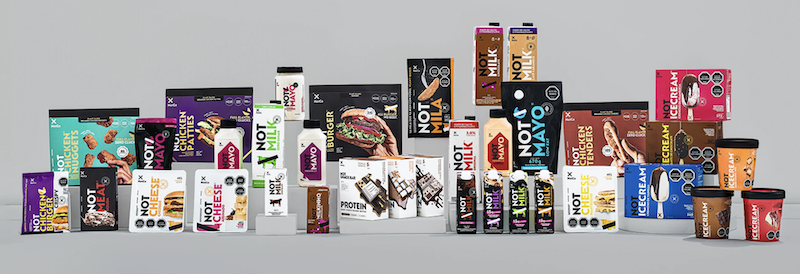
How NotCo’s products are made
So back to the 2.6 x 10²³ possible formulations. NotCo’s AI, Giuseppe, isn’t fazed by this. When he is fed all the properties of an animal food product he is able to come up with five possible formulations quickly. But Giuseppe, like all AIs, can’t taste. This is where humans come in. NotCo’s chefs taste his recommendations and choose one that they give back to Giuseppe. He works out another five formulations and the chefs choose one of these…and so on until a product like NotMilk, NotMayo, MotChicken, NotBurger etc is created. NotChicken was created in just two months and its key ingredient is strawberry.
How does NotCo makes its products better than the originals
Let’s look at protein shakes. YoPro’s is 15% protein (the designated protein level in Chile) but also 19% carbohydrate. Milk (whether cow, oat, almond etc) is made from one ingredient. That limits what you can do with the carb content of the protein shake. Giuseppe and NotCo’s chefs weren’t hindered by the one ingredient barrier. NotCo’s protein shake contains 15% protein and 3.5% carbs. Note: to launch the product NotCo ran a comparative OOH ad (against YoPro) it knew would get banned and would trigger a fine. The fine was built into the marketing plan.
How NotCo is growing from zero market share to market disrupter
Firstly, NotCo is creating partnerships with famous brands, gaining an established audience. Very many of its products are co-branded with companies such as Dunkin’ Donuts, Starbucks, Kraft/Heinz etc. NotCo knows it can’t change the world alone.
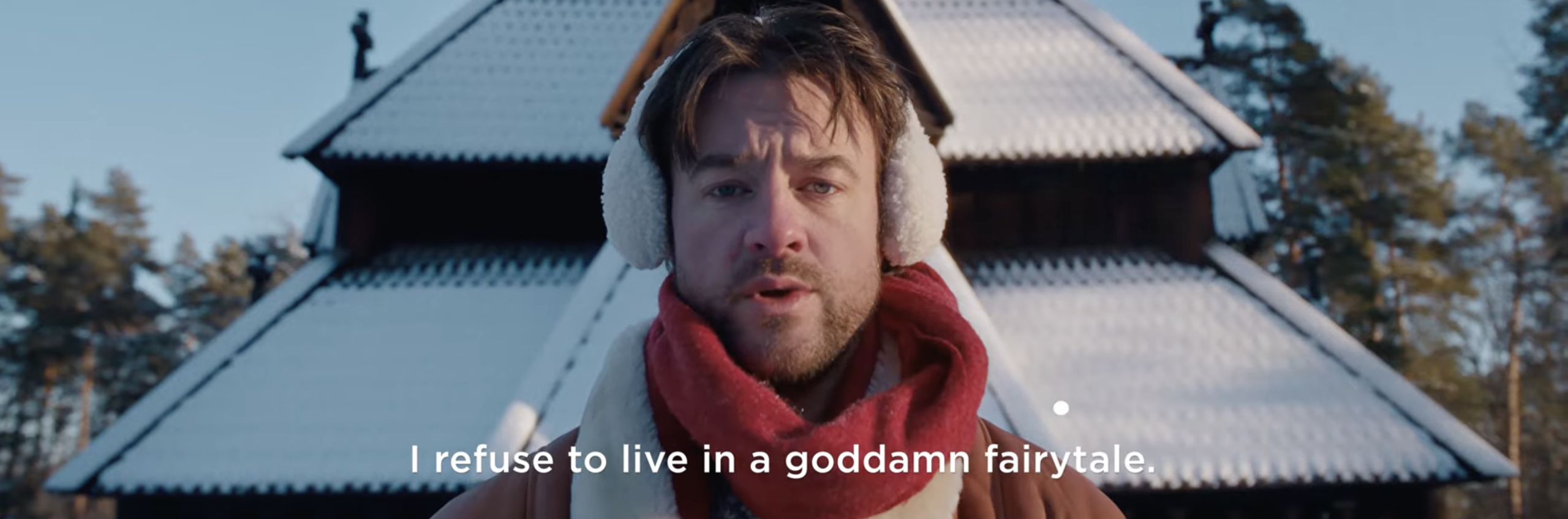
NotMayo is a collaboration with Heinz. But a brilliant advertising campaign did the heavy lifting to launch it. The job was to remove people’s taste bias for plant-based mayo. The premise is, If you hate mayo, you’ll hate NotMayo.
This is the campaign commercial:
What about changing the world?
If replicating the animal-based food we love to eat is not mission enough, NotCo is also undertaking activist work. Here’s an example:
Green sea turtles are endangered but it’s still legal to eat them and they are a food staple in Peru. NotCo set out to create plant-based sea turtle meat, pro bono, to take them off the endangered list. It would take humans 13.2 billion years to work out the “recipe”. It took Giuseppe, working with Its own and Peruvian chefs, 4 days to create NotTurtle.
Here is the case study:
There’s also this, which could not be more direct:
How do you become “a master of pushing creative boundaries”?
Understandably, the first question asked of Machado following his presentation was, “How do you get brave ideas through?” It helps, of course, to work in a company that believes in creativity and has bosses who believe in creativity. But brave work can also be guided. People forget that Burger King’s famous creative work, Machado noted, wasn’t produced when he joined. At first, he fitted in with the company’s focus on short term results and work that wasn’t “disruptive” [apologies for the buzzword: ed]. Machado pushed the work out further and further over seven years. “Ultimately, the Burger King CEO told him, you make us comfortable with not being comfortable.” He also said that it helps to try to understand what makes the other side of the table tick, whether that’s a client or an agency. Talk to that, he advised. Lastly, he added, no matter how “bad” a client is, there is always someone in the company who wants to do good work. Find them, understand their wants and work with them to achieve them.