Black people are three times more likely than white people to be killed by police and 50% more likely to be unarmed when killed (mappingpoliceviolence.org).
Those are horrid statistics. The US has both a gun problem and a fear problem. Courageous Conversation Global Foundation (CCGF), whose aim is to effectively engage, sustain and deepen interracial dialogue, is trying to solve the unconscious bias that is getting black men killed.
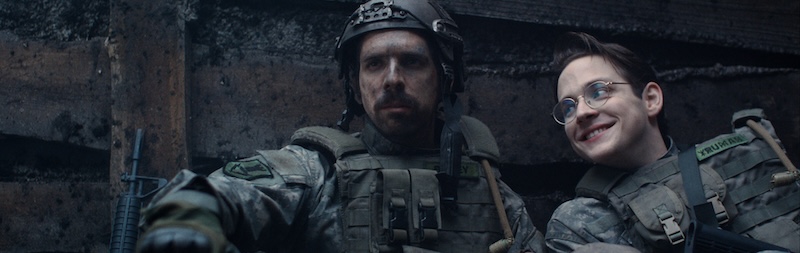
Its campaign by Goodby Silverstein & Partners is called Not a Gun. It’s led by a film, directed by Kevin Foley at Rakish, in which a candy bar sold to a range of people “becomes” a gun in the hands of a black man.
“Unconscious bias towards black people has been problematic among police for such a long time,” stated Glenn Singleton, founder of Courageous Conversation Global Foundation.
“To spark change and to ensure we all get home safely, we either need the police and the community to solve it together, or we need policy change. One way or the other, something has to happen.”
The print and outdoor components recall incidents involving Trayvon Martin (Skittles), Stephon Clark (a cell phone) and Eric Garner (cigarettes). They show picture products such as candy bars and cell phones in the hands of people of colour, except with the twist that the products are labelled with the tag, Not a Gun.

CCGF will also partner with law-enforcement professionals to develop a training seminar called Survival Options for Police and People, geared specifically to improving relationships between police departments and communities. Visitors to notagun.org can sign up for the training as well as sign a petition that encourages more effective unconscious-bias and de-escalation training for all police officers.
“The Not a Gun campaign brings to life the issue of police officers taking black people to be holding guns when, in reality, they’re in possession of something harmless,” stated Rony Castor, an associate creative director at GS&P.
“Unconscious bias is a growing epidemic affecting this country, and we are hopeful that campaigns like this by Courageous Conversation will inspire police and community members to become trained and educated in a way that ultimately changes the narrative, saves lives and makes everyone feel safe.”
In fact, according to the Los Angeles Times, excessive use of force by police has become a leading cause of death for young black men in America.
“For a black man, a routine traffic stop shouldn’t make you feel all alone and make you wonder if you’ll walk away alive,” added Anthony O’Neill, an associate creative director at GS&P. “I’m hopeful this campaign can make an impact where it needs to and save lives.”
The media strategy aims to support transformation in local communities that are rallying behind the change they want to see. The campaign has launched in Austin, Texas, to address existing issues with race after former assistant police chief, Justin Newsom, was reported to have used racial slurs at the end of last year. Local media will run from February 25 to March 22 with placements in broadcast, outdoor, print and digital media.
In addition to the ads, the effort aims to drive unconscious-bias training among police departments. Police officers spend seven times more training hours learning to shoot than learning to de-escalate (https://policeviolencereport.org/) despite the fact that de-escalation training, that is, using all conceivable means other than shooting, results in 25% fewer killings by police officers (https://mappingpoliceviolence.org/).
“There’s an inherent fear when it comes to police and people of colour,” Singleton commented. “It shouldn’t exist in 2020, but it does. I hope this campaign can shed some light on the issue of unconscious bias and spark some fruitful conversation around it. Then we can begin to end the problem completely.
“In talking with police officers, they know there’s a problem of mishandling of force against black people. The only way to solve it is for the community and police officers to come together as one. We are hopeful that Not A Gun will lead to productive conversations, tangible actions, and will help in ending the problem completely.”
The campaign and course were created in consultation with Khalfani Yabuku, a retired Atlanta police commander, and author of When the Thin Blue Line Begins to Blur.
Credits:
Agency: Goodby Silverstein & Partners
Co-Chairmen: Jeff Goodby and Rich Silverstein
Chief Creative Officer: Margaret Johnson
Associate Creative Director: Anthony O’Neil & Rony Castor
Art Director: Malika Reid
Copywriter: Shareina Chandler
Design Director: Ryan Self
Designers: Tana Cieciora, Tiffany Zaporteza & Lorenz Ortiz
Director of Business Affairs: Judy Ybarra
Associate Director of Account Management: Jenna Duboe
Account Manager: Emily Kelly
Brand & Communications Strategists: Bonnie Wan, Christine Chen, Madison Cameron, Matt McNamara & Nancy Parrott
Director of Production: Leila Gage
Agency Producer: Molly Troy
Website Production: GS&P Labs

Production Company: Rakish
Director: Kevin Foley
Executive Producers: Brad Johns & Preston Garrett
DOP: Mike Gioulakis
Editing: Biff Butler @ Work Editorial
Audio and Sound Design Company: Joel Waters @Lime Studios
Music Sound Design: Dary Barclay
VFX Company: The Mill
Executive Producer: Fawn Fletcher
Senior Producers: Anita Emor & Katie Buckley
Colourist: Matthew Osborne
Client: Courageous Conversation
Founder &President: Glenn Singleton
Director of Government & NGO Partnerships: Courtlandt Butts
Executive Director, Courageous Conversation Global Foundation: Andrea Johnson