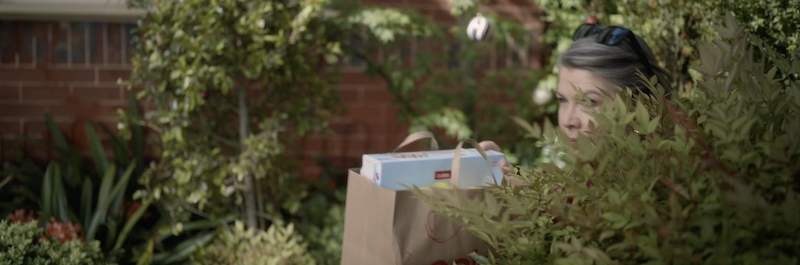
There’s a numbing effect that comes with repeated exposure to the same message. A lot of domestic abuse campaigns have created a road most travelled. Domestic abuse is still unsolved. All hail to House 337 for this campaign.
The agency realised that it had a powerhouse of striking comparative statistics to use. Women are over three times more likely to be killed by a partner than by not wearing a seat belt, for example. And they are 50 times more likely to be injured by their partner than in a house fire and are twice as likely to die at their partner’s hands than from smoke or gas inhalation.
At least one woman per week*, on average, is killed by a male partner or ex-partner. But unlike these other life-threatening issues, people don’t understand the scale of the problem because it happens behind closed doors. Only one in five Britons believes that the scale of domestic abuse in the UK exceeds that of car accidents or house fires.
So House 337 built these two “everybody” emergencies – a car accident without a seatbelt and a house fire – into The Ignored Emergency, its campaign for UK domestic abuse charity, Women’s Aid.
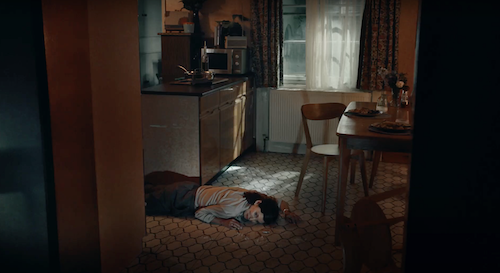
The campaign leads with two frightening films styled like classic safety videos. The shock is that they juxtapose known dangers with domestic abuse. We’re taught from a young age how to keep ourselves safe from fires and accidents, but there are no public broadcasts about a problem that is killing women weekly.
The campaign aims to raise funds for the life-saving services that Women’s Aid provides.
Sarah Hill, chair of Women’s Aid,stated, “Even when their lives are at risk, financial barriers make it impossible for many women to escape abuse. It can cost over £50,000 for a woman to leave an abusive relationship safely. We recently estimated that at least £516 million is needed to ensure that all women and children have access to specialist domestic abuse services. Domestic abuse must be recognised as an emergency. We need to help society see it for what it truly is, which is why we’ve repurposed the familiar format of a public safety campaign to spotlight the horrifying statistics: women are more unsafe with a partner than unbuckled in a car or sitting in a smoke-filled room.”
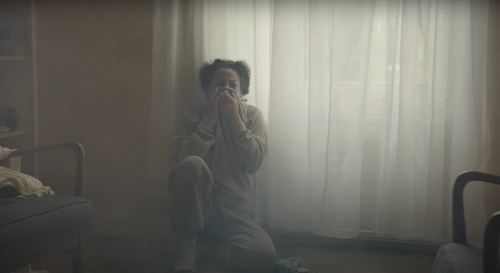
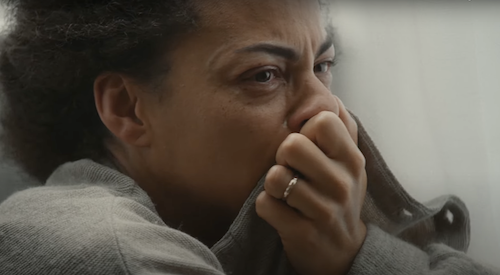
“In emergencies like fires or car accidents, strangers and emergency services rush to help, often risking their own lives. But for women facing domestic abuse, just being believed is often only the first step. Help too often doesn’t come—it’s terrifying, isolating, and the truth emerges only when it’s too late. For many, it remains out of sight, out of mind,” added Louise Canham, associate creative director, at House 337. “We know the statistics are shocking. But as humans, we often feel a deeper connection when confronted with the harsh reality firsthand. When we compare it to something universally horrifying, like a fire or a car accident, the gravity of domestic violence against women becomes impossible to ignore.”
The films were directed by Emma Brandershorst, known for her work on social themes from a female perspective. Her 2022 short film, Spotless, highlighting period poverty, won a number of awards, including the Berlinale’s Krystal Bear, Cinekid’s Best Short Film, Gold at the Young Director Awards, and the Grand Prix at Regard, qualifying it for the 2023 Oscars. Branderhorst was produced by The Corner Shop – the BAFTA and Emmy Award Winning Production female and minority run studio.
Emma Branderhorst commented, “As a female director, I feel a deep responsibility to use my voice. Partnering with Women’s Aid, we’ve created films that confront the harsh truth: women in our society are still not safe, a reality underscored by recent setbacks in women’s rights. Through scenes like a burning house or a car accident, we immerse viewers in the immediate urgency of an emergency — moments everyone recognises, where help arrives without question. Then comes a stark shift: we reveal that these women live in a perpetual state of emergency, yet help never comes. With these films, I strive to contribute to a world where domestic violence is no longer tolerated and women can feel safe. As a director, I bring urgent issues to light and challenge people not to look away.”
The full campaign covers online, digital OOH, radio, social, press and influencer. The digital OOH will be displayed in major UK cities, including London, Birmingham, Nottingham, Glasgow, Dundee, Southampton, and Manchester.
Credits:
Client: Women’s Aid
Head of Media, Brand & Relationships: Teresa Parker
Communications Manager: Katrina Kelly
Senior Communications Officer: Abbie Carr
Senior Media Relations Officer: Sophie Ward
Creative Agency: House 337
Chief Creative Officer: Josh Green
Creative Director: Chris Ringsell
Associate Creative Director: Louise Canham
Senior Creatives: Holly Fallows & Charlotte Watmough
Creatives: Indi Morland & Caitlin Chakraborty
Senior Designer: Marina Supernova
Chief Growth Officer: Lucy Freedman
Deputy Head of Account Management: Kat Thompson
Senior Account Director: Marianne Roberts
Account Manager: Siena Singh
Strategy Director: Roz Hurst
Senior Strategists: Kathryn Loosley & Abbey Gaunt
Senior Producer: Laura Melville
Project Director: Chelsea Chapman
Editor: Bradley Morey
Production Company: The Corner Shop
Director: Emma Branderhorst
DOP: Myrthe Mosterman
Executive Producer & Founder: Anna Hashmi
Executive Producer: Tess Mitchell
Producer: Anastasia Liasi
Editing: Work Editorial
Editor: Louise Robinson
Assistant Editor: Miles Watson
Producer: Lola Cookman
Post-Production: No.8
Colour: Matt Turner
Sound: Sam Robson & George Castle
Flame: Leanne Pletersky
Producer: Ciara Roche
Executive Producer: Ollie Ireland
PR: MHP & Mischief
* ONS, Office for National Statistics (ONS) (2023b). Domestic abuse prevalence and victim characteristics, England and Wales: year ending March 2023.