There are many reasons why people would hate advertising. The first, as Nick Jamieson, executive creative director of Melbourne agency, Taboo, notes, is that “most ads are a little bit shit. The second is that “there are a lot of them in a lot of places”.
“In the traditional space, it’s rare to come across the really good ones and the public is becoming desensitised,” he continues. “They’re bombarded with so many messages that people are just not wanting to tune into a lot of the stuff that’s out there.” These days, they don’t always have to. So, creating an agency “for a world that hates advertising” is very logical. That’s what Taboo is. It bills itself as advertising for people that hate advertising. What is advertising for people that hate advertising? At Taboo, it’s work that people “genuinely want to be part of.”
 Nick Jamieson
Our conversation continued like this:
Nick Jamieson: Organisations spend a lot of money for the right to tell their message to an audience. That’s a one-way dialogue, an organisation talking about itself. And what that does is kill value for the recipient of that message. We think that’s a bit of a self-centred approach and not as effective a form of communication as it could be. Even if it’s as simple as word of mouth, getting someone to talk about your brand rather than just regurgitating a brand message, works better. Our internal mantra is ‘what a brand does is more important than what a brand says’ – which for us is about creating meaningful actions for brands that people actually want be a part of and participate in. And while we don’t dismiss traditional advertising – we use as it as part of the bigger campaign to amplify what we’re doing – it’s not what our clients come to us for.
The Stable: Before Taboo, you were a creative director within a multinational group – at Clemenger BBDO. What do you love about being in an independent agency? What do you miss?
NJ: I had a lot of great opportunities at Clemenger. I got to work with some incredibly talented people and I think that’s probably what I miss most. Great people are one of the most valuable things you can find at work. When you’re working long hours on long projects you form pretty close relationships – relationships a lot like family. I guess what I don’t miss are the layers and all the red tape. The beauty of being in a place like Taboo, or I expect any independent agency, is the freedom of being able to flex your creativity and get your ideas out into the world faster. We’re briefed to make work, we’re not briefed to sit and spin the wheels because of X, Y and Z and I think that’s a bit of an issue with agencies that are owned by a group or have more people to say no, more people to ask why. Within my first six months at Taboo I’d put out more work than I had in the last year at Clems. It was refreshing to get the creative muscle working again – to create and make, which at the end of the day, is why I’m in this business.
The Stable: Indies have challenges though?
NJ: The main challenge lies in not having big cushy retainers to sit on. You have to fight to survive. There are not boards and boardrooms full of people that have your back. At the same time, that challenge is also an opportunity to learn about being smart with our ideas. Being an independent agency keeps us accountable for our creativity; it keeps us hungry and honest with our clients. We have to fight for our ideas – and the campaigns we make have to work. If they don’t, then the clients are not going to come back to us.
TS: Creativity took a bit of a beating last year. What do you think Australian advertising creativity is up against?
NJ: People are pretty cynical these days and cynical audiences are always tough for creativity. People’s ability to suspend their disbelief has reduced. They’ve lost touch with the magic of creativity, and now more so than ever, are quick to pull it down and nit-pick it. There’s also a financial constraint right now. Brands are being held more accountable for things. They can’t be so frivolous with how much rope they give creativity. Consumers are harder to get to, so creativity has to work harder.
Taboo creates a lot of products. There’s Fragrant Disregard, Mood 01 & Mood 2. Mood 1 is “sharp, mysterious and dark”. Its message is that “no one should force you to be someone you’re not, including yourself. But that doesn’t mean you can’t project a raw, unbiassed image of your narcissistic tendencies in a vapour that speaks out in all foul languages.


There’s The Dark Truth absinthe, “A decadence, a muse, a symbol, a scourge. No drink was ever more taboo. Consumed by artists, mavericks, rebels, geniuses and provocateurs, it made Hemmingway earnest and Oscar wild. Taboo’s Dark Truth has been imbued with powerful magic designed to loosen the lips and open the mind. “The Dark Truth is what we find when we’re brutally honest with our clients, our consumers and ourselves,” stated Reece Hobbins, Taboo director of brand development & innovation.

TS: Are the Taboo products self-promos?
NJ: As an independent agency we have the luxury of freedom. Aside from our clients, we don’t have to answer to anyone. We feel that our products are an extension of our creativity as well as a way to get our brand out there in a way that’s a little bit unexpected and a little bit different. We encourage our people to be entrepreneurs and have side hustles and bring that spirit to the table when they come to work. We have an incubation department so the products are also creative outlets.
One product, the Supafish bar, which began as a carpe diem when a tender opportunity for a floating bar on the Yarra River came up, evolved into a PR campaign for Taboo’s clients as well. [Read the case study here.]


TS: What does work for people who hate advertising look like?
NJ: There are two campaigns since I’ve been working here that stick out. The first was the most fun I’ve had in my entire career, Bring Flavour to Bland.
It was for CUB’s Chicago-based craft IPA, Goose Island. The idea came from the insight that if you’re into big flavours, you’re probably ready for this full-flavoured IPA. The brief was to win earned media. We had a tiny budget for production and nothing for media. So, we had to think outside the box. About a 6-hour drive from Melbourne outside the box. We found a town in the least flavourful part of Australia in which to launch the beer, the Shire of Bland. Bland is in the middle of nowhere, halfway between Sydney and Melbourne. Working with the Bland Council, we asked Australia to help us to bring flavour back to Bland. That began with a plea to Aussies in the form of a video featuring the people of Bland, sent out on social media and to all of Australia’s news desks. It got picked up by nearly every news media including an interview on The Project and basically went viral.
Then Scott Morrison saw the video and posted his own via Twitter announcing he was going to send the Shire his personal Sri Lankan curry recipe. He’d literally just stepped out of a drought relief summit and on the strength of our idea promised to send Bland $1m in drought relief funding. Off the back of all the noise, we stepped in and Goose Island threw the shire a Flavour Festival to show the country that Bland officially now had flavour. The best part about it, though, was that no one knew there was an agency behind it.

In the wake of the festival, Bland won a tourism award and the festival is now an annual event. The Shire’s general manager, Ray Smith, is even something of a local hero, touring Australia talking about how local councils can promote themselves. The council is now our client and we’re currently working with it to promote its next festival, Chicken Stock, the biggest chicken festival in Australia.
It was one hell of a tough campaign to run, that’s a story in itself, but the results were phenomenal.
The second is for TAC.
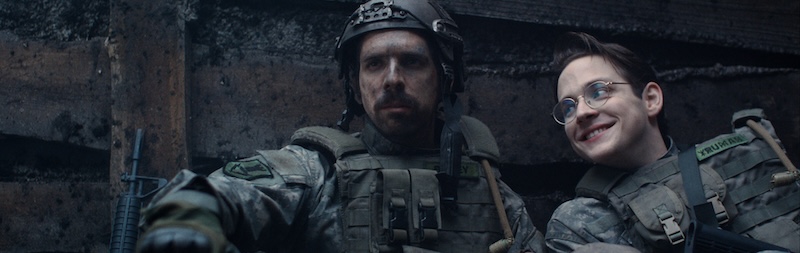
What’s so fantastic about this client is that they truly understand the value of innovative & meaningful creative. We’re incredibly lucky to be given permission to really push the envelope and find different ways to drive behaviour change in Victorian drivers. This particular campaign is focussed on mobile phone use while driving. As part of TAC’s partnership with MIFF, we created a short film competition for 18-25 year-olds called Split Second.
Its brief was to come up with a 45-second idea for a film designed to drive awareness and change behaviour around using your mobile phone while driving.
This is the campaign’s third year and we’ve partnered with production house Airbag for the second time. The winning film gets $50,000 production budget to make their film with Airbag, a director, $5,000 cash and will be screened before every film throughout the festival – that’s 500+ screenings. This is a perfect example of the kind of work we’re known for. It’s providing genuine value to the consumer, it’s non-traditional in its approach and execution and it’s interactive in the sense that we’re giving young Australians a platform to help their career.
TS: What do you love about Taboo.
NJ: As well as the freedom, I love the collaboration. Aside from the geniuses inside the building, we have an incredibly varied network of creatives, producers, directors, animators, story technologists and more who are always ready and willing to jump on a call or get in a room and turn ideas into real things. They’re part of the Taboo family. In bigger agencies, that kind of fluidity doesn’t always happen. It’s really special. It gives me a lot of drive and inspiration.