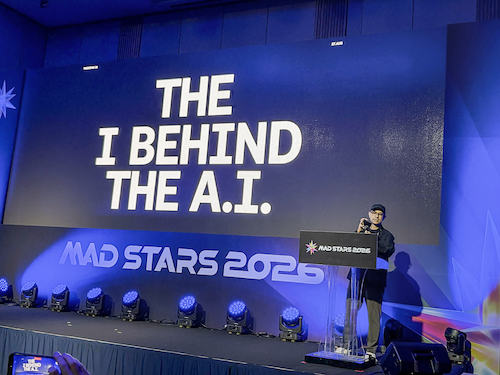
Paulo Mariano is a Brazilian senior art director and creative lead. He works at independent Lisbon agency O Escritório. In 2026, he sat on the MAD STARS final jury in Busan, and gave the festival keynote, The I Behind the A.I., an interesting take on AI. The biggest danger with AI, he says, may not be that it replaces creatives, but that it makes average work easier to produce. A.I., he adds, could stand for “Average I”.
The Stable: What is Average I?
Paulo Mariano: Not Average Intelligence. The I is the first person, Average Me. It is still about intelligence, but above all about behaviour, which is what drives our choices. We have never had so many ways to make things. So why does so much of what we make look the same?
Average is a poison that spreads quietly, in many ways, and now faster. In my essay, The I Behind the A.I., Average I is the result of five behaviours, five threats I found in my own work at different points in my career, each one pushing me towards the middle. I had to name them one by one to make sure I didn’t become them. It’s a warning not about technology, but about how we behave around it: what it does to us, and what we do with it.
The Stable: What is average work in your view?
Paulo Mariano: Average work isn’t work that fails. Average doesn’t look like mediocrity. It looks like competence. It looks like strategy. It looks like speed and, beyond that, it looks like a perfectly reasonable decision. It’s work that passes most meetings. It meets common-sense expectations, and that gives it an absurd amount of power over how we judge and perceive the environment around us.
In a jury room, like the one in Busan this year, you see it clearly: nobody argues against that work. Nobody argues for it either.
There are so many pressures during the development of an idea. It’s nothing new: there are many eyes looking at what we do, including the machine’s. We all look for signs of confirmation. The priority of the Average is to please most of them.
The Stable: What steers work towards average?
Paulo Mariano: Humans are built to like the average. Familiar feels safe. Closing our eyes is not an option. We are in the middle of a process with no way back. I love technology, and even those who don’t eventually get used to its presence. The trouble is that once we get used to something, it becomes harder to see its problems.
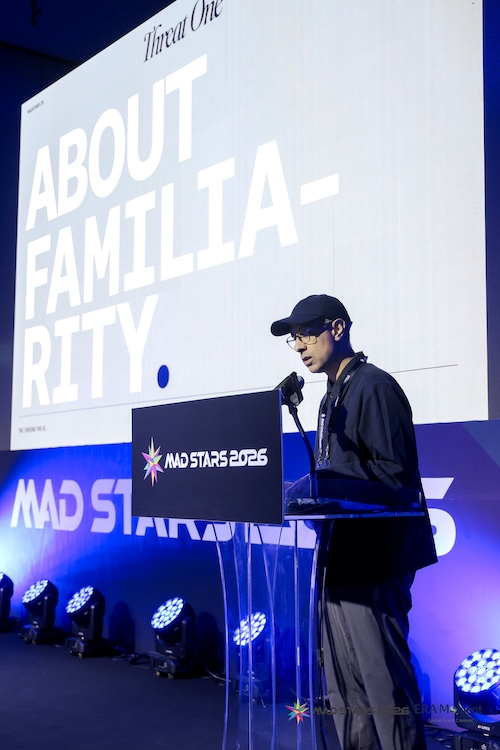
The first threat is familiarity: the Average Incumbent. Most of what shapes your work happens outside your field of vision.
The second is getting used to having only one way to say things: the Average Interpreter. I’m not selling a language course, but we all know that saying something the same way over and over doesn’t guarantee you will be heard.
The third is settling into a single way to make things: the Average Ideator.
The fourth is attention: the Average Inattentive. The Portuguese writer Gonçalo M. Tavares describes a train and a house you pass every day. Above a certain speed, he says, we don’t see less, we stop seeing. Nothing really changed. The house is still there and you are still on the train, but there is speed. Looking without seeing is one of the easiest habits to fall into.
The fifth is time: the Average Immediate. Technology has systematically removed the pauses between wanting, deciding and doing. But as humans trying to create, we need time to doubt, don’t we?
The Stable: What’s the answer to avoiding average for you?
Paulo Mariano: Studies suggest that people who only navigate by GPS get worse at finding their way. It’s a habit. Someone could say: “Hello? Old man, how did you ever get anywhere without an app?” That’s true, and I use it too. But what happens the day we don’t have it?
The problem is not the machine. The problem is the absence of decisions. Don’t accept so easily. Doubt, be curious, disobey your certainties, seek authenticity, and preserve what gives you identity. All of those things require willpower. It’s not a passive decision. It’s hard. Truly hard.
It’s obvious that the market won’t allow you to climb the mountains to meditate, but it won’t sustain average creators either.
In short, seek insights, not outputs. Care more about having an input worth building on, a solid start. Production got cheaper. Authorship didn’t. The craft isn’t in the making anymore. It’s in refusing: the first good answer, for instance. The brain registers the deviation, not the rule.
The Stable: Examples of non-AI work that stand out for you?
Paulo Mariano: Whether it’s AI or not, relevant work has two things: a strong insight and deliberate decisions you can defend. The question is always: why did they do it that way?
Here are four pieces, and the decision that justifies each one being non-AI.
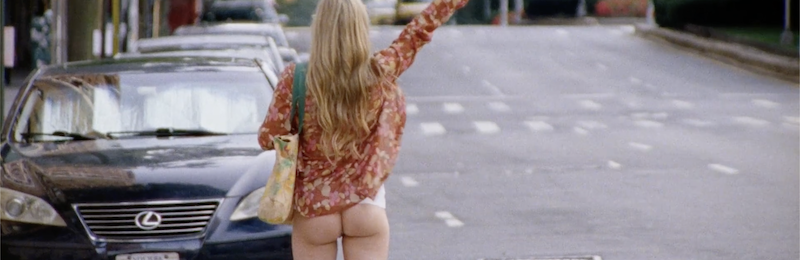
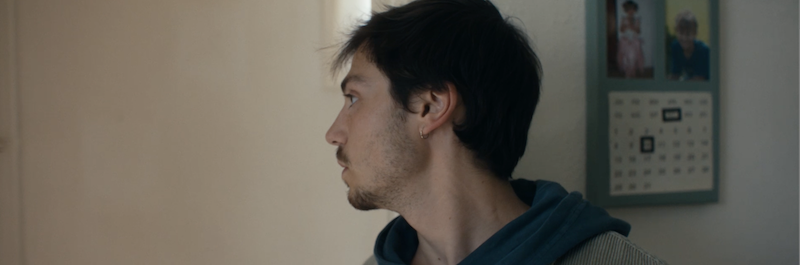
Dear [Name]: Client: People Like Us, UK. Agency: Worth Your While / Denmark
The decision here is to preserve the voices. The power of the human word.
The text was compiled from real rejection emails sent by companies to real candidates, shaped into a poem with the poet Yasmin Ali (Y.A Poet) and spoken by the actor Ebenezer Gyau. A film against automated rejection, written, directed and performed by people.
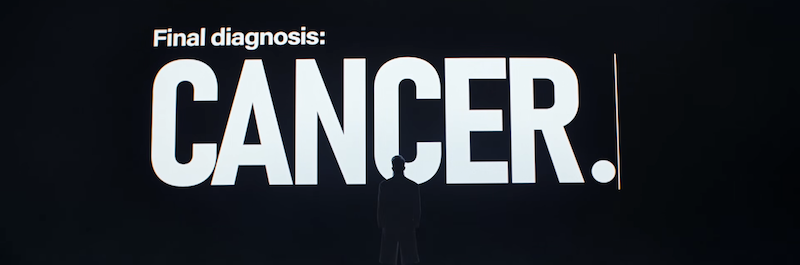
The 100th Edition: Client: Frankfurter Allgemeine Zeitung. Agency: Scholz & Friends / Germany. Awards: Eurobest 2024 Grand Prix, Industry Craft · ADC Cube.
The decision here is to value the weight of history. It relies on real historical context.
Craftman.Ships: Client: SHIPS. Agency: Hakuhodo Gravity and Hakuhodo Cabin / Japan. Awards: Cannes Lions 2026, Silver, Industry Craft · Spikes Asia 2026, Grand Prix, Industry Craft · One Show 2026, Gold Pencil · CICLOPE Asia Pacific 2026, winner.
The decision here is to preserve technical authorship. Every frame is embroidered by hand.
Golden Heart: Client: Netflix. Agency: Solid Dogma / Portugal
The decision here is to preserve cultural heritage. I art-directed this one: a Heart of Viana, Portugal’s most iconic jewel, handmade by a master artisan in Gondomar for Úrsula Corberó, who plays Tokyo in Money Heist. The whole process was documented.
The Stable: What are you most proud of?
Paulo Mariano: This is the one project where I treated AI as my camera. I art-directed an imagined journey of Francis across 22 real locations in Portugal at exactly the same time the real Pope Francis was locked into his World Youth Day schedule in Lisbon. It won Bronze in Design at the ADC Europe Awards, but that’s not why I’m proud of it. No algorithm would have suggested it at the time, because there was nothing similar to take an average from.
All About Francis: Authorial Creation
It was an attempt to prolong time and place and, above all, to allow freedom. You can see the whole project here: https://paulomariano.com/ALL-ABOUT-FRANCIS-A-I-Artistic-Project