Every 6 minutes, someone in the United States dies from opioids and today, there are more than 2.1 million people suffering from opioid use disorder.
Serviceplan Innovation, and partners – a coalition of NGOs, healthcare professionals, activists, media partners, and professional photographers – are using the very pills that are the problem as problem solvers. Each pill connects its user to a helpline, 855-HOW-TO-QUIT, at a critical moment – when they have the pill in their hand. In the US, every pill comes with a unique identifier imprinted, such as OP for oxycodone, IP33 for codeine, or C for fentanyl. The helpline uses the familiar dial pad mechanic where each letter corresponds to a number, to turn the opioid pill codes into phone extensions: OP is dialled as 67, IP33 as 4733, C as 2.
Each extension connects the caller with a different person who managed to quit that very pill.
“Peer-support increases recovery by at least 26%. Through this helpline, individuals in need are connected with others who have faced similar challenges. Seeing others who have successfully overcome addiction and are living fulfilling lives. This connection can provide a sense of under- standing that can help combat feelings of loneliness and isolation, which are common triggers for relapse or continued use,” explained Erika Ball, founder & director, We Are Those People.
The helpline features 30 people, reflecting the demographics of opioid use disorder. They share their experiences with one of the 30 most common opioid pills, from how they became addicted to how they managed to quit. Each testimony was curated by trained addiction specialists to include import- ant medical information. The helpline also provides information for each pill. It connects to 988 for emergencies, and to the SAMHSA National Helpline for concrete treatment options. The toll-free helpline is available in all 50 states and will be functioning 24/7, initially live and later as interactive recordings.
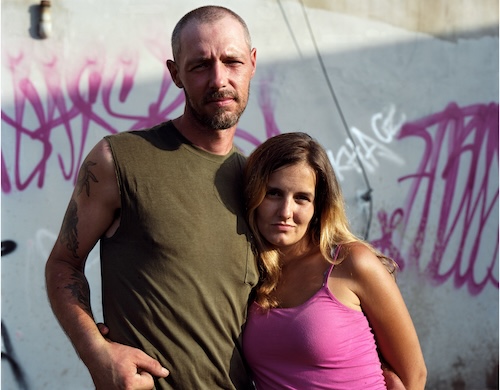
“I’m Emily, and this is how I quit Oxy. (…) Every week I took some milligrams less, until the withdrawal hit. It’s not easy, but you can fight back with Ibu- profen, vitamins, water, food, you know, the wellness package,” stated Emily, who recovered from oxycodone addiction.
“I went to a clinic and I started a MAT, medication assisted treatment. And I give them a lotta props, because the people at this place, they never judged me, they just cared for me,” stated Juan, who recovered from hydromorphone addiction
The initiative launched on March 5 as a nationwide PSA campaign displayed on billboards and other out of home media, provided pro-bono by leading media company, Talon. The median plan uses data to place the ads in, and tailored to, the most relevant environments. In Philadelphia, for example, more ads will feature fentanyl and oxycodone, while in Washington state, hydrocodone pills will be more prominent. There will be billboards near pharmacies and known hotspots, and print, TV, and digital placements next to pharmaceutical ads. Activists and participating organisations will amplify the campaign in social media and beyond. The website 855-how-to-quit.org works as the campaign hub, featuring recordings of all stories, editorial content, resources for treatments, and various ways to support or even join the initiative.


“Besides making people aware of the problem, we also have to build and establish trust. Together with Talon, we use media to be contextually relevant in moments of receptivity: next to pharmacies and other familiar environment to those we want to help,” noted Max Schöngen, general manager global creative lead, Mediaplus.

Serviceplan Innovation collaborated with Mediaplus; Munich design studio, Kimera; design company, Raw Materials; on the 855-HOW-TO-QUIT-(OPIODS) initiative. Partners in the initiative are healthcare consultancy, Anzen Health; and non-profit organisations, We Are Those People and PAIN.