
Travelling overseas to become a helper in an orphanage has become part of the rite of passage for many western millennials. Young people are very socially aware. Very interested in giving back. Very interested in doing good.
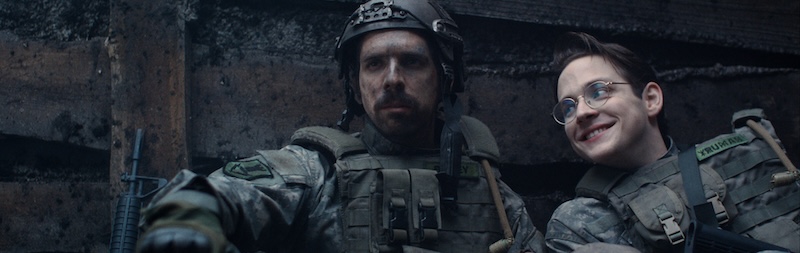
The idea that helping is orphanages is doing good is misguided according to a documentary by awarded filmmaker, Will Francome, for global care organisation, Better Care Network. The documentary has a message – do not volunteer in orphanages. The eighteen-minute doco, The Love You Give, explores orphanages from the inside – interviewing both those who have grown-up in them and those who manage them and shows how expose how global efforts to move towards new models of care for children are being weakened by a constant supply of Western volunteers, who are unwittingly helping to fund a system that is harmful to children. The system is being used as a form of tourist promotion, for example. Ruth, who grew up in an orphanage, tells how she was taught to lie about having relatives to make sure that volunteers keep coming.

Firstly, children become attached to the volunteers – who leave. These children feel abandoned, and many have already been abandoned by their parents (albeit believing in it’s the best interests of their offspring). Secondly, the constant stream of volunteers hinders attempts by ReThink Orphanages to connect the children with relatives and give them the continuity of primary care they crave – and possibly need to thrive. Thirdly, orphanages are expensive to run. Supporting relatives who bring up the children in their homes eases financial pressures on the orphanages so that resources can be used for real orphans.

- Eighty percent of children in orphanages actually have one or more living parent [Source: Csaky, C. 2009. Keeping children out of harmful institutions: Why we should be investing in family-based care, Save the Children.]
- Poverty is the main reason why children are sent to orphanages – often to receive an education
- Children raised in orphanages experience developmental delays and attachment disorders
- Young adults leaving institutional care are more likely to become victims of trafficking, exploitation, unemployment and homelessness – and are 500 times more likely to take their own lives [Source: HOLM-HANSEN, J., KRISTOFFERSEN, L. B. & MYRVOLD, T. M. 2003. Orphans in Russia: Policies for family-like alternatives, Norwegian Institute for Urban and Regional Research.]
- Volunteers are left to care for vulnerable children with no qualifications or previous childcare experience
The documentary also suggest ways in which young people can be part of the solution, such as supporting community initiatives that strengthen families and reduce the barriers that result in children being placed in care.
https://youtu.be/wUUjPvnWFgM
Better Care Network works with leading children’s charities, including Save the Children, J.K Rowling’s charity Lumos, Hope and Homes for Children and international volunteering organisations, including VSO and Projects Abroad, through a coalition called ReThink Orphanages. ReThink Orphanages currently has 63 member organisations. The coalition is working to end the popular practice of orphanage volunteering and channel efforts towards programmes designed to prevent family separation. There is now a global effort, backed by many of the world’s governments, to move away from institutional models of care, focusing instead on strengthening families and communities. These care reform efforts are being weakened, however, by the continuing support for orphanages, through funding, volunteering, tourist trips and faith-based mission work.
Justine Williams, campaign manager at Better Care Network, commented, “We’ve learned that traditional campaigns and messaging about this issue don’t work, therefore we needed to create a social movement to engage young people in understanding that their good intentions are simply perpetuating the cycle of children needlessly being placed in orphanages. We also want to show how they can be part of the solution to stop this happening.”

The film was created by, and launched in partnership with, creative network, Livity, which specialises in creating youth-focused content and campaigns for clients including Facebook, Netflix and PlayStation.
“Thousands of people volunteer in orphanages every year, in the belief that they are making a difference,” explaned Ty Stanton-Jones, creative lead at Livity. “But once you scratch the surface the opposite is true. This campaign is about the children, families and organisations who have the solution.”
A Volunteer Checklist on the campaign’s website features things to watch out for if people are thinking about signing up to volunteer, as well as further information, advice and stories of care leavers and former volunteers.