I bet that you, your kids or your parents still have at least one Mambo t-shirt in your wardrobe. I bet you still think of the brand with awe.
Mambo was the brand that belonged to the cool kids in the 80s. And to all Australia in the 90s. The Monkeys have got together with Bombora Film & Music Co. and writer/director, Paul Clarke, to give Australia the story behind the phenomenon.
Their one-hour documentary, Mambo: Art Irritates Life, will go to air on ABC TV on Tuesday November 8, at 9.30pm.

Writer and director, Paul Clarke, noted, “When you really get to think about it, there probably hasn’t been a good doco about the 80s in Australia, featuring that sense of excitement generated by all the ratbags in art and music rattling the establishment cage, and really enjoying themselves so hopefully that’s what we’ve made. It was great fun to write and direct in collaboration with our friends The Monkeys – they have wonderfully silly ideas including a printed t-shirt titles and end credits… the artists at Mambo really related to them.”


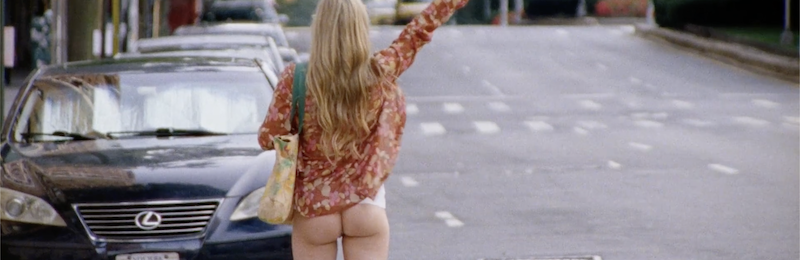
Mambo began in the days when artwork could get you into trouble, in a garage in inner Sydney. 15 years later, the Mambo brand of piss-taking and irreverent humour was the obvious choice to represent Australia on the world stage at the 2000 Sydney Olympics. Founder, Dare Jennings, a teenager from the south western plains of New South Wales, first hitchhiked to Sydney to set up a screen-printing studio for t-shirts and posters, calling it Phantom.
Phantom became a music recording label, releasing independent local acts, aka the wild children of rock that were largely ignored by the big record companies. It was in the early 1980s that Jennings realised he could combine the irreverent artworks produced by artist friends and musicians with surf wear, to release his first run of board shorts under the name Mambo. The board shorts were a hit and Mambo was born.
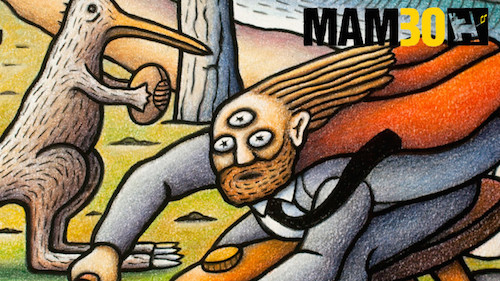

Script editor and producer, The Monkeys co-founder and executive creative director, Scott Nowell, explained, “We are children of the 70s and 80s, and for us Mambo came into being at a pivotal time in our pubescent lives. Growing up on the Northern Beaches, I can remember my first pair of Mambo shorts and how quickly Mambo captured that larrikin voice, sticking it up the big surf brands then taking on much bigger targets with humour and a violent lack of respect. Looking back, it’s hard to overstate how important that became to us as a nation.”
At the time, Mambo was well known for its irreverent humour and much loved for presenting a fresh take on the Australian surf industry at a time when we were beginning to be open to new ideas and taking on the world.

“We went from Keating’s creative nation to little Johnny and the Cronulla riots. Over those decades the Mambo voice remained steadfastly politically incorrect and we have beer monsters, farting dogs and Australian Jesus entrenched forever in our culture as a result,” Nowell noted.
The idea of creating the documentary began when The Monkeys hired senior creative, Scott Dettrick, in April 2008. Dettrick is a former Mambo art director.

l-r back: Dare Jennings (Mambo co-founder), Scott Dettrick (The Monkeys), Paul Clarke (writer & director, Mambo: Art Irritates Life. front: Reg Mombasa (Mambo co-founder)
Nowell explained, “Early on we hired Scott Dettrick. He had been working as an art director at Mambo for 10 years and came to us with the idea to tell the story of Mambo’s impact on Australian popular culture.
“The idea immediately connected, and not long after we met with writer/director Paul Clarke from Bombora Films and pitched him to produce a documentary outlining the social history of the 80s and 90s as told through the lens of Mambo, Australia’s modern art movement that we all wore on our backs.”
As well as being instrumental in getting Mambo: Art Irritates Life off the ground, Dettrick is the documentary’s production designer.
Credits
Writer & director: Paul Clarke
Producer & script editor: Scott Nowell

Production company: Bombora Film & Music Co.
Executive producer: Jo-anne McGowan
Line producer: Katherine Hristoforidis
Editor: Antoinette Ford
Production designer: Scott Dettrick
Art director: Wayne Golding
Associate producer: Sonia Borg
Narrator: Celia Pacquola