Rejection is a gut punch and gut punch rejections are common in agency life. Sometimes they’re right, sometimes they’re wrong. Timidity is an annoying reason. Dubious pre-testing is another. Being rejected for a promotion or a job, getting a no for something (or someone) that could make your work better…painfully frustrating. Do you have to take no as the final answer? When – and how – do you not? What about the “no” you hated that turned out to be the best thing in your career (and/or life)?
This edition of The Stable’s Chats wonders about the possibilities of “no” beyond making you want to take yourself to bed and stay there for a lifetime. The responses it received are fascinating anecdotes and brilliantly intelligent ideas. Here they are:
Ali Rez, CCO Impact BBDO Group, Dubai

In order to get to a Yes, you need to get to the No fast
I learnt early on in my career through a very talented creative director to never give up on a strong idea. He used to have a collection of his rejected ideas on sheets of paper literally in a drawer and would occasionally go back and re-sell them. But when he did pitch an idea, he always asked the client to make a decision quickly either way.
When we presented a wonderful idea for girls’ education during a pitch meeting to a major FMCG client, their initial reaction was of pure love. Then we learnt that we didn’t win the pitch, so that was that. We then took the same idea to a second client. Same reactions of “We love it”. But followed eventually by “It doesn’t however fit our bigger strategic plan”. We repeated the exercise with two more clients, and saw the same pattern – initial thrill and joy, but a rejection not far behind. Disappointing, but at least we had quick decisions.
And then we found a client who was willing to make it happen. They saw the potential and the scale, and signed off on it, which resulted in a hugely successful campaign. Ending with the same client on stage at Cannes picking up a Gold Lion.
What’s important as a lesson here is to get that No fast so you can move on to somebody else with the big idea. The worst thing to happen to an idea is when it gets stuck in limbo.
Dan Beaumont, founder & managing director, GAME Creative, Sydney

No isn’t a fait accompli. It’s a question
I’ve heard “no” every day of my life. As a kid it came from my parents, teachers, coaches, selectors. Then bosses, clients, investors, airlines, banks. Then my wife. Now my own children, constantly.
And lately, me.
How does it feel? It sucks. But you can’t control every outcome.
So what happens if you don’t take no for an answer?
Depends what you’re asking for. A new BMX. A later curfew. An extension on an assignment. Taking the kick to break a deadlock. A pay rise. Budget for a better idea. An upgrade. A simple hug. Every one of them forced me to work out how badly I actually wanted it, because that’s the motivation that decides what you’ll do next.
It’s the useful part. No asks you a question – how much does this matter? If it makes you want the thing more, you have your answer. If it’s quietly a relief, you have that answer too. And most nos aren’t final anyway. A formal pitch is the exception. You can’t argue with Keyser Söze. But a no to an idea is only an opening position. A decent relationship and “mind if we have another go?” gets you further than most people bother to try.
Which leaves the No that outranks the lot. Mine. The one I give my own business, deciding which opportunities are worth our time and energy, and what work is good enough to put in front of a client. I say it more often now.
Every one of them makes the Yes worth more.
Torey Fitton, senior client director, Think HQ, Melbourne

When I was asked at 4:45pm on a Tuesday to write a piece about rejection with a next-day deadline, my immediate instinct was to say no bloody chance. But in the spirit of agency life, here I am, here we are – and here are my tips.
In client service, you quickly learn that a client’s “no” is never really an actual “no”. More often than not, it translates to “not right now”, “that’s out of budget”, or “I’m terrified and not ready”. But as a senior account director, you can’t take that as a door slamming shut. You have to see it as an invitation to probe a little deeper, ask the smart follow-ups, and turn a hesitation into an opportunity.
On the flip side, we also have to be confident in dishing out some firm, healthy “nos” of our own. Setting clear boundaries with clients and internal teams alike should never be about being difficult, but building trust. People feel secure when they know exactly what to expect and where the parameters lie.
Then there are the personal “nos” that hit you straight in the gut. Earlier in my career, I was turned down for a job at a male-dominated tech startup that proudly described its culture as “work hard, play hard”. They told me I wasn’t the right fit. At the time, it hurt. I knew I had the gumption, the drive and could hustle better than any tech-bro.
Looking back, it was the single best rejection of my life. Bullet dodged. Missing out on that role forced me to stop chasing the wrong validation and figure out what actually mattered to me – working somewhere grounded, collaborative, and actually aligned with my values.
Now, I look at “no” as a growth mindset play. It’s a moment to pause, analyse the room and pivot.
Which brings me back to agreeing to write this with zero notice. Next time, I might actually practice what I preach and say no. I mean, that’s not a definite “no”, obviously…
Ben Walker, Chief Doer, Those That Do, Sydney

Before advertising, I was a stage kid. Theatre, dance, singing, the lot. Which means by the age of 10 I’d been rejected more times than most adults are in a lifetime.
Auditions have brutal maths. One role, 40 kids. You line up in a draughty hall, you do your piece, and someone with a clipboard says, “Thanks, we’ll let you know,” which even an 8-year-old learns to translate. My favourite reason I ever lost a part? I was too short. Not too wooden, not too flat. Too short. There’s no note to take from that. You can’t rehearse your way taller.
But that’s exactly what all that no taught me. Rejection is casting, not verdict. They weren’t saying I was talentless. They were saying I wasn’t right for this role, this show, this director. The next audition was next week. You dust off your jazz shoes and go again.
Turns out that’s the single most useful qualification for advertising. A lost pitch is an audition. Pre-testing is a panel with a clipboard. A client’s no usually means wrong role, wrong show, not wrong you. It’s also where I learned the rule I still run on – be tough on the work, never on the people. The performance can fail an audition. The performer goes again.
And stage kids learn the flip side too. When you know, actually know you’re right for the part, you find another way in. Audition again. Rewrite the script. Start your own show.
So, no. I don’t take no as a final answer. I take it as notes.
Frederico Roberto, ECD at TBWA\RAAD, Dubai
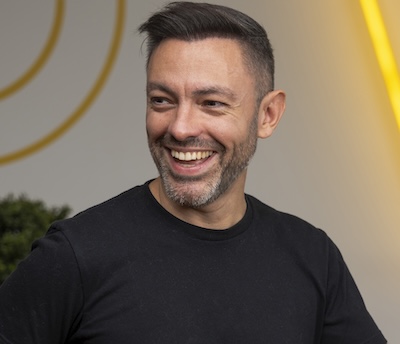
This is a story about “Nos”. A lot of “nos”, actually. “Nos” given. “Nos” taken. “Nos” that were simply the reality. Until they weren’t.
I was still back in Portugal. This was probably back in 2011. A client brief came in, with an impossible challenge. The client wanted to drive some PR and awareness to their Groupon-like website (forretas.com), where people can bulk-buy products and experiences, for cheaper prices…..and their budget was 1000 euros (4000 AED give or take). I mean yeah…right….We said “No”.
But the client said “No” back. They told us, “whatever you propose, we’ll do it”. Well, that was a first…
We took on the challenge. It was one of my first projects as a newly anointed creative director, so, obviously, I didn’t want to say “no” to an opportunity to do whatever we wanted. Well…whatever the budget allowed, that is.
After several “nos” from my end, the junior team (what’s up Ivo and Tiago?) came up with the most outrageous idea. “What if we ‘hacked’ everyone’s bank accounts and deposited 1 cent into all of them, with the Sender’s description being www.forretas.com? So when people get a text notification or visit their home banking, they’ll be scratching their heads. That’s surely a new media…”.
Biggest “no” (and laugh) of my life until that point. But the guys didn’t take “no” for an answer.
I started getting excited, although my brain kept saying “no”. Finally, I gave in. I was like: “You know what? What’s the worst that can happen? Get a ‘no’ from the client? That’s not gonna happen.” So we presented the idea. The client loved it. Being a creative technologist geek himself, he was like: “Give me 48h to create an algorithm that will generate real bank account numbers and send 0.01 euro to 100.000 people” We were like….: “NO WAY”. And the rest is history. The campaign made the news big time in “efficient marketing in a time of financial crisis” etc, etc. We got several golds in the Portugal main award show and a reminder that, sometimes a “no” is the most invigorating fuel.
Michael Noone, co-founder and head of creative, Q Agency, Sydney

I know we all hate the “no” we occasionally get. Sometimes you bounce back, sometimes the client comes back and says “yes” after all, but we all cycle through the stages of grief with varying efficiency when we receive a no. But what about that client you try to say “no” to in lots of different ways, yet they never take the hint? You raise your prices, you do all the little things to give the hints… but they miss all the cues. Actually, saying no used to be the hardest thing for me to do, because it felt like the price was too high.
For me, the lesson is being upfront. I had a client who was an incredibly poor fit, but they loved us. Our whole team died on the inside when we worked with them. Everything that never normally went wrong, went wrong. Everything that normally went right, went wrong. When we said “right”, they heard “left”. Just seeing their name appear in my email caused my stomach to churn, but they always paid on time and it wasn’t an easy time to say “no” either.
Then we did the maths, the hours spent servicing them, the sheer volume of emails, the constant desire to change strategy…it was madness and it was costing me my sanity. So, I said “no”. Then came more meeting requests, more emails… more attempted manipulation.
To date, still the best “no” I have ever said. It bought back my time, my focus and my energy, which enabled the business to grow.
Luke Williams, creative director, Bonfire, Perth

No means you’re alive
“No” might be the best word in advertising. It means you’re doing what you were put on Draper’s green Earth to do – push. You’ve applied the correct amount of creative thrust and reached the outer limits of what someone is comfortable approving. Granted, the outer limit might be a silly gag in an eDM, but it still counts.
A career without “no” would be deeply suspicious. It would mean every idea passed through without resistance, bothered nobody, changed nothing and arrived in market exactly as expected. Very few good stories start with the client saying “yes”.
Once, while working on a campaign for a local ballet company, we had an idea for their production of Dracula. Using lenticular printing, the titular character would disappear from the poster when viewed in a mirror. It was simple, strange and, we thought, too good not to make.
The idea got more noes than an elephant. The printer said “no”. The media owner said “no”. The logistics said “no”. But none of that made the idea any less good, so we left it pinned to the wall for future use.
Three years later, the client brought Dracula back. And so did we. This time, “no” became “not yet”. Then “ahhh, maybe?” Then “alright, let’s take a punt”.
That is the thing about no. Sometimes it means the idea is wrong. Sometimes it means the timing is wrong. Sometimes it means you have explained it terribly. The difference, I think, is knowing when the fight is for the right reasons, and when it is just because you want to be right.
I still biff that bit all the time.
Frankie Oviedo, executive creative director, WTA, USA

I don’t think “no” always means stop. More often, it means pause.
It’s a prompt to understand what’s really standing in the way. Sometimes the barrier is strategic. Sometimes it’s budget, timing, internal politics, or a brand that isn’t ready yet. Until you understand the reason behind the no, you don’t really know what it means. That’s often where the work begins.
The creatives I trust most know which fights are worth having before the idea ever leaves the room. The work has to ladder up to a real point of view, and it has to arm the client with enough substance to keep fighting for it on their side of the table. If it can’t survive that, it probably wasn’t the fight to pick.
But there’s a line, and it matters. Conviction isn’t the same as refusing to let go. Sometimes a deeper look confirms the idea isn’t right, or isn’t right yet. When that happens, you take the “no”, learn from it, and move forward. That’s the part most people skip.
Other times, the first “no” is the most useful thing that could have happened. It reveals the real problem. It gives you the information to reshape the idea, sharpen the argument, or find a better answer than the one you walked in with.
Our job is to keep showing clients what’s possible. Trust takes time. Bold work takes trust. Sometimes a no is just the first step toward the world you can already imagine.”