Names define people. That’s why parents spend so much time choosing one for their baby. But in China, girls are often given names highlighting outdated feminine qualities of softness and submissiveness, or even names that are sexist, such as Inferior to man. Meanwhile male names often convey strength or power, or even parental preference for a boy.
These names become labels and help to perpetuate stereotypes that could limit their potential in life.
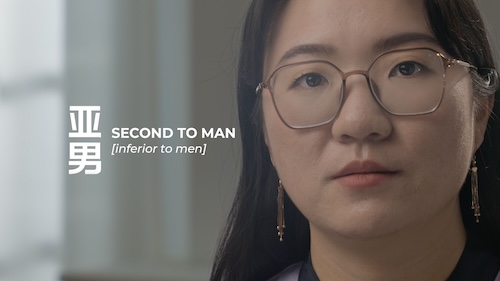
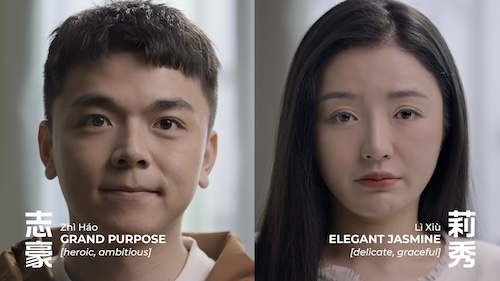
VML Singpaore is helping Unilever’s LUX to mark its 100th anniversary this year by creating 100 new and powerful (Chinese) names for women to challenge unconscious bias and highlight the power of a new name. The names are wrapped in a social campaign, In Her Name, inspiring women to give their daughters stronger, modern alternatives to traditional options or even legally changing their own names, as scores of women are already doing in China. With 47% of women surveyed expressing a desire to change their names, In Her Name aims to empower women to become protagonists of their own lives – beginning by taking a powerful name?
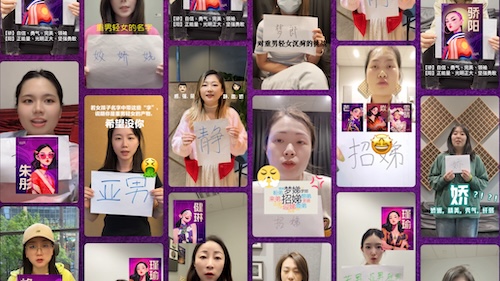
A participant in the new initiative is Yà Nán, whose name translates as ‘second to man’ or ‘inferior to man’. She commented, “This name brings me constant stress. All my life, I had to work harder than men to prove myself.”
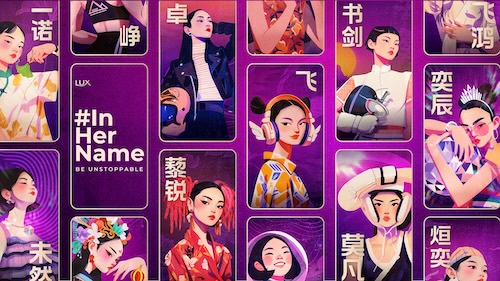
To create the In Her Name campaign, LUX has worked with linguistics professor and language expert, Liu Yanchun, on 100 new names that genuinely reflect what Chinese women should be called nowadays. Instead of highlighting outdated ‘feminine’ traits such as ‘quiet’, ‘loveable’ and ‘small’, or a sexist preference for a son such as ‘welcome younger brother’, the new names evoke strength and potential, from 佳睿, meaning ‘beautiful and wise’ to 明奕, meaning ‘a girl with a bright future’.
Severine Vauleon, global brand vice president of LUX, stated, “Our new initiative ‘In Her Name’ is aimed at empowering Chinese women by identifying contemporary names that reflect the power and potential of modern women. Through these new names, women can find strength in their inner and outer beauty – helping us all move further towards a more gender-equal society.”
Professor Liu Yan Chun, Linguistics and Applied Linguistics Communication, University of China, added, “While creating new names, I’ve drawn inspiration from classical literature, embraced positive connotations and addressed contemporary societal needs. Through this diverse lens, I’ve curated names for women.”
In Her Name is backed by a host of influencers and a video. The 100 new names have been revealed via China’s Little Red Book platform (Xiaohongshu), which has 312 million monthly active users. Each name is brought to life by a striking image of a woman that embodies the strong, powerful and inspiring associations of each name. Followers on social platforms, Douyin and Weibo, can also find suggestions about the types of qualities and personality traits they might want their new name to convey and a call to action to join the movement.
Marco Versolato, chief creative officer – Unilever at VML Singapore, commented, “Over the past few years, we are proud to have worked closely with LUX to shed light on some of the judgements and casual sexism women face in their everyday lives. Now, we’re excited to launch LUX’s latest initiative, “In Her Name” where we have collaborated with linguistics expert Liu Yanchun, on a gender-parity initiative inspired by the recent trend of Chinese women officially changing their birth names. Traditional Chinese names are linguistically beautiful, but in contemporary society don’t necessarily reflect the strength and power of modern Chinese women – which is why we wanted to create some more representative and inspiring options. A name, after all, is so much more than a name – it’s a reflection of your potential.”
The starting point for the In her Name initiative is China, which was chosen for its size and importance – and often stereotypical names – in order to kickstart a conversation about traditional naming and its potential impact on people’s lives.