The Stable’s series to counter stereotypes with reality continues. Continues to defy disdain for age. To show that experience is not a hindrance.
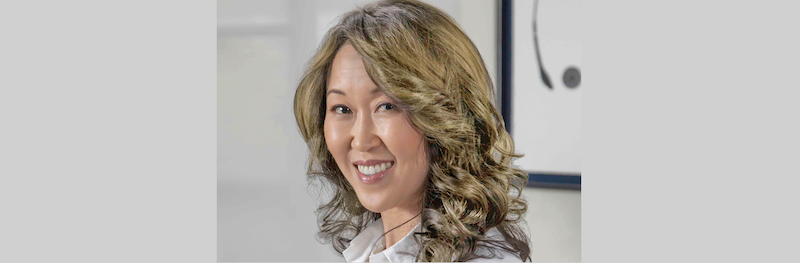
Rob Morrison is a rare creative. Firstly, he is still thriving. Secondly he is not frightened to ‘fess up to being old. The thriving thing, no doubt, comes because he’s a brilliantly strategic creative. The second thing no doubt, is considered very (dangerously) brave. But Sally Kissane, Ogilvy Network in Australia and New Zealand, explains what Morrison holds in his hands. “I have always believed agency cultures and creativity thrive when you have the right combination of experience and youthful exuberance. Having experience is one thing but being generous with those insights and being open to new ways of thinking is where the real magic happens. Rob is all that and more.”
Here is Rob Morrison’s story:
You’ve had a big career in big agencies on big brands. What are the greatest obstacles to standout work in your experience?
Rob Morrison: The short answer is ‘Fear’. I’ve seen plenty of outstanding work die before it left the agency. Plenty more die at the clients. That’s sad. But what’s brutal is seeing brave work, initially approved, only to suffer death by 1000 cuts as fear takes over. It took me a long time to figure out it was fear. I used to think work was rejected because of envy or ignorance or a personal gripe. No, if Adland gave me a magic wand, I’d take away the fear. There’s no need to be scared. Nobody dies if we get it a little wrong.
How do you keep your creativity firing? What gets you up in the morning?
Rob Morrison: I still find people fascinating.
I love figuring out why people do what they do, then trying to influence them. It’s like a puzzle with infinite answers but none of them are perfect. I’ve always loved the challenge of it.
But “What gets you up in the morning?” isn’t the right question. Most Adland creatives I know simply can’t switch it off. It’s something that stays with you 24/7. All day. All night. Otherwise, you don’t last as long as I have.
What do you think are the ingredients of great work?
Rob Morrison: The work I’ve loved through all my years always has the same 3x ingredients:
- It builds from a strong insight – something inherent in the product which solves something for the audience.
- It’s then executed simply. Not always with high production values, but never with excess clutter.
- It sells. The industry got distracted by purpose-driven advertising. That works for recruiting staff. But it will never sell as well as actually selling.
You’ve been freelance for 5-years. Advantages and disadvantages?
You’ve been freelance for 5-years. Advantages and disadvantages?
Rob Morrison: I have freelanced a few times between gigs but, you’re right, this is by far my longest stretch.
The best thing is the variety. Variety in who I work for and what I work on. This week alone I’ve written award entries for an interior design company, a website for a company reclaiming wetlands and ideas for male weight loss. Freelance is the only way I get that level of variety.
The downside is what a mate of mine calls ‘the hustle’. When things get quiet, you have to shake the cage to generate work – without looking desperate. When I ran big creative departments, I remember freelancers hassling me for work and it was almost always awkward. But then your income relies on it.
Advertising has changed a lot during your career? What has advertising lost and what has it gained? What was better then and better now?
Rob Morrison: Yeah, I’m old enough to remember multiple headlines declaring, “This is the death of advertising”.
We saw it with the arrival of integration. Then the internet. Mobile marketing. Social media. Now AI. But the fundamentals haven’t changed. Talk to people, in their choice of media, about your client’s product, to solve their pain point.
That said, what we have lost is, some of the craft. That’s a matter of time. In the ’90s it was almost a ‘Big-Mac-style’ chant; “2-weeks for concepts, 1-week for full copy.” You had the time to explore every idea. To craft every word. Now the deadline is days not weeks. Which is why employing older creatives makes sense – we know how to craft fast. As a side note, it always amazes me when legal get more time to review the work than we had to create it. Who decided that?
But we’ve also gained a lot. Luckily, I’ve worked in very few “middle-aged white man” agencies. There’s no demographic pattern to my favourite creatives, suits, and planners – women, men, straight, gay, locals, recent arrivals – literally every imaginable background. But the fact the industry is genuinely focussed on addressing the lack of women in creative leadership is a huge improvement. Selfishly, as both my daughters are now junior creatives in adland, that makes me happy. I know it’s nowhere near perfect yet, but it’s getting better.
What are you most proud of?
Rob Morrison: Someone asked me about legacy recently and I wasn’t sure how to answer it. I’m still too focussed on the next idea for the next client.
But, if pushed, I have been responsible for hiring a lot of creatives as juniors who’ve gone on to have amazing careers. People who are now industry leaders. If you had a time machine and visited some of my old creative departments, you’d see some familiar faces (albeit with bad haircuts). Lots of whom are now Group CDs, ECDs and CCOs.
If I played a small role in nurturing their talent then, I’m pretty proud of that.