

Think incel culture and Andrew Tate are responsible for the rise of toxic masculinity? They might be small players compared to microplastic pollution. In a fiendishly clever twist on one of this generation’s great concerns, Danish NGO Plastic Change, is highlighting how microplastic pollution is, quite literally, turning men’s genitals toxic. Faced with the direct threat microplastics pose to male fertility, the organisation is appealing to the mostly male delegates at the world’s biggest plastics convention to act. And think with their dicks.
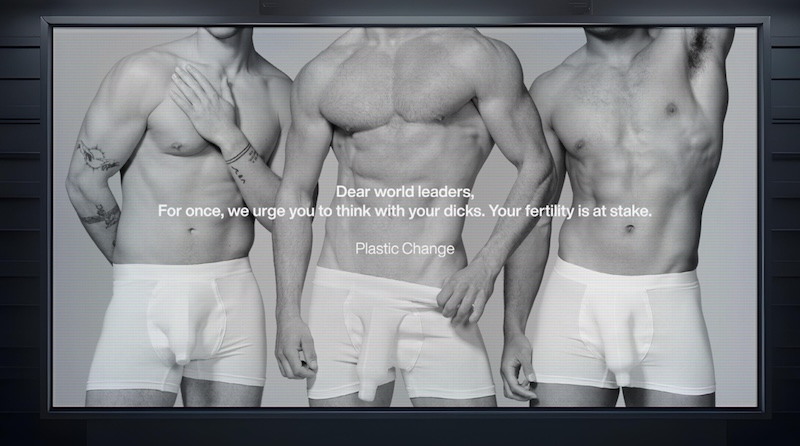
The campaign, Are You Packing Microplastics? was created by independent agency, Worth Your While, in collaboration with Glue Society and spoofs Calvin Klein’s iconic underwear ads to raise awareness of the serious issue of microplastics. Microplastics are everywhere, including in 80% of penises*, contributing to lowered sperm counts and declining male fertility. Recent research revealed that microplastics are present in 80% of penile/testicle tissue samples*** and 100% of semen samples tested****. Research also shows that many men disengage from environmental issues because they associate caring for the planet with femininity, seeing eco-friendly choices as a threat to their masculinity.** The campaign’s hyper‑masculine visuals and framing microplastics as a direct threat to male fertility flip that narrative.
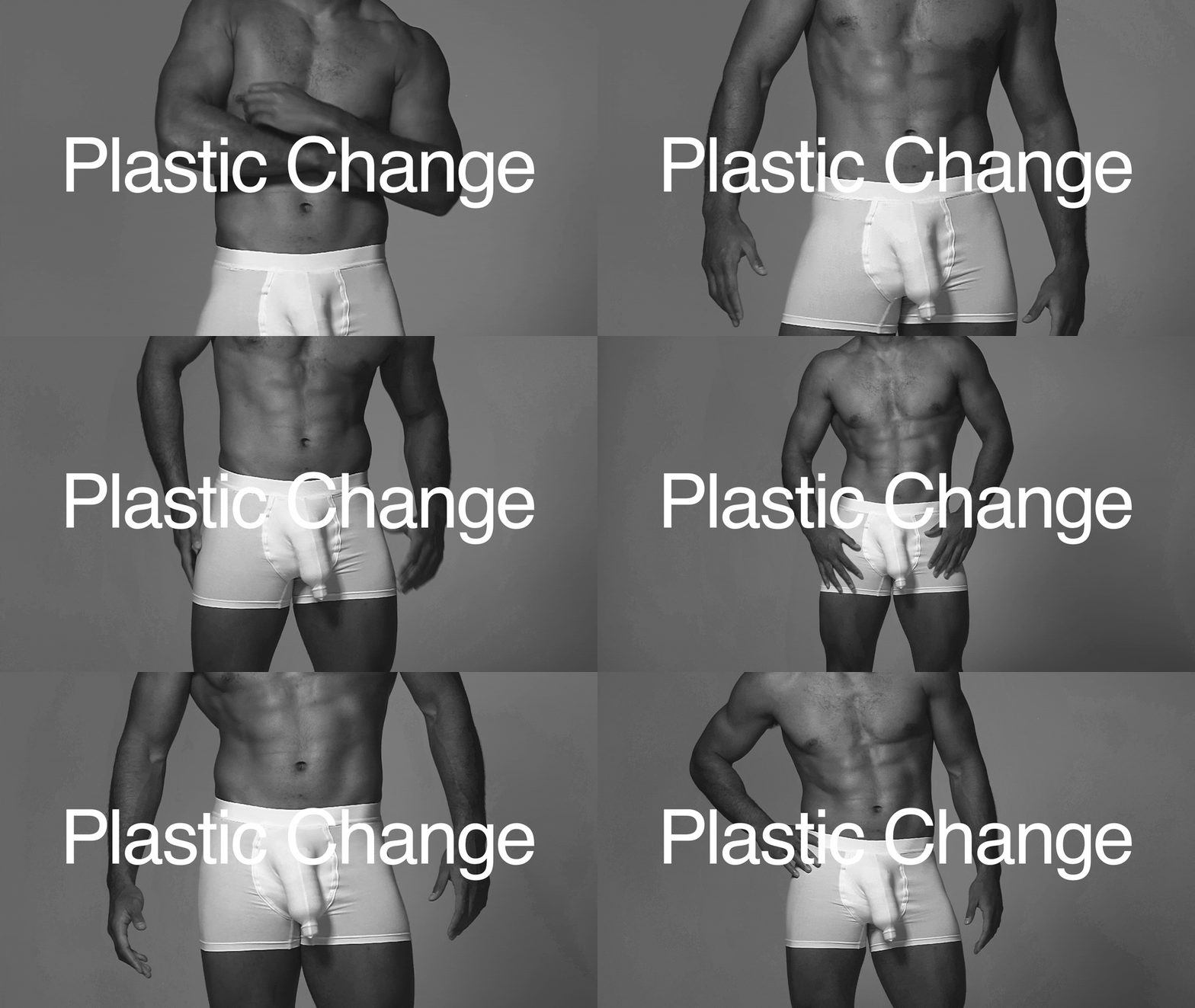
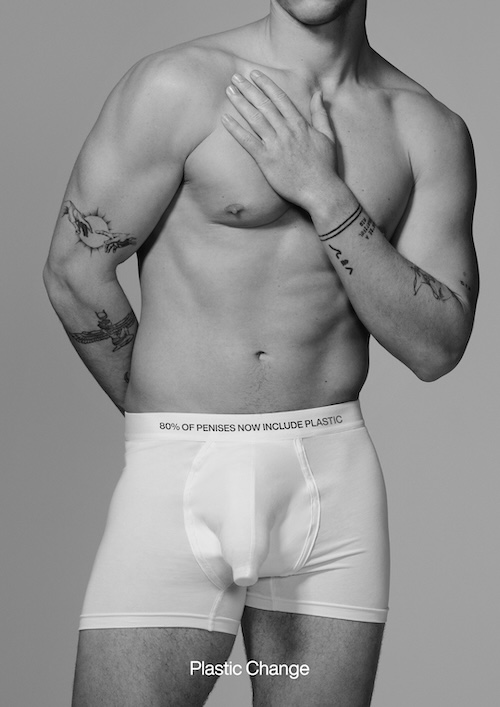
The campaign was shot by renowned fashion photographer, Derek Henderson, satirising his own style made famous in Vogue, Bottega Veneta and Louis Vuitton. Its series of black and white images feature buff male physiques clad in skin-tight boxer shorts. But in a clever twist, the bulges in their underwear have been subtly replaced by PET plastic bottles – while instead of featuring the brand logo, the waistbands are woven with headlines including “How toxic is your masculinity?” and “4 out of 5 dicks are packing plastic”.

The campaign launched to coincide with the UN Global Plastics Treaty INC-5.2 talks in Geneva, Switzerland, and aims to put pressure on the predominantly male delegates to act decisively against new plastic production – by hitting them where it matters most, the physical manifestation of their masculinity.
Are You Packing Microplastics?’s billboards will run in Geneva, strategically placed to confront global decision-makers mid-negotiation, alongside OOH placements in Denmark. It will also run globally on Plastic Change’s digital and social channels (Instagram, LinkedIn and Facebook) with a call to action directing viewers to share the campaign message and upload their own #PackingPlastic pics to socials. Social amplification will be driven by male influencers including biohackers, fitness figures and podcasters and the campaign will run until August 14.
Anne Aittomaki, strategic director, Plastic Change, commented, “Environmental campaigns often fail to reach men. Studies show that many men associate environmentally conscious behavior with femininity and are therefore less influenced by the messages of environmental campaigns. The campaign aims to flip that script by reaching out to men. If saving the planet doesn’t feel urgent, maybe saving your sex life and ability to reproduce will. This isn’t scare-mongering – it’s science. And it’s time all men paid attention.”

Tali Madsen, chief strategic officer, Worth Your While, added, “In rooms filled with delegates wielding decision-making power over the future of global plastic policy, the science that plastics are in our brains, in our breast milk, and even unborn babies has yet to spark necessary change. By hitting men where they are most vulnerable, this is not about shock for shock’s sake; it’s a strategic communications move to administer a necessary wake-up call that might finally make them realise what’s at risk.”

Men, here’s why you should be worried:
* Microplastics have been found in human penile tissue, with a study published in the International Journal of Impotence Research indicating their presence in 80% of the samples analysed.
**Research by Scientific American shows many men disengage from environmental issues because they associate caring for the planet with femininity, seeing eco-friendly choices as a threat to their masculinity
Codrington, Jason, et al. “Detection of Microplastics in the Human Penis.” International Journal of Impotence Research, vol. 37, no. 5, 2025, pp. 377–383. Springer Nature, https://doi.org/10.1038/s41443-024-00930-6.
*** Another study, published in the Journal of Toxicological Sciences, found microplastics in every human testicle studied. Scientists said the discovery may be linked to a decades-long decline in sperm counts in men worldwide.
Hu, Chelin Jamie, et al. “Microplastic Presence in Dog and Human Testis and Its Potential Association with Sperm Count and Weights of Testis and Epididymis.” Toxicological Sciences, vol. 200, no. 2, 1 Aug. 2024, pp. 235–240. Oxford University Press, https://doi.org/10.1093/toxsci/kfae060.
**** According to research published in the journal Science of the Total Environment, microplastics were found in every human semen sample tested in a study of 40 semen samples from healthy men undergoing premarital health assessments in Jinan, China. Eight different plastics were detected with Polystyrene, used for packaging the most common, followed by polyethylene, used in plastic bags, and then PVC.
Li, Ning, et al. “Prevalence and Implications of Microplastic Contaminants in Human Semen from Individuals Without Occupational Exposure.” Science of the Total Environment, vol. 937, 10 Aug. 2024, article no. 173522. https://doi.org/10.1016/j.scitotenv.2024.173522.
Credits
Client: Plastic Change
Creative: Worth Your While
Directing Collective: Glue Society
PR: One Green Bean
Stills Production Company: Wildfire Content & M.A.P Sydney
Photographer: Derek Henderson
Executive Producer: Fletcher Watson
Stylist: Ewan Bell
Digi Op/Assistant: Jack Burgess
Retouching: Maria Fimmano
Media: Mindshare Denmark
Media: OMD Switzerland