
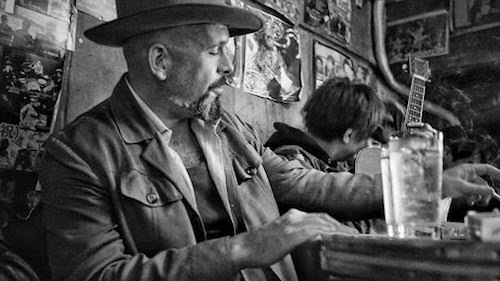
The 10th Ad Stars Awards judging begins next week before the festival’s run from August 24- 26. Thirty judges will come together from all over the world. One of them is American born ex-Aussie, Peter Grasse, who now lives in Tokyo as executive producer of Dictionary Films, the production sibling of global post production company, Cutters Studios. He is judging the Film, Film Craft and Video Stars categories.
Ad Stars editor, Barbara Messer, interviewed Grasse about settling into life in Tokyo, setting up Dictionary Films and judging Ad Stars for the first time.
Messer: You helped Curious Sydney to become an award-winning production company, and then disappeared to Tokyo to launch Dictionary Films. Why?
Grasse: I had to leave Curious behind because in the end it wasn’t heading toward what I value as a commercial filmmaker. Accumulating experience working with great filmmakers around the world gave me a committed passion to make inspiring well-crafted commercial content. Laughing, talented people making great work is what brings us true happiness. That’s what Dictionary Films is all about. There’s just no point in being greedy and making garbage. Be good. Be great!

Messer: Challenges and achievements in Tokyo?
Grasse: Japan itself is not really challenging to me. I don’t speak the language as well as the natives, but I learned over 20 years that you don’t have to speak perfect Japanese to be charmed by it and fall in love. This part of the world is just magic, and again it’s the people and their attitude to life.
My biggest achievement has been building a team of people I really adore and making exciting work with them. Honestly, it’s truly inspiring to work with the crew at Dictionary and Cutters. They work hard and play hard, just like all my production heroes such as TK Knowles and Traktor. I’m living the dream with a new team.
Messer: It’s not the first time you’ve launched a production company from scratch. What’s your vision for Dictionary Films in Tokyo?
Grasse: We care. We execute every script beyond all expectation because we can take pride in what we create. Because pride in our work is what we value. That’s the vision. And it’s important to say that we still have that vision because we haven’t compromised it. Once you’ve collectively made a piece of shit, you’re dirty & done. Not I! Not Dictionary! Never!
https://www.thestable.com.au/diesel-japan-makes-itself-the-voice-of-asian-youth/
Messer: How does Tokyo inspire you?
Grasse: Sydney is much more inspiring than Tokyo with the harbour and its natural beauty. Tokyo tries hard to be hip, but that doesn’t give me a rise. I’ve just been fortunate to meet some very interesting characters here. They are inspiring. That, and the service. That’s inspiring. People work hard and do a good job at what they do. Like me, they care about what they create. That’s inspiring.
Messer: What would you say to agencies thinking of producing their next TVC in Japan?
Grasse: I would advise, and have advised, Australasian agencies to work with Japanese talent for years. Yet, that’s still to happen. Nevertheless, perhaps not for long. You’ll see in Busan that everything Down Under has started to look the same. I’m sure some clever creative somewhere can see that and be motivated to change it. Just look at Japan’s Gravity Cat. It blows everyone’s mind and that’s just the tip of the iceberg. People need to get out more.
Messer: You’re judging Ad Stars for the first time this year. What are you looking forward to about your week in Busan?
Grasse: Food glorious food. Friends fabulous friends. And work wondrous work. And not necessarily in that order. The work in this region is simply excellent. East Asia has a great and unique sense of humour, as well as an admiration for craft. I reckon I’m going to have the time of my life.
As for the show itself, it’s become very popular in the past few years, and for good reason. Preliminary online judging for Cannes this year involved nearly 600 spots. Preliminary judging for Ad Stars was not far off that mark, meaning that Ad Stars is growing in importance and popularity.
As for the location, I’ve been to Korea a number of times, and Busan promises to be one of the best spots in the country. People just rave about it and say the food is amazing. They also rave about the show and comment on the camaraderie between the judges and the delegates. I reckon I’m going to rent a sailboat for a day and have the time of my life.
Messer: I was curious to read that you arrived in the region as an anthropologist writing on the Ainu, Hokkaido’s indigenous people. What can you tell me about the Ainu people?
Grasse: The most relevant thing I can say about the Ainu for this publication is that their culture was at a disadvantage because they primarily had an oral history, and because of this, Ainu culture was eventually eclipsed by Japanese culture. This is both important and relevant to today’s society because we are in the midst of a digital dark age. Because of the digital ephemerality of our current communication, much of what is documented will lack validity and permanence.
Egad! How do we stop the end of our culture & society? Simple. We need to make things, which is good news because we’re in the business of crafting stories in multiple durable mediums, and in doing so we motivate and craft culture itself.
Long story short: it’s important. We should value what we do. More so than ever, actually.
Messer: You’ve lived in Pennsylvania, Auckland, Sydney, Hong Kong, now Tokyo, plus stints in South Africa and Germany. How did you catch the travel bug?
Grasse: I honestly saw America’s future on the horizon 20 years ago and wanted out. South Africa was amazing. I’d like to back there. I also still love Germany and all those places. The best thing about moving around is that now I have all these places to stop over in and say hello to good friends. Like you never left. Just as it ever was. Busan is going to be like that. Another place on the map to go back to and reminisce, I’m sure.
You might also like