
Africa Creative’s The Odyssey of Wilson is the interactive story of a volleyball. A volleyball that has ended up in the ocean. It will take 450 years to fade away. The campaign, created by Africa Creative for the Onda Azul Institute, with technological support from telecom giant, Vivo, is a call to action to fight the impact of plastics on ocean environments aligned with the UN Sustainable Development Goal 14: Life Below Water.
Launched ahead of the 2025 United Nations Ocean Conference in Nice, France, the campaign uses Wilson’s imagined path through the world’s oceans as a metaphor for the long-term degradation caused by plastics. Backed by ocean data and projections, the experience traces currents, tides, and climate events to visualise the volleyball’s transformation into microplastics—witnessing acidification, ice shelf collapse, and rising sea levels along the way.
The campaign is built with real data from UNESCO’s State of the Ocean Report 2024 . The report reveals that 2023 was the warmest year on record for ocean temperatures, with average warming already reaching 1.45°C above pre-industrial levels, dangerously close to the 2°C ceiling set by the Paris Agreement. Sea levels have already risen 9 cm in the past 30 years, and the rate of increase has doubled in that time, largely due to warming oceans, which now account for 40% of global sea level rise.
Moreover, ocean oxygen levels have dropped 2% since the 1960s, resulting in over 500 coastal “dead zones” where marine life can no longer survive. Acidity has increased by 30% since pre-industrial times and is projected to rise by 170% by 2100, disrupting fragile ecosystems and threatening species such as shellfish and corals.
The campaign also echoes urgent warnings about marine biodiversity: many species now face a “triple threat” of rising temperatures, acidification, and deoxygenation, making survival increasingly difficult, akin to living in a room that is heating up, with thinning air that’s also turning acidic.
According to UNESCO, between 1.1 and 4.9 million tons of plastic are already present in the ocean, with discarded fishing gear and single-use plastics cited as primary sources. While progress has been made in mapping the seafloor — now at 25% coverage, up from 15% in 2019 — critical gaps remain in global monitoring and coordinated action.
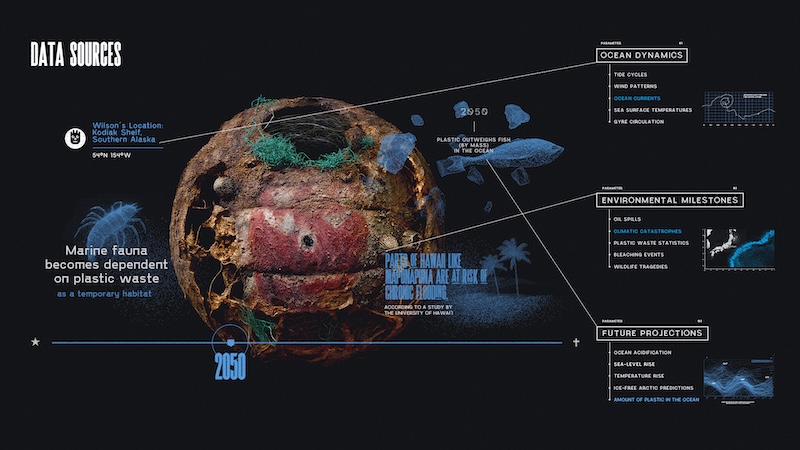
“This project is about making science human,” stated André Luis Esteves, director at the Onda Azul Institute. “By following the journey of a simple object, we illustrate decades of invisible damage caused by plastic waste — and why it urgently needs global attention. With Vivo and inspired by UNESCO’s scientific leadership, we’ve transformed data into a story people can feel.”
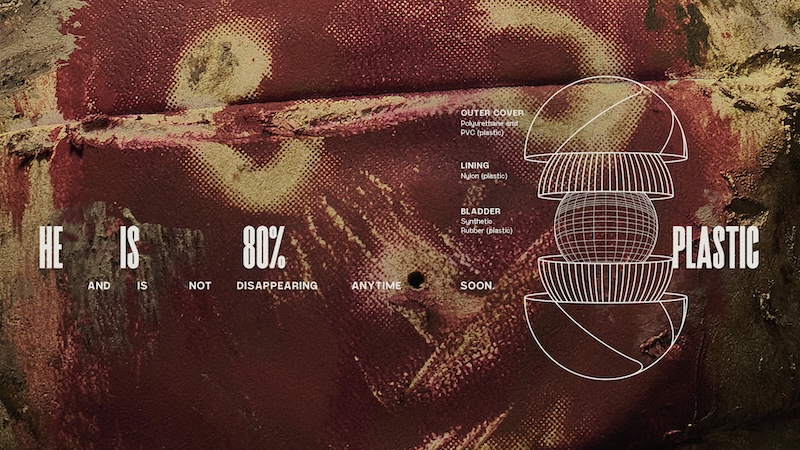
Vivo, a long-standing advocate for sustainability, provided infrastructure to translate scientific data into the storytelling platform.
“Science alone doesn’t move people — stories do. By turning complex data into a powerful visual journey, we help make the invisible visible. Communication plays a strategic role in mobilizing collective action for our oceans ahead of the UN Ocean Conference,” stated Raphael Vandystadt, VP of sustainability at Africa Creative.
Explore The Odyssey of Wilson here.