One hour after the doors to D&AD Festival day 1 were opened, the line to enter has wrapped itself around the building. Inside there’s a buzz. Chatter, presentations, clusters of people everywhere and some mood music fighting to make its voice heard. The question of whether or not I would find Bridget Jung, executive creative director of Ogilvy PR Australia and Tara Ford executive creative director of DDB Sydney, is uncomfortably prickly. I am the moderator for D&AD’s global trends – advertising in an hour and a half. The morning sucks when you’re nervous.
By Candide McDonald, editor.
Of course, I did find them. They were exactly where they were meant to be, exactly when they were supposed to be. We started chatting about current creative challenges (D&AD is all about creative excellence after all).
“I think the climate’s really conservative generally. Clients are wanting more for less and don’t necessarily have the appetite to go ahead with brave ideas,” Bridget noted.
Then our conversation moved into the topic, inside the jury rooms. Bridget’s jury rooms was PR and Tara’s was Media.
The Stable: D&AD judging is tough. The work has already gone through pre-selection judging. Good work sits on the bottom tier.
Bridget Jung: In a judging room, there’s the work that’s good, which becomes the minimum. Then you have work with a bit of magic or inspiration that sets it apart. That work becomes the ingredients for the Book, the work that deserves to be awarded and the work that should be really celebrated. This is the work that’s able to shift 10 to 12 people in a room with something that’s beyond just being new or just being original but a really interesting way into a problem.
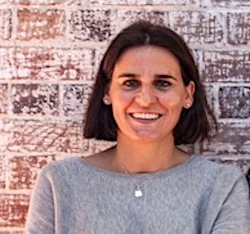
Tara Ford: The really good work stands out straight away and you just feel it. You feel the great work emotionally, I think. You feel it and you remember it.
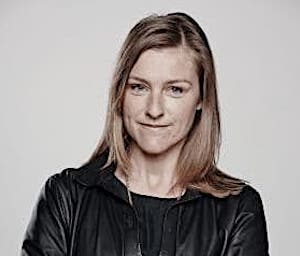
BJ: Because when you have hundreds of pieces of work, if you can’t remember it, it’s a sign. If you look at iconic campaigns, they’ve got iconic visual language, an iconic headline. You don’t need the two-minute case study film, you don’t need to dig into the description or the context.
TF: You know what the idea is straight away. You don’t have to search to find how the idea evolved and you can articulate it.
I’d been holding onto the subject of case studies. In our prep meeting for global trends, the power of case studies in judging had come up. So I asked, “Do case studies skew judging? People don’t see case studies.”
TF: They’re another piece of advertising. Another element of the campaign. And it’s no secret that there’s an art to it.
BJ: It’s an interesting point because we had a discussion around two almost identical pieces of work. Were they the same? Which came first? They were both local and someone brought up the point that the consumers didn’t see the other piece. Our view then was that it’s not about that. We have an obligation to celebrate the best work in this industry. It’s not just what the consumer sees. It’s what do we see. What really is outstanding, unique and original.
This led to the subject of judging criteria.
TF: One of the criteria we have to judge by is originality and I think that’s really important. So there are three: originality, idea and relevance.
BJ: At D&AD, we’re also curating a body of work that people coming up in the industry – students, young creatives- will be looking at. So we’re telling them what is defining work, what is iconic work.
BJ: And in PR which is a little different, you tend to get a lot of news for news’ sake, so we had to make sure that it was not only original but also inspiring – not just new or a world first. That it was a really exciting way to approach a problem that probably a hundred other teams have taken on and not been able to unlock.
TF: Relevance is really important. You keep coming back to the thought that a piece might be really beautiful but how is it relevant to the brand and also how is it actually relevant to people? Will people actually use this? Is it something they’ll want? I think you have to look at it this way as well. We’re not just talking to ourselves. We’re actually putting something out there – an ad, an experience, an object – that can be consumed…so long as people actually want it.
BJ: …and it has to link back. Sometimes it’s easy to get an interesting story out there, but you have to make sure that story drives back to what you’re doing for the brand. You have to be able to stand in front of a client and tell them why they should buy it. That reason’s not just ego, and “I’m going to win an award out of this”.
Originality is one of the hardest criteria to meet in the world, now that there’s so much advertising out there. Campaigns do get replicated for various reasons, including that marketers like the safety of ideas which have worked well before. And that we all share influences and experiences.
BJ: What really came out in our discussions is that those pieces that were clearly original thinking really stood out. Ideas for which you can’t at first believe that someone’s got there, but when you think about it it’s obvious. They’re the inspiring and exciting pieces. One example for us was Teddy Gun (by FCB Chicago and Illnois). For a super-saturated, “everyone knows there’s a problem” cause. Everyone’s been talking about or fighting for gun control. Coming up with the creative pivot of making a teddy bear gun to show how much harder it is to get a toy manufactured legally than a gun is fresh, arresting and sticks in your mind.
Also, when you look at its awards history, Teddy Gun is at the end of its run. It’s often hard when people are so familiar with a piece of work. They don’t get that rush of inspiration. This piece did well and it deserves it. It’s a really interesting way in. In fact, it seems to be often that the categories which are the most saturated eventually drive the most creative ways to surprise people. Meet Graham last year was a great example of that.
We’d wandered into the subject of judging work that had already won a lot of awards. Good. I was keen to explore the question, “Do you feel pressure to judge work like Fearless Girl highly?”
BJ: I don’t think that’s a problem
TF: I don’t think that’s a problem either. I’ve seen the case study for Fearless Girl maybe fifty times but I still get goosebumps at certain points. It’s an iconic piece. It still has that impact. Even when you see that visual of the little girl and the bull, it still hits you, even as a still image. I think, in fact, there is an awards fatigue. You see a piece of work so many times and go the other way.
BJ: It wasn’t shortlisted for PR. But I agree with Tara, it’s an iconic piece of work. It’s amazing. Its craft is faultless. The discussions we had were about criteria, about relevance and context. I think there a couple of things. Moreover, since that piece of work came out, the fund that produced it has paid millions of dollars in a settlement because it wasn’t paying women executives at the right rate. It provoked a lot of debate because everyone in the room loved it and loved what it did, but it became an ethical dilemma. For example, if there was an amazing piece of Volkswagen work post the emissions scandal, would you award it? It’s hard to. I think that’s particularly true in PR where reputation is a big part of the responsibility.
TF: We had a really interesting case in our jury, where two entries were based on exactly the same idea, but executed in a similar way in two very different countries. We checked the dates to see which came first and they were two days apart. That was a bit mind-bending. We also checked and they were not in any way affiliated, they weren’t parts of a global campaign. Only one got into the short list.
BJ: That came up in our jury as well. We looked at the dates and we looked at the affiliations too. Ultimately one entry was just far more interesting and it came down to the execution, which shows off the importance of the execution. Getting the territory is a good start but from there you can take it one place or another and taking it that better place leads to a more powerful ad.
TF: You can fuck up creative at any step of the way. It’s one thing to have a good idea but you have to execute it brilliantly, you have to PR it well, you have to put it in the right places, and have the perfect case study – the last piece of the campaign, the case study. That’s why we look at the execution so hard. That’s what people see. They don’t see the idea on a piece of paper.
BJ: I think what is so good about D&AD is that the jury managers remind us every day that what we are trying to do is curate the best work for 2017. We’re really looking at that year and asking could the Book NOT have that piece of work in it.
TF: We also decided, “don’t worry what it’s done anywhere else because we are responsible for these results, so what should we be awarding?” We also said that it didn’t matter what was happening in the next jury room. Only what we were talking about mattered.
BJ: It’s always interesting to look at the body of work selected at D&AD. You can have big budget, big product work chosen beside small, even tactical campaigns. So in KFC, there was the 11 herbs and spices idea. KFC deleted all of its Twitter followers and followed just 6 people named Herb and 5 Spice Girls. Then it just waited until someone noticed, which happened one month later. That tweet was liked and retweeted hundreds of thousands of times. What I particularly like about the idea is that it’s actually intangible. There’s nothing produced, there’s no asset but it’s a story that travelled the world. It was so simple and didn’t cost anything.
.@KFC follows 11 people.
Those 11 people? 5 Spice Girls and 6 guys named Herb.
11 Herbs & Spices. I need time to process this.
— ???? (@edgette22) October 19, 2017
TF: It’s pure PR, isn’t it?
BJ: And it stood up against big budget campaigns. It’s great that you can have both. When you look at what’s in the Book, there are so many options that can excite a young team about what they can do or which direction they can go. It’s very inspiring.
What were the debates in Media, I wondered?
TF: Media is also a specialist category. We worked on two criteria – using existing media in an interesting way or finding something that’s not usually used to communicate with a consumer. So the passport stamp in Palau Pledge and the Immunity Charm became debate topics. The question was, “Are these media?” But actually, they’re perfect media – they’re communication and in its purest form that’s a piece of media. People for whom the idea is relevant can look at the “thing” – the passport or the bracelet, and get a message.
BJ: The conversation about categorisation is always interesting. “Is it better in another category” comes up time and time again. The edges between PR and advertising are now blurred. A couple of times, like with KFC’s FCK print ad, the discussion was around “Is this an ad or is it PR?” PR is designed specifically to spark a broader conversation. Yes, it’s a print ad but it travelled to far-flung places like Sydney easily. It sparked a broader conversation. And it was a brave idea – KFC, a family restaurant told the world, “we’ve fucked up”. Kudos for being able to sell it in.
Mother’s human humour plucks KFC out of its chicken shortage disaster
Another was the Ikea pee ad. It looked like a normal retail print ad for a cot, but you could only access the price if you peed on it and you were pregnant. Again, it sparked a conversation and made it onto the news, spreading the special family club price for Ikea. We differentiated entries into pieces that got PR incidentally and pieces designed to drive PR. These two fit into the latter. They’re PR. Another PR campaign I really liked was the Marmite DNA test. It took a long-running, incredibly well-known advertising idea, you either like or hate Marmite, and offered DNA tests to prove whether you’re genetically programmed to have strong feelings either way. I loved seeing the use of radio, TV, creating a product and putting it all together. And I could imagine the discussions down at the pub or the cafeteria, “Have you seen that Marmite DNA test?” PR doesn’t have to be short-lived or disposable and it can be part of your brand building assets.