AI has become part of daily life, from recommendation algorithms to medical care and education. It has the potential to be highly beneficial and help us solve some of the most pressing issues of the century. It also carries the potential for abuse and for compromising our human rights. Facebook has discovered that.
Following two years of consultation and intensive international negotiations, the 193 Member States of UNESCO have agreed to adopt a normative framework on the ethics of artificial intelligence, combining actions and universal principles. Among the issues covered by these actions and principles, probably one of the most urgent is the right to privacy.

AI systems are trained using our data. They learn about taste in clothes and interests, and they take into account our opinions and political affinities, medical conditions and even our sexuality. Some of these personal data are collected using cookies.
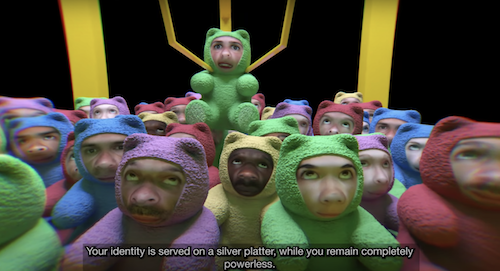
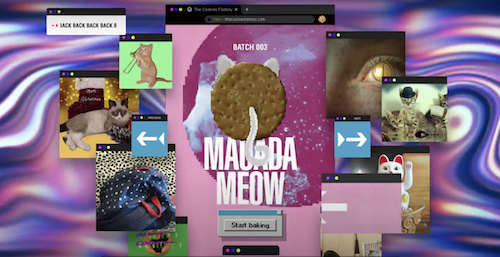
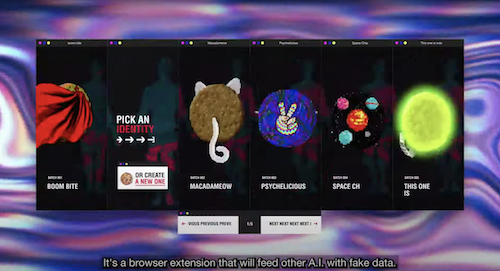
To alert the general public of the problem of digital privacy, UNESCO is launching The Cookie Factory. This extension allows you to assume a new identity as you browse the internet, using fake cookies, and shows you exactly how your data is harvested in real-time.
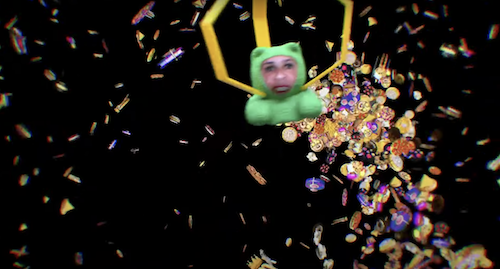
The Cookie Factory allows you to choose from 40 fictitious profiles – a Japanese hacker, a die-hard cat fan, a hermit, a survivalist, a conspiracy theorist…and feed the internet fake data about “you”. The AI-enabled Google Chrome extension replaces your own cookies with your chosen avatar’s cookies on all the websites you visit including YouTube and Amazon. You will be able to watch as the AI navigates the pages you visit by clicking on keywords corresponding to the avatar’s profile. These pages, tracked exactly as they are in a normal browsing session, will fill your browser with your avatar’s cookies. At the same time, they will tell the story of the avatar through a visual and audio narrative, from recommendations on YouTube and Amazon to your history, favourites and targeted advertisements, once these new cookies have been generated, your browser believes that you have indeed become someone else.
The extension even allows you to create your own profile by associating four of the 76 ‘themes’ on offer. In total, 158,185,764 possibilities to fool tracking algorithms. You can, of course, revert to your real identity and cookies whenever you wish by simply deactivating the extension.
Try the Cookie Factory.
The experience has been created by DDB Paris in collaboration with production studio, makemepulse. It took more than a year to develop and aims to support UNESCO in its effort to raise the awareness of the general public to the importance of cookies and help individuals make more informed decisions about their use of AI and what they expect from it.
The campaign launched November 25 and is driven by a trailer, supported by a PR and social media.
Credits:
Client: UNESCO
Client Team : Gabriela Ramos, Julien Ravalais Casanova & Matthieu Guevel
Agency: DDB Paris
Chief Creative Officer: Alexander Kalchev
Creative Directors: Pierre Mathonat & Alexis Benbehe
Art Director: Shanel Redzheb & Charlotte Faurisson
Copywriter: Lucie Guidon
Social Media: Pierre Guengant, Marie Le Scao & Elise Lassimoulie
Account Managers : Vincent Léorat, Nicolas Carlotti, Mathieu Bliguet, Tanguy Mortreuil & Justine Roux
Project Manager : Benoît le Morvan
Digital Project Managers : Philippe Saint-Martin & Cécile Picard
Post-Producers : Jérôme Deplatière & Sylvie Dumas
Sound Production : Cédric Boit, Alexandre Vicart, Clément Reynaud, Marine Cremer, Romane Bourdier & Angélique Laffond
Traffic Managers : Sophie Toqué & Virginie Fruchard
PR Director : Anne-Marie Gibert
Digital Production Studio: makemepulse
Executive Creative Director: Nicolas Rajabaly
Chief Technology Officer: Antoine Ughetto
Digital Art Director: Guillaume Mitch
Head of Production: Julien Rault, Gregory Bruneau
Producer: Juliette Desbois
Developer: Christophe Massolin
Post-Production Studio: Mikros Image (Julien Pinot & Nicolas Huguet)
Music: Universal