Greenpeace has used graphic images that shock and children’s stories that are heartbreaking to appeal to break the world’s unhealthy habits in campaign after campaign that appeal to emotions. This new campaign, by Dead Pixel and Studio Birthplace directors, Jorik Dozy and Sil van der Woerd, may well be its most powerful yet. Its three short films use a powerful visual metaphor and a simple narration of facts. They appeal to heads. Emotional responses follow.
The campaign, Dangerous Lies, pulls back the veil on the world’s biggest polluters and their pledges to become “carbon neutral” or “net-zero” by 2040. While “carbon neutral” may sound good for the planet, in reality it is a marketing loophole, Greenpeace says, that allows corporations to continue environmentally-destructive practices as long as they offset emissions by purchasing “carbon credits”. The credits are meant to fund schemes that supposedly remove carbon from the air, the films reveal, but they are impossible to verify and inherently flawed. So when JBS, the world’s biggest meat company, promises to be carbon neutral by 2040, it’s really saying that it will pay up to continue to destroy the Amazon Rainforest so it can raise its methane-producing cattle.
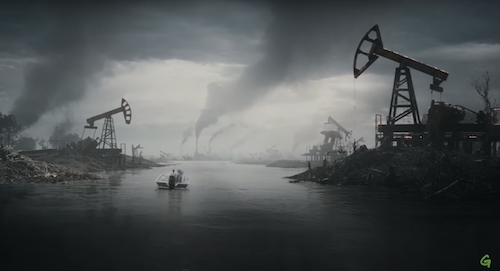
Studio Birthplace directors, Jorik Dozy and Sil van der Woerd, came up with the campaign’s concept, which draws inspiration from The Truman Show, in which an insurance salesman(Jim Carey) discovers his entire life is just a fictional TV show when his sailboat collides into a wall that is painted to look like an endless sky. In the Greenpeace series, its characters find that the natural places they are enjoying end with screens behind which are horribly polluted worlds, created by JBS, French oil-giant, Total, and the entire aviation industry.
“The whole idea of visualising how big multinationals throw up lies to hide the truth and make that into a physical, visible reality was quite a challenge,” stated Tim Smit, DeadPixel’s lead VFX artist. “We had to figure out how to project images onto a 2D surface so that it looks 3D, only for something to break open that 2D surface and unveil a hidden world behind it. Usually, it’s an augmentation of something but this time we had to make these crazy 3D-paintings with some live-action elements.”
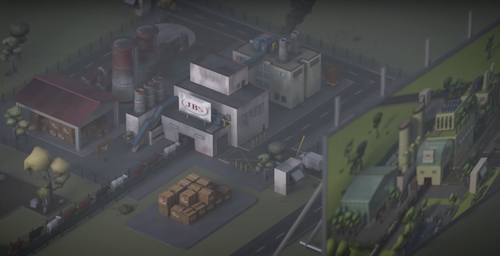
Each film features a different variant of this sudden transition from 2D to 3D. The JBS film features a football breaking through a painted wooden wall to reveal bleak industrial cow-farming. The Total film shows a boat tearing a painted canvas and entering a jet-black river with oil rigs lining the sides. And the aviation film shows a tarp getting ripped open by an airplane in take-off.
“It was a huge collaborative effort to figure out how to make this happen, but I think we did very well considering we had just 3 weeks to make this happen,” said Smit, who worked with fellow Dead Pixel artist, Marti Pojul, to make this happen.
Smit stayed in Amsterdam during the Singapore-based production and worked via an on-set visual effects producer.
“I loved working on this not only because the message it conveys is dear to my heart but also to everyone involved,” Smit added. “Jorik and Sil have a great eye for detail. They are great to work with because they almost always know exactly where they want something and if they don’t, they’re open for collaboration. It’s a two-way street. That’s something I really appreciate.”
The film’s VFX were created by Dozy; 3D graphic animations by Method & Madness; 3D lighting, shading and envornoment rendering by DeadPixel artist, Sohaib Bouiass.