Tinygiant director, Trevor McMahan, has tapped into a very longing everyone has now and then. His short film is a human story about digital exhaustion and the fantasy of starting over. Ironically, it was shot entirely on an LED volume stage. What began as a test for an LED volume wall in Geneva evolved into a narrative that shows virtual production technology can serve character-driven storytelling, not just blockbuster action. McMahan has turned that idea into a written story deeply embedded in his own very human life. Here it is:
The Quiet Power of Virtual Production: Why LED stages might be better suited to human stories than we thought, by Trevor McMahan
My kids came to set with me the other day for the first time. I think they’ve always assumed my job mostly involves talking about strange things on Zoom calls, so it was exciting to finally show them what a shoot looks like.
Unfortunately, the set wasn’t exactly thrilling.
We were filming a scene meant to feel like an exciting boat ride, but the reality looked very different. The actress was sitting inside a boat surrounded by towering chroma blue walls. The set was minimal. The air was still. The post supervisor at my side kept reminding me to make sure the actress’s hair wasn’t frizzy and that no water splashed on the windscreen. It all felt oddly procedural.
Looking around the stage – and then back at my kids’ unimpressed faces – I realised how flat the experience must feel for everyone involved. For the actors. For the crew. Even for the clients watching the monitors. There was no world around us.
Of course, the job of filmmaking is to make sure none of that emptiness ends up on screen. And we were doing that. But standing there, I couldn’t help thinking about a project I had directed only a couple months earlier – a short film called Escape – which had been shot entirely inside an LED volume.
In that case, we were also working on a stage with a car and a minimal set. But the difference was night and day.
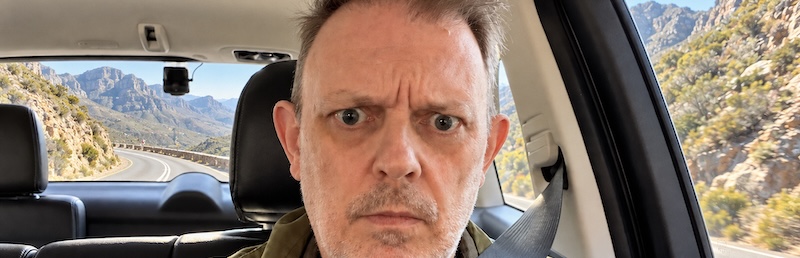
Instead of staring at blank walls, our actors were surrounded by a moving desert landscape. Sunlight shifted across the horizon. Cactus silhouettes passed behind them. The environment existed all around the car, casting light and reflections on it, not just in our imagination.
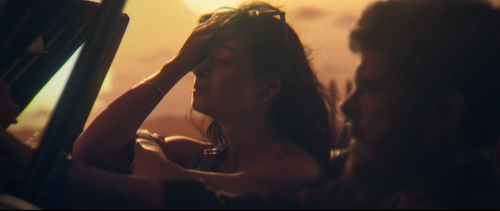
Before making Escape, I had always thought LED volume stages were primarily tools for large-scale productions – science fiction, fantasy, or heavy world-building. The kind of environments where virtual production helps create massive digital worlds.
What I hadn’t expected was how useful the technology could be for something much smaller and more intimate.
Because the background was physically present on the LED walls, we didn’t have to worry about keying out a green screen later. We could shoot through windshields, mirrors, and layers of glass without worrying about post-production complications. We could put the camera wherever it felt most emotionally right rather than wherever compositing would be easiest.
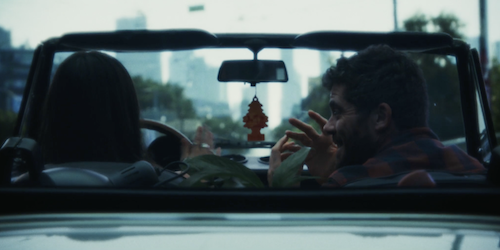
And perhaps most importantly, everyone could see the world of the film in real time.
Instead of imagining the environment that would eventually be added later, the actors could react to it. The cinematographer could see how the background interacted with reflections and light. It was the kind of thing where a client could look at the monitor and understand exactly what the shot would look like.
That immediacy changes the feeling on a set.
Where blue screen shoots often feel technical and removed from real life, virtual production can feel surprisingly alive.
Part of that comes from the real-time tools that drive the environments. For Escape, some of the landscapes were built in 3D and processed through Unreal Engine – a real-time 3D system that responds to camera movement and renders the environment live.
What fascinated me was how collaborative that process became. How we could adjust the sun’s position in the 3-D environment, right there on set. You could see the shadows shift across the sand as the sun moved across the sky. It felt less like post-production and more like location scouting across space and time.
Sometimes the ideas even emerged on the spot. During one rehearsal, a member of the 3D team casually suggested, “What if the car started to float away from the road?”
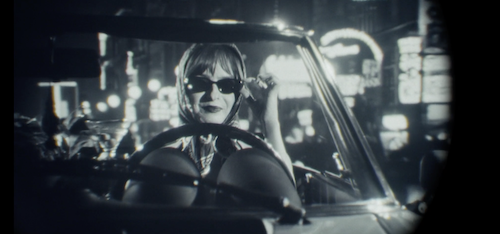
Within minutes, they had updated the animation, and suddenly our couple was drifting upward into the sky – a small surreal moment that made its way into the film. It felt playful and spontaneous, like digital improv happening alongside the traditional filmmaking process.
Moments like that changed how I thought about the technology.
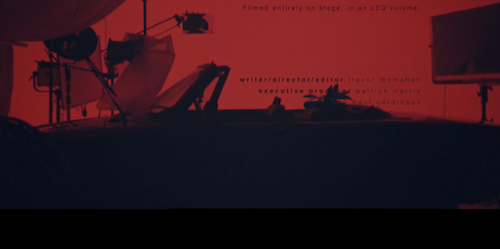
Since Escape, I’ve shot on a few more LED volume sets, and what keeps striking me is that virtual production doesn’t only serve spectacle. In many ways, it can actually help create the conditions for quieter, more human storytelling.
Actors have more of an environment to inhabit. Cinematographers can capture reflections and depth in-camera. Directors can focus on the emotional rhythm of a scene instead of constantly anticipating the needs of post-production.
In other words, the technology felt like it faded into the background and let us focus on human moments again.
And maybe that’s the most interesting part of where virtual production seems to be heading. Not toward bigger or louder imagery, but toward approaches that allow filmmakers to build worlds while still holding onto the small moments that make stories feel meaningful.
And sometimes it isn’t what the audience sees on screen, but what the actors, crew, and even a couple of slightly bored kids see while standing on set that makes all the difference.
Behind the scenes of Escape: