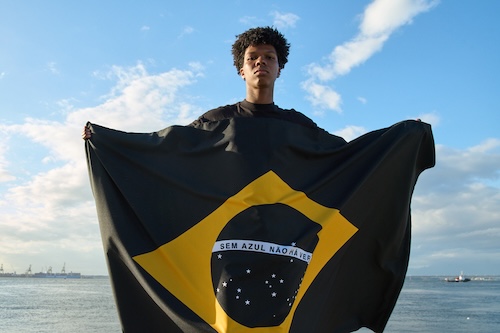

Droga5 Sao Paulo has reimagined the Brazilian flag. The vibrant blues and greens are gone, replaced by black as an environmental warning. The Lifeless Flag campaign was created for the debut of the SOS Oceano (SOS Ocean) coalition, a movement advocating for the expansion of marine protected areas in Brazil, and will run throughout October and November during COP30.
The Lifeless Flag was unveiled at Rio Ocean Week, on October 23, with the symbolic hoisting of a 10-metre flag between the Museum of Tomorrow and the Rio Art Museum (MAR). The campaign that is algiend with the goal of protecting 30% of the oceans by 2030, turns the flag into a visual manifesto for the planet’s future.

“Our role as communicators is to craft stories that spark new reflections in society and ensure that relevant messages escape their bubbles. We often speak about the importance of protecting forests, but it’s equally essential to focus on ocean preservation, especially as we prepare to host COP30. This campaign is an example of how creativity can drive positive impact,” stated Gabriela Rodrigues, chief impact officer at Droga5 Sal Paulo and head of WALK, the agency’s unit dedicated to social-impact projects for brands.

“Design has the power to condense a complex idea into a symbol that is felt before it’s understood. In this campaign, we use emotional language to change the way people see blue and green forever. Technically, blue is a primary color – the starting point for many others. Green, for instance, exists because there’s blue. It’s from the meeting of blue and yellow that the color representing our forests is born. Just like in nature: without the blue of the oceans, there’s no green of life on land. This chromatic relationship becomes the message. When the flag loses its blue, it loses its green and the visual void becomes an alert,” added Diego Limberti, chief design officer at Droga5 Sao Paulo.
The campaign also includes digital content, influencer partnerships, out-of-home actions, and bilingual activations designed to reinforce the global debate on ocean preservation, as well as a collaboration with the Sea Shepherd vessel and the participation of its founder, Paul Watson, a global reference in marine conservation.