This month is the 30th anniversary of the fall of the Berlin Wall, a construction that separated the people of one city – brothers, sisters, families and lovers. A wall that caused decades of anguish, desperation and grief.
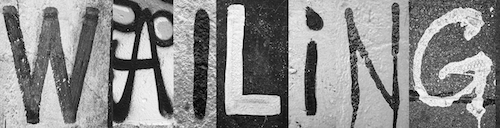
The wall also served as a canvas for the people of Berlin and beyond to share their messages of anger, hope, sadness, boredom and protest.
Heimat Berlin is marking the anniversary with a film that speaks not of the past, but of the present, for street art association, The Cultural Heirs, a non-profit association committed to integration and violence prevention as well as the prevention of discrimination and inequalities in our society. We were less divided thirty years ago than we are right now. The voice of Heimat’s message is that if the wall itself. In a two-minute film, the wall tells its story using letters taken from original graffiti posted on it.

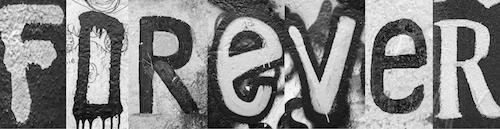
The process of creating the font was very complex and took three months of photographing and researching the parts of the wall that still exist to make a totally authentic font from the original graffiti.
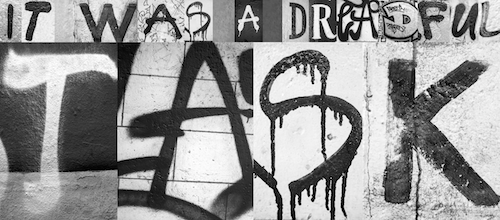
If the Wall had a voice, this, Heimat postulates is what it would it say: “Don’t rebuild me – not in any way, not even in your minds.” It’s a message the world needs to hear.
The font is also available for everyone to make their own statements for freedom, using the anniversary typeface and a microsite where people can upload them. The statements will be collected and turned into a book which will be sent as a message to the current leaders of the world.
To leave your message, write your own slogan, tick the two checkboxes, and choose Graffik Generien to see your text pop up. You can then download it (or ‘herunterladen’) in .png form.

Matthias Storath, chief creative officer at Heimat Berlin, stated, “Street art and iconic design can have a dramatic impact on culture, and creating a campaign to celebrate freedom and warn about division to mark this important anniversary was very meaningful to us. We hope that this project will help remind audiences of our hard-won freedoms, which we must cherish and enjoy.”
Credits
Creative agency: Heimat Berlin
Sound Design & Music: Stephan Moritz @ Mokoh Music
OnlineTool: visualtech
Client: The Cultural Heirs (die kulturellen Erben)
The history of the Berlin Wall
STREET ART & THE BERLIN WALL
French street artist Thierry Noir is believed to be the first graffiti artist to begin painting the Berlin Wall, in West Berlin in April 1984. At the time, there was already writing on the wall – mostly racist comments and anti-American slogans. Noir wanted to perform a revolutionary act by transforming the wall, making it ridiculous and helping to destroy it.
In 1986, street artist Keith Haring painted a 300-metre mural on the wall, which was highly publicised. This featured human figures who were interlinked at their feet and their hands, signifying unity. The colours matched those found in the German flag: yellow, red and black. Unfortunately, it had been painted over by the time the Wall came down in 1989.
Following Wim Wenders’ acclaimed film Wings of Desire (1987), in which the Wall’s graffiti murals featured, Berlin street artists were soon joined by members of the public, who created a potpourri of art, graffiti, and messages for which the wall subsequently became famous. Much of the artwork was not claimed by artists and remains anonymous. Because the wall was open to everyone, there were no restrictions on what artists could do.
ABOUT THE BERLIN WALL
Following disagreements about the reconstruction of Germany after the Second World War, the country was divided into East and West Germany in 1949, with the French, British and American sectors of Berlin becoming West German enclaves within East Germany.
The Berlin Wall was built to prevent citizens of East Germany from migrating to the West and work began on August 13, 1961 when, at midnight, the army and police began tearing up the streets, installing fences and laying barbed wire alongside the border. The date became known as Stacheldrahtsonntag (Barbed Wire Sunday).
Overnight, the city’s borders were closed and control stations were installed, including the infamous Checkpoint Charlie. Trespassers could be arrested or even shot, and although the exact number of casualties remains unknown, it is estimated that over 230 people died while trying to cross the Berlin Wall.
The Wall spanned 155 km and initially consisted of chain fences, minefields, beds of nails and other obstacles. Throughout the years, it evolved into a sophisticated security system of concrete walls, electric fences, guard towers and an in-between no-man’s land known as the ‘death strip’.
In the years leading up to its deconstruction, the West Berlin side of the Wall had artwork completely covering it. The colourful expressions were in sharp contrast to the East’s sterile ramparts, where people were not permitted to get close enough to the Wall to paint anything. This came to symbolise the differences of the separate societies. On one side, the free expression of the open society of West Berlin; on the other, the blank walls of the repressed society of East Berlin.
Today, remaining sections of the Wall and its art can be found in the East Side Gallery: an open-air gallery in Berlin, consisting of a series of murals painted directly on a 1,316 m (4,318 ft) long remnant of the Berlin Wall, located near the centre of Berlin. The gallery consists of 105 paintings by artists from all over the world, painted in 1990 on the east side of the Wall.