
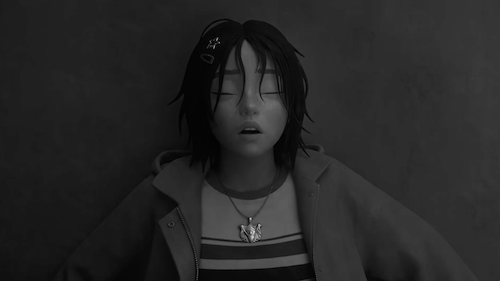
Mitsuki, a young Japanese woman, takes shelter from the rain inside a Tokyo arcade. There, she discovers an arcade game that pulls her into an unknown universe, where she must overcome challenges inspired by Andalusia’s eight provinces. The only way to win? Surrender to Andalusia.
The animated short film is called The Surrender. It was created by Ogilvy Spain for Andalusia Tourism, and features an original score by Hans Zimmer and premiere at Comic-Con Málaga 2026.
Far from conventional advertising, The Surrender is a branded content piece of more than five minutes that expands and closes the Andalusian Crush universe, a campaign that has already won the Gran Premio Nacional de Creatividad, the El Sol Grand Prix, and awards at international festivals including Cannes Lions, the Clio Awards, and Spain’s Eficacia Awards. The Surrender unveils millennia of Andalusian history and culture for tourists willing to face a destination as challenging as ANDALUSIA.
After three years of showing the world what it means to discover the region, this latest chapter reinterprets Andalusian heritage as a tribute to video game culture, cinema, science fiction, and pop culture. The Surrender unveils millennia of Andalusian history and culture for tourists willing to face a destination as challenging as Andalusia.
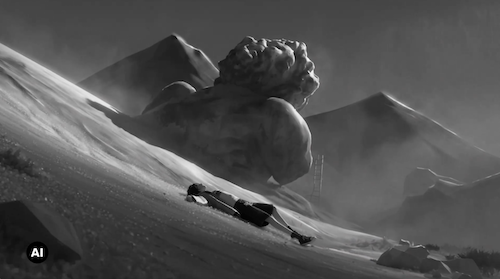
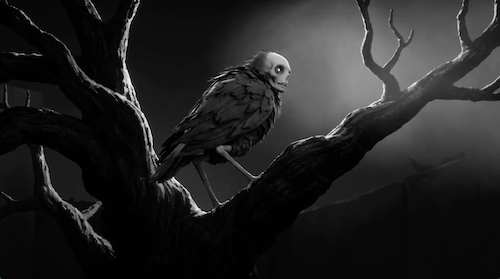
Over more than six months of work, the project combined 3D animation, live-action filming, and motion capture with advanced artificial intelligence techniques, woven into different stages of production to explore new visual and narrative possibilities. The story draws on isekai, a genre of Japanese anime in which the protagonist is transported to a parallel world.
“The amount of talent that came together for this was incredible. It’s as if Messi and Zidane, each at the peak of their game, were playing on the same team. In fact, the hardest thing to manage was the sheer number of ideas and proposals brought to the table,” stated Miguel Provencio and Víctor Vázquez,creative directors at Ogilvy.
“This project leaves us with mixed feelings, for a couple of reasons. On the one hand, it’s a kind of farewell to Andalusian Crush, a brand platform we saw being born and would have loved to keep building on. On the other hand, we’ve worked throughout with a creative freedom and ambition that seem to be an endangered species in advertising today,” added Juan P. Moreno and Javier Senovilla, executive creative directors at Ogilvy.
Music is the backbone of the piece. Hans Zimmer, a two-time Oscar winner and the composer behind scores such as The Lion King, Gladiator, Interstellar and Dune, expands on the theme he created for the previous Andalusian Crush instalment. He delivers a full symphonic development that accompanies Mitsuki through what he describes as a monumental love letter to the cultural force of Andalusia and a surrender to it.
The film pays constant homage to gaming culture and its ability to influence other forms of expression. Each level is built around a distinct genre, mechanic, or recognisable visual style, and gathers references to titles that have crossed over from the screen to become cultural icons.
Throughout her journey, Mitsuki is guided by the Carriazo Bronze pendant, an iconic Tartessian piece representing the Phoenician goddess Astarte.
- In the first level, with an aesthetic inspired by García Lorca, the protagonist makes her way through a traditional white village under the gaze of Bernarda Alba and faces the Morcho, a mythical creature from Andalusian folklore said to portend death.
- The second level becomes a platformer devoted to Sevillian Baroque art, where Mitsuki dodges hazards among masterpieces by Zurbarán, Murillo, Ribera, and Valdés Leal. After surviving the living skeleton of In ictu oculi and seeking help from Saints Justa and Rufina, she makes a daring leap into the void from La Colosal, Murillo’s famed Immaculate Conception.
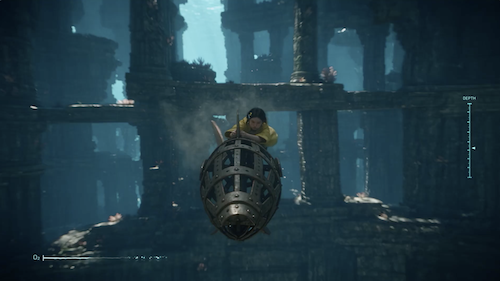
- Water takes over in the third stage, which plunges Mitsuki into the depths of Atlantis alongside the goddess Malac. This level gathers references to the maritime heritage of Cádiz and Málaga, including the Priests of Cádiz, the Virgin of Carmen with her biznaga, and the Castle of Sancti Petri.
- In Granada, the fourth level unfolds as a parkour sequence that starts in the Alhambra’s Court of the Lions and sends Mitsuki zip-lining over the rooftops of the Albaicín toward an interdimensional portal that leads her to the next challenge.
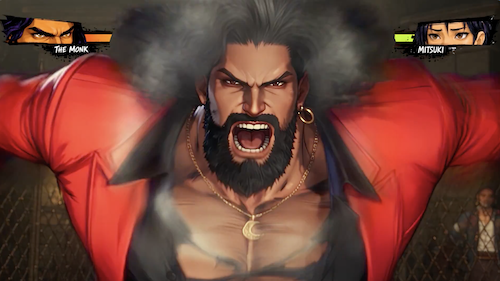
- The fifth stage, “Tablao” Battle, pays tribute to head-to-head fighting games. Under the watch of La Matriarca, Mitsuki squares off against The Monk, a flamenco legend who hits her with the full force of a quejío set to seguiriyas, the genre’s rawest cry.
- From there, the adventure speeds up as she travels through the Pulpí Geode in Almería; the Censers of Loja in Granada; the giant olive groves of Jaén; Doñana Park in Huelva, where an Iberian lynx devours one of Columbus’s caravels; and the maze of arches in the Mosque-Cathedral of Córdoba.
- The climax unfolds in the Tabernas Desert in Almería, the iconic backdrop of Sergio Leone’s spaghetti westerns. There, a mysterious rider reveals the key to completing the game: surrender to Andalusia.
A ROMA production, with post-production by McNulty + Sauvage and managed by WPP Production, the film required a long and meticulous process involving more than 150 professionals. A team of digital artists, illustrators, 3D animation designers, and specialised technicians, together with sound design by ISILIK, made it possible to translate Andalusian heritage into contemporary entertainment.
Watch the first two episodes:








Leave A Reply