AI has made it ridiculously easy to make beautiful things. Which raises a slightly uncomfortable question – what happens when making is no longer the hard part? Syed Shuja Hussain has explored that dilemma.
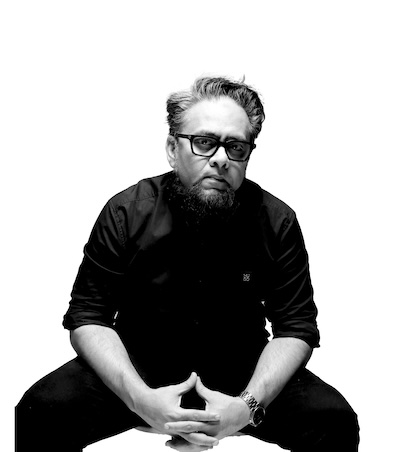
Hussain is an awarded creative director and art director, based in the UAE. He held creative positions in top global agencies such as Havas Worldwide, Impact BBDO and FP7/McCann and Leo Burnett, before joining Dubai World Trade Centre as creative director and acting head of brand management. He has worked with a vast array of famous brands in an agency career of more than twenty years – Ferrero, Pepsi, Visa, McDonald’s, Burger King, Mastercard, KFC, Sanofi, Starbucks, Primark, Dubai Tourism, Dubai Police, Emirates NBD, Babyshop, and Home Centre, among them.
AI has made it ridiculously easy to make beautiful things. That is the good news. The slightly awkward news is that everyone can now make beautiful things. Open LinkedIn, Instagram, Behance, pretty much anywhere creatives hang out, and you’ll see incredible cars flying through impossible landscapes, fashion campaigns on planets nobody has discovered yet, giant products taking over cities, and food photographed like Ridley Scott has suddenly developed a very personal interest in mayonnaise.
Some of it is brilliant. Some of it genuinely makes me stop. But a lot of it also makes me think, “Cool,” and then I scroll. That has been bothering me lately, not because the work is badly made, but because it is often beautifully made and still somehow hard to remember. I can remember the lighting, the texture, the cinematic grade, sometimes even the prompt style, but not always what the work was trying to say.
And I think that may become one of the more interesting creative problems of the AI era. We have dramatically improved our ability to make. I’m not sure we have dramatically improved our ability to have something worth saying.
For most of my career, making something extraordinary was difficult. You needed the photographer, the director, the location, the set, the right weather, the right budget and usually a producer capable of making seventeen impossible things happen before Wednesday. After all that, somebody from the client would still ask if we could make the logo slightly bigger. Some things are eternal.
Now I can sit with a laptop and explore ideas that would have required a small production company a few years ago. I love that. I use AI all the time because it lets me explore faster, visualise ideas earlier, test worlds, play with casting, environments, compositions and film language before somebody starts discussing overtime.
That is an extraordinary creative advantage. But there is a catch. When everyone gets the same superpower, eventually the superpower itself stops being the advantage. Something else has to be.
Picasso may have understood that long before any of us had heard the word “prompt.” In 1964, when he was talking about mechanical brains and calculating machines, he reportedly said, “But they are useless. They can only give you answers.” It is a great line for the moment we are in because our machines have become very, very good at answers.
Write this. Visualise that. Make it cinematic. Change the lens. Make the burger bigger. Put it on Mars. Done.
The interesting part is increasingly the question that came before all of it. Why are we making this? What are we actually saying? Why should anyone care? Why should this brand be the one saying it? Those questions are still annoyingly human.
Recently I was working on a creative project for a major US retailer. I won’t show the work here, partly because it isn’t mine alone to show, but mainly because showing polished images would slightly ruin the point. The most important part of that project happened before there were any images at all.
It started with a thought and then a rough sketch. Nothing impressive. No cinematic lighting, no beautifully rendered people, no twelve-paragraph prompt ending in “8K, hyperrealistic, award-winning photography.” Just a very simple question: is there an idea here?
That moment still matters because once the thought made sense in pencil, AI became incredibly useful. Before that, it would simply have helped us make the wrong thing beautifully.
This is where the Death Star comes in.
The Empire had exceptional production values. Strong visual identity, consistent uniforms, impressive architecture, unlimited budget. They built a weapon roughly the size of a moon and then somehow left one small exhaust port that allowed a farm boy from Tatooine to blow up the entire thing. That is what happens when execution gets a little ahead of the sense check.
And, to be fair, they built another one.
Which proves even the Empire had clients.
Sometimes somebody in the room has to ask the irritating question before everybody gets too excited about how spectacular the thing looks. That person isn’t anti-craft. They are protecting the idea.
This is not really a new problem. Advertising has always had a habit of confusing technique with creativity. A new camera, a new format, a new platform, a new piece of software. For a while, the technique itself gets the attention. Then everybody learns it and we are back to the same old thing: ideas.
John Hegarty once warned that if we all ask the same people the same questions in the same way, we will get the same answers. You could almost replace “people” with “models” now. Same prompts. Same references. Same cinematic adjectives. Same answers.
We have all seen that AI face. We have all seen that lighting. We have probably all generated that mysterious woman standing in the middle of a desert for reasons nobody completely understands. The technology is not doing anything wrong. We are just asking very similar questions.
That is why I think the new scarcity is judgement.
For years we talked about production being scarce. Time was scarce. Money was scarce. Access was scarce. AI removes a lot of that friction. What becomes scarce instead is taste, curiosity, restraint and knowing when something is genuinely interesting rather than simply impressive.
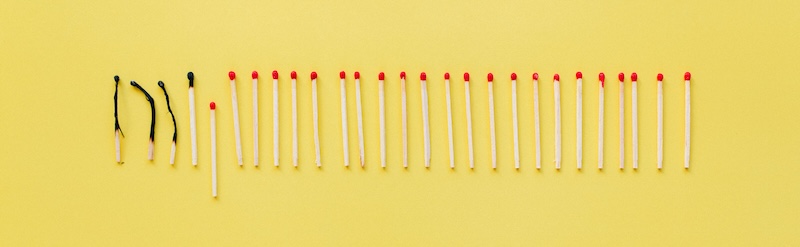
Knowing what not to make may become one of the most valuable creative skills we have. When producing ten routes was expensive, you naturally thought carefully before producing ten routes. When generating a hundred routes costs almost nothing, having the judgement to kill ninety-nine of them becomes part of the job.
AI gives us more possibilities. It does not automatically give us better choices.
Before I ask AI to make anything important, I find myself coming back to four simple things. Is there a real human or business truth underneath the idea? Could only this brand credibly own it? Is there one thought strong enough to travel beyond a single execution? And will somebody remember what it made them think or feel, rather than simply remembering that it looked expensive?
If those things work, then bring everything in. AI, film, photography, design, illustration, VFX, a man with a pencil. Whatever the idea needs.
Technology should serve the thought, not become the thought.
And this is not an anti-AI argument. Quite the opposite. I think this may be one of the most exciting creative moments we have had in years. Maybe decades. A person with an idea can now explore it at a level that previously required enormous resources. Young creatives can visualise things they could never afford to make. Small agencies can think at the scale of big agencies.
Someone sitting in Houston, Karachi, Mumbai, Dubai, or a bedroom somewhere nobody in our industry is paying attention to can make something tomorrow that makes the rest of us slightly uncomfortable.
Good.
That is what creative disruption is supposed to do.
But access to a lightsaber does not automatically make you a Jedi. Sorry, I had one more.
David Ogilvy reduced advertising to four wonderfully unforgiving words: “We sell, or else.” AI has not changed that. Brands still need to grow. People still need to care. Something still has to move, whether that is a product, a perception, a behaviour, a conversation or an emotion.
The job is not to demonstrate how clever our technology is. Nobody outside our industry really cares which model made the background. They care whether the thing means something to them.
AI can increasingly make almost anything. Soon the things we currently find astonishing will become normal. Perfect images will not feel extraordinary. Perfect film will not feel extraordinary. Being able to generate a hundred executions before lunch will not feel extraordinary.
It will just be Tuesday.
And when that happens, we may end up exactly where advertising started: with an idea.
Picasso’s machines could only give him answers. Ours can now give us extraordinary ones. But maybe the creative advantage was never having more answers.
Maybe it was knowing which question was worth asking.
AI can make it.
Our job is still to make it matter.





Leave A Reply