

This week, Donald Trump joined the gallery of press freedom predators compiled by Reporters Without Borders (RSF, from its French name Reporters sans frontières). On the same day, RSF and The Good Company released a chilling 1.44 minute film, available in English and French, that draws on the conventions of horror cinema.
The film, Baby Trump, is not timid. Trump is the villain in a bedtime story. He is also the child to whom the horror story is being read.
This is the story: In a beautifully furnished child’s bedroom in the 1950s, toy soldiers lie scattered across the rug as rain beats against the window. A father sits on the edge of his son’s bed to read him a bedtime story. The angel-faced little blond boy is delighted. But instead of a fairy tale, his father reads him a newspaper article about a candidate celebrating his election victory. Those who speak out are branded “enemies of the people”. As journalists investigate, checking facts and interviewing witnesses, they uncover electoral fraud
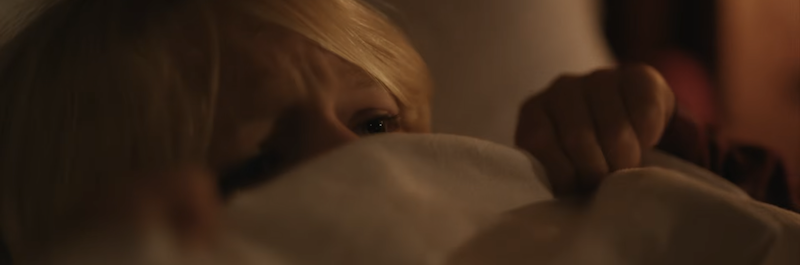
The boy’s delight turns to fear as thunder cracks outside. When those behind the fraud are found guilty, he hides under the covers. “Goodnight, Donald,” his father says as the shot closes in on a notebook on the bedside table bearing the boy’s name, Donald Trump.
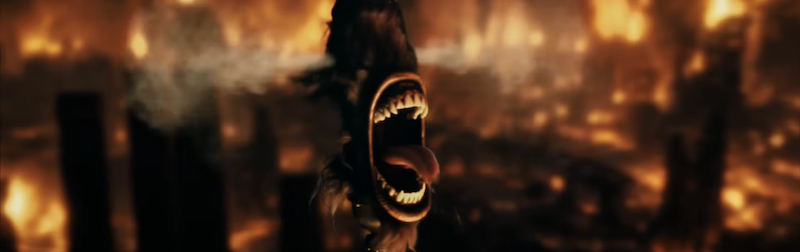
RSF’s brief to The Good Company was to shine a light on press freedom predators, especially the most outspoken of them all. The agency turned the question around – what scares them? The answer was facts, the foundation of journalists’ work. That thought led the team back to childhood and the bedtime stories that once kept us awake at night. What if, even as a little boy, Donald Trump had been terrified of one particular kind of story – the truth? What terrifies little Donald isn’t a monster under the bed, but journalists doing their jobs, uncovering fraud and corruption. Even the idyllic 1950s setting takes on a sinister edge through the film’s use of classic horror techniques.
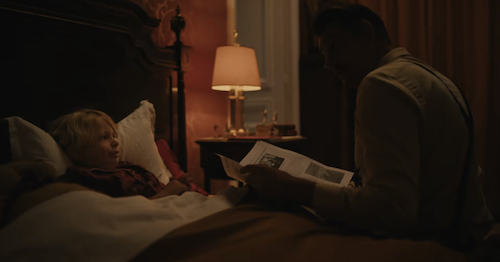
“We made a horror film starring Donald Trump. But for once, he isn’t the one doing the terrorising. He’s the one trembling. Because even the most fearsome predators have predators of their own: journalists,” explained Hadi Hassan-Helou, creative director at The Good Company.
Each year, Reporters Without Borders publishes profiles of press freedom predators – heads of state, leaders, political parties and companies that kill, imprison or censor journalists, or use financial pressure to silence them. The 2026 gallery features 32 predators across five categories based on the World Press Freedom Index indicators – political, security, legal, economic and social. The film aims to encourage audiences in France and around the world to explore the gallery and the research behind it, published on RSF’s website on 2 November.
“This film uses fiction to convey a well-documented reality – press freedom predators target journalists precisely because their work can expose the truth. In this campaign, The Good Company uses a parody of Donald Trump, the latest addition to this sinister gallery, to remind us that these predators share the same phobia: facts. Facts are central to the journalistic method, and their presence in public debate safeguards democracy,” commented Thibaut Bruttin, director general of Reporters Without Borders.
Never in the World Press Freedom Index’s 25-year history has the average press freedom score been this low. In the latest edition, published on 30 April 2026, the United States dropped seven places to 64th out of 180 countries. RSF’s annual round-up recorded 67 journalists killed in the year leading up to 1 December 2025, more than one a week. On 14 January 2026, RSF described the US president as “on his way to joining the world’s worst press freedom predators”. He has now joined their ranks.
“In the film, a child is scared of journalists doing their jobs. Around the world, 503 journalists are detained for doing theirs,” added Hadi Hassan-Helou, creative director at The Good Company.
The campaign will run in media space provided free of charge, launching in print and digital, with TV and OOH placements depending on support from media partners in France and internationally.
“RSF isn’t afraid of fear, and together we have a duty to provoke. If people challenge you, they’ve noticed you. Our hope is that this film travels and is seen wherever it will unsettle people most,” stated Julien Quidor dit Pasquet, managing director of The Good Company.




Leave A Reply