Pepsico is disenchanted with what adland is providing. President of Pepsico’s global beverage group, Brad Jakeman, made that clear in his rebuke, Designing for Disruption, at the ANA’s Masters of marketing conference earlier this month.
“Can we stop using the term advertising, which is based on this model of polluting [content]…”
The “global alignment agency is a dinosaur concept…”
And the company is not just remonstrating against ad agencies, “The agency model that I grew up with largely has not changed today yet agency CEOs are sitting there watching retainers disappear…they are looking at clients being way more promiscuous with their agencies than they ever have.”
It’s putting its money and its ideas where its mouth is.
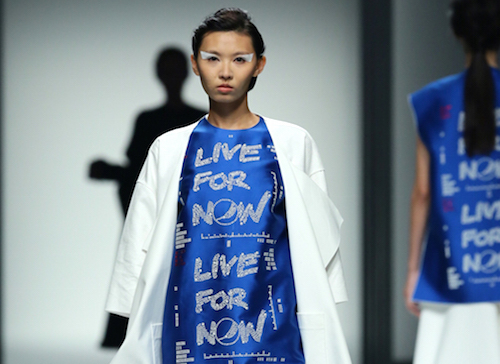
With soft drinks struggling to hold their ground against a barrage of new competitors, Pepsi is doing what it can to support a lifestyle positioning and align it with youth culture, ie. self-expression, sport, fashion, music.
The launch of the Pepsi phone is an idea that ignites questions. Being in with the in crowd at Fashion Week is smarter. Pepsi has done more than make itself the named sponsor of Shanghai Fashion Week, October 13 -21. It became the named partner of three up-and-coming local fashion labels.
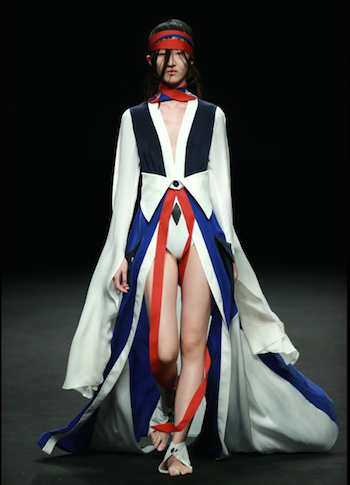
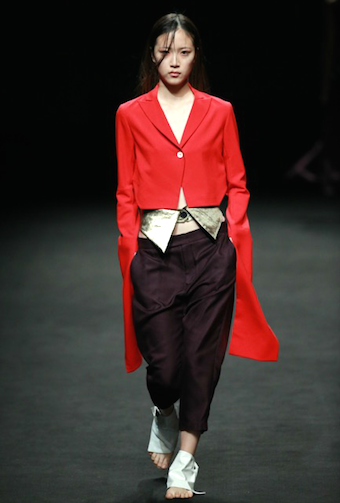
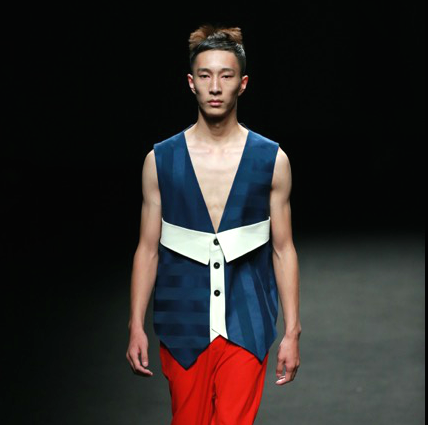
Pepsi’s relationship with the collections of Just for Tee, Content and Su Guang Yu was subtly visibly on the catwalk. Pepsi’s input was a “very subtle exercise,” stated Matthieu Aquino senior director, brand experience & international design at PepsiCo.
“We want people to express themselves and be honest about what they want to create. We gave them a lot of background about the brand, showed them the brand positioning and past campaigns so they could feel the brand.” They were required to use Pepsi colors of blue, red and white, but “It wasn’t mandatory to use all three together. We didn’t ask them to put logos, but you need to feel the connection to the brand.”
The idea came from Pepsi Marketing China, which collaborated with the brand’s global design team and was overseen by Mauro Porcini, the brand’s first-ever chief design officer who joined PepsiCo in 2012 after leading design at 3M.
The 2016 Spring/Summer Shanghai Fashion Week was the second time Pepsi had worked with Shanghai Fashion Week. The collections were not the first of Pepsi’s design initiatives the since Porcini joined the company either.
In Spring 2014, Pepsi launched its first global fashion line, the Pepsi Capsule Collection, with design-oriented brands like Bang & Olufsen, Original Penguin, Del Toro, SHUT NYC, Gents and Goodlife. The Collection was a series of products ranging from skateboards to shoes to clothing, with Pepsi represented in artwork created by global street artists like Brazil’s Ricardo AKN, the U.K.’s “doodle bomber” Hattie Stewart, Argentina’s Ever and Jaz, Spanish artist Zosen and Merijn Hos from the Netherlands.
The Pepsi Capsule Collection was sold at Collette in Paris, Liberty in London and Bloomingdales in NYC.
For Autumn/Witner 2014, Pepsi partnered with Vogue Italia to launch the Pulse of New Talent collection by ten emerging global designers.
Together, the initiatives are meant to highlight the brand’s lifestyle positioning and align it with self-expression, sport, fashion, music. Efforts such as the Capsule Collection are also a savvy way for the brand to elevate its licensing program. In China, especially, that’s been crucial. Like many other big brands, Pepsi has to endurea plethora of fake merchandise threatening to sully its brand name. “There are tons of counterfeit products on the market, but for the last two years we’ve been elevating the quality of our output,” said Mr. Aquino. “Our goal is to provide better and better assets for our partners.”
Overall, design itself plays an especially critical role for Pepsi in China, which presents an increasingly intense level of competition from all over the map — Western brands, Asian competitors and Chinese companies, who have been stepping up their own design. “All these great executions are collapsing in the same area,” said Mr. Vella.