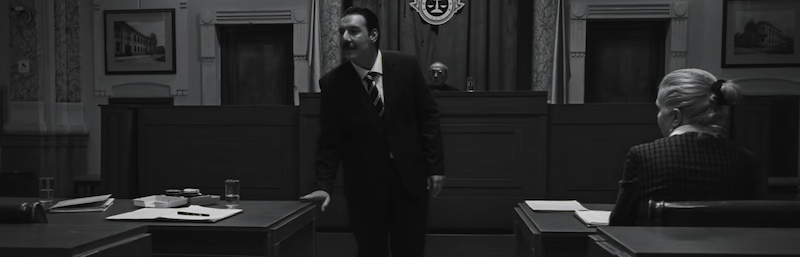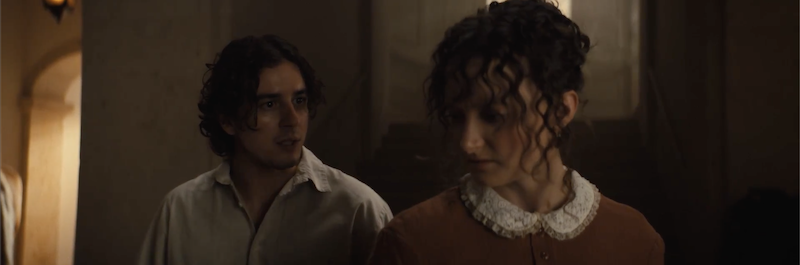
Photoplay Playtime director has gone from new to wow in a such a short time. Now, she also has an SBS mini-series under her belt. The director, who added humour to the rigours of motherhood for Bonds, to Saturday real estate searching for Domain, the strength of Young Henry’s beer and being a woman for Bumble x Google has conquered sadness (actually, again – watch this triumph for Kids’ Cancer Project.) It’s Fine, I’m Fine is a happy-sad black comedy. It’s complex, irresistibly human and addictively insightful.
Smith took The Stable behind the scenes of this new triumph. Her interview also gives a real insight into her remarkable personality – exuberant, positive, enthusiastic, disarmingly honest and heartwarmingly grateful.
NOTE: It’s Fine I’m Fine has also just been AACTA nominated for Best Digital Series. AACTA members can vote on the winners from now until November 7.
The Stable: To start, please me about the series.
Stef Smith: It’s Fine, I’m Fine is a four-part TV miniseries (!!! I still get a kick out of being able to say that).
The series melds together three things I love – happy/sad stories, magical realism & therapy. Though I don’t go to therapy nearly as much as I should (but who does!?!). As a storyteller, I’m really drawn to the happy/sad moments. Look at the world around us, it’s impossible to be happy all the time. Life is too complex for that. Are we all alone in the Universe? I dunno, but sometimes it sure as shit feels like it. I find embracing sadness a really healthy and liberating thing.
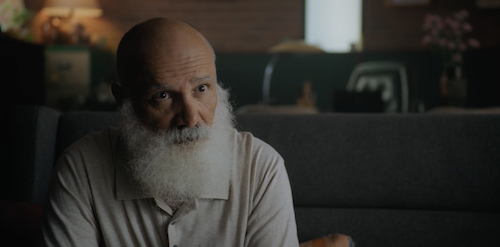
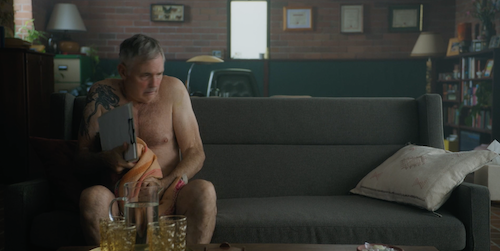
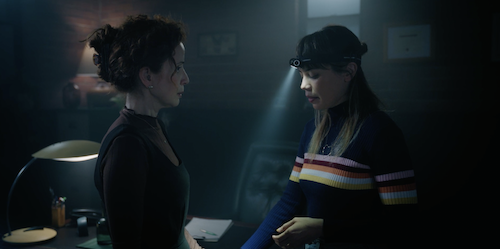
The series stars Ana Maria Belo as the lead character, Joanne. Ana was also a writer and story producer on the series and happens to be deaf – which you see in the final episode of the series performed in Auslan. The ensemble of actors is really incredible, including some writers who performed their scripts – Arky Michael, Cecilia Morrow, Chris Bunton and Wendy Mocke. And amazing guest appearances from Andrew McFarlane, Catherine Van-Davies, Edan Chapman, Eryn Jean Norvill, Heather Mitchell, Margaret Pittas, Sam Greenlees and Suren Jayemanne.
TS: Where did the (idea for) the series come from? Mental health is still a touchy topic – what was the aim of the series?
SS: I really missed sinking my teeth into meaty performances, as both a director and an audience. Things move so quickly these days in storytelling and it feels like we rarely get to sit as a character unfolds in front of us.
Before creating the series, I’d been to a couple of sessions of hypnotherapy which I fuckin’ loved, but that makes me swallow a laugh almost every time I say it because it totally sounds like it shouldn’t work. Anyway, it’s a very visual form of therapy – less talky-talky, more creative visualisation of the fuckery inside your own scrambly brains. Hence, magical realism.

From conception, I wanted to create a framework for a series that allowed the voices of an ensemble of writers. What better setting than therapy for lots of different people to spill their guts? What’s great is that can mean anything, and in our series sometimes that is through humour, sometimes it’s raw vulnerability, often it’s both.
As for the aim of the series. It was to provide access and a genuine pathway for those new writing voices to build meaningful credits that could lead to future employment. It was vital to me that the project benefitted the ensemble of writers as much as myself, so everyone was picked based on their amazing talent, perspectives and that they deserved a solid shot. A chance to say whatever it is they wanted, to be supported completely in that.
I’m so grateful the writing ensemble all said yes. Our entire framework of the show was built on creating genuine access and inclusion, long before a single person was cast. I’m very proud of that.
TS: What do you hope your audiences take from the series?
SS: I try to approach all of my work as if my job is to advocate for the audience’s final experience. What do they feel? Are they genuinely moved, shocked, does the toilet humour drag on long enough? Were there tears? Did they give a shit?
Even though my priority is always the audience’s experience, I’m too chicken shit to actually sit in on a screening. I can’t handle it. And I don’t want to put the audience through sitting in the same room as my anxious ass. So far, the only screening that I’ve sat through with an audience was our screening in Cannes for CanneSeries at the start of the year. I guess if you’re gunna do it, it may as well be on La Croisette.
We were lucky enough to have a sold-out Australian Premiere at MIFF, and even then I couldn’t do it. I went and played Jurassic Park at TimeZone then came back for the Q&A where thankfully there were reports of many tears and chuckles.
It’s such a gift to hear about the audience’s favourite characters or moments, and how that differs from person to person. This show speaks to so many different people.
TS: Please tell me about making the series (include challenges and “gifts”).
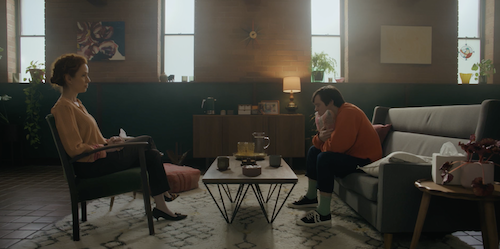
SS: Before financing, the writing team was given parameters early on that helped ensure the production remained shootable. Those were – same location, same therapist, maximum 10 page count per ep, must include magical realism that the therapist can’t see.
The rest all came from the writers -what they had to say, an itch they wanted to scratch, a genre they wanted to work in, anything! Nothing was off limits. That was the whole point of the show. They weren’t being told what to say.
There were ten of us in the end. Anna Lindner and Chris Bunton wrote two episodes together. Nick Coyle wrote two. Wendy Mocke wrote three. Arky Michael, Jeanette Cronin, Michael Gupta, Cecilia Morrow and I wrote one each. After the series was financed by Screen Australia and Screen NSW and we moved closer to production, Ana Maria Belo, who also plays the lead character Joanne, was brought on to the writing team as the final piece of the puzzle.
It was such a joyful process seeing all the scripts the writers delivered. We did a Zoom reading with the writing ensemble and from there we had the help of our script editor, Phil Tarl Denson, to help guide the order of the episodes and work with the writers. Then ,Ana and one of our producers, Iain Crittenden, and I went through each episode and made sure Joanne’s voice was consistent and plotted her arc across the show with very nuanced beats.
We also had two consultants on the series who were absolutely vital in their contributions – a psychology consultant, Nicole Pesa, who is a qualified psychologist as well as a gifted screenwriter, and Edan Chapman our Auslan consultant and who worked closely with Ana for the final episode. Edan also ended up joining us on set by performing in the final episode of the series. No spoilers!
A strength of the show is that it challenges a lot of preconceived notions all at once, and in a very non-confrontational, low-risk fashion. Audiences can’t sit through long dialogue scene – bullshit. New writers are too risky to give them freedom over their own stories – bullshit. Genuine inclusion is too hard for fast-paced television shoot schedules – bullshit. Australian’s don’t care about therapy – that’s a big old bag of bullshit to you too, sir.
TS: What was Photoplay’s involvement in the series?
SS: Photoplay was the backbone of the entire production. Creatively, they gave me complete freedom and endless support. They were a steadfast sounding board, positive problem-solvers and absolutely essential in getting this made. Without them, there is no television series.
Shooting during Covid meant there were so many things that Photoplay needed to battle to keep this project shootable, having two-years of pandemic shooting experience behind them did not hurt
There was a team of us producing who all balanced our roles, changing at different stages of financing, pre, production, and post. This team was Clare Delaney, Florence Tourbier, Iain Crittenden and myself. Then we had our team of EPs who helped make our investors feel a little safer in the crucial financing stage. This was Photoplay EP and Captain No-Bullshit, Oliver Lawrance; all-round kindest human, Gracie Otto; and our amazing editing mentor and EP, Annette Davey (look her up, she’s a bad ass).

Photoplay took me in early on in my commercial directing career, and for them to give me so much support as I bash solidly on the very closed door of long form television (and that it’s now resulted a debut television series for us both) that’s pretty special! TELE VIRGINS!
Another amazing thing that comes with being signed to Photoplay as a commercial director is access to the best post houses who have been alongside me for most of my career now. I’m a horrible loyalist and the teams at The Editors and Sonar Music have my heart until I RIP. Our colourist, Greg ‘Elvis’ Constantaras, not only graded cinematographer Josh Flavell’s images beautifully, he also did the online, poor bastard!! They all said yes to this project when it was a whiff of an idea and carried us through. I <3 them forever AMEN.
TS: What does it mean to you to have It’s Fine I’m Fine picked up by SBS? How did that come about?
SS: Absolute cliché – which we all know exist for a reason – DREAM COME TRUE.
There were a few different plans for the series early on, and the longest shot of all was being broadcast on Australian screens and SVOD as a TV-half hour series.
But I push shit uphill for a living and I created the series in a strategic format, what I call modular storytelling, meaning that I knew if I didn’t fuck it up, the show could potentially be cut as a 4 x TV half hours. We had all of the pieces for 80 minutes of storytelling, and were flexible for what that may look like. In the early days, that was as a 12 x 6-10 minute short form series.
The process of this show was pretty fast and furious. In May 2021, we applied for development financing through Screen NSW and production financing from Screen Australia simultaneously. In August 2021 we were financed.
The funding bodies have been endlessly supportive of this series – of everyone’s creative autonomy, full belief in the writing team, Photoplay and myself. I’m so grateful to them. Sofya Gollan at Screen NSW and Lee Naimo and Louise Cocks from the Screen Aus Online team made this project a financial reality.
We shot 80 pages of narrative drama, with in-camera special effects, over 8 shoot days in Dec 2021. That is a testament to the cast and crew who were consummate professionals and absolute weapons. My editor, and darling friend, Lily Davis, and I cut 6 (short form) episodes to proposed picture lock over the 6 days we had together over Christmas 2021.
We submitted to CanneSeries for consideration in Jan 2022 and heard back 24 hours later. By April 2022 Lily, Ana, Chris, Margaret Pittas (who plays Bubu Agnes) and I were standing in front of the Palais Des Festivals in Cannes trying not to combust with nerves and WTAF level joy.
From then, we came back and kept pushing the shit up the hill until another welcome surprise, when we were so lucky to screen twice as part of MIFF 2022, selling out our second session. I believe this selection was instrumental in helping our acquisition with SBS.
SBS is such a perfect home for this show, not just with its charter and how genuinely our project aligns with the values of diversity and inclusion… but for how it regularly gives new voices a solid shot. That was the whole point of making this show. To give new voices a shot. And now SBS have with us. How lucky and grateful are we.
The fabulous thing about this series is that there are endless stories to tell and a second season could look like anything; new stories, favourites could return, who knows! Anything is possible!
The Stable: How have you developed as a director through making the series?
SS: Hmmm. I always knew I was ready to be directing television. Now I FUCKIN’ know.
I’d love to find a balance of commercial and narrative work, I genuinely love making ads. I like the pace and that it’s not all about you, I find it liberating being a part of a team. I’d love to see some bigger scale, more out-there performance-based commercial scripts and work with clients who aren’t afraid to take the piss and for something to actually be funny or silly… Which can be easier said than done sometimes as we all know.
I’m repped internationally for my narrative work by Casarotto Ramsay as a writer and director, who represents some of Australia’s (and the world’s) best talents. I guess it’s up to Australia to give me a job or I could be forced to join the long list of people who hop over the pond…until then, I’ll continue to push shit up the only hill I know and try to bring others along with me. Lol what a saccharine piece of you know what!!