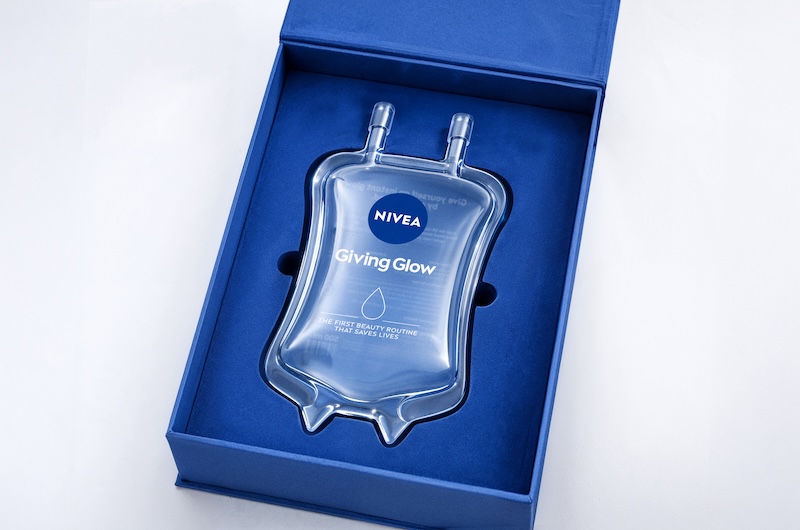
Influencers across the GCC have just unboxed what looked like standard Nivea beauty PR packages. But inside were empty blood bags, styled like hero skincare products.
It was a blood donation campaign by Publicis for Nivea. Giving Glow isbuilt around one insight, blood donation has documented skin benefits (circulation, collagen production, a natural glow), but only 1% of people in the region donate. Fewer than 40% ever return…
…and one need. Across the GCC, blood banks operate under constant pressure. Donations expire in just over a month, demand remains high, and while only 1% of the population people donate at least once, fewer than 40% ever return for a second time. At the same time, millions of people follow meticulous self-care routines daily, investing time and intention into feeling better, lighter, and renewed. This contrast reveals a powerful tension: the rituals we repeat for our well-being rarely include the act that could mean everything to someone else.
Nivea and Publicis reframed blood donation as an act of renewal to address blood shortages with an innovative twist on the traditional product launch. The campaign launched a call to action disguised as a product. Influencers received familiar PR beauty kits but instead of a new Nivea release, the boxes contained symbolic empty blood bags, treating a plea for blood donation like a hero product. Each box redirected viewers to their nearest blood donation centre via QR code, encouraging the incorporation of this act of altruism as a part of their self-care routine.
The campaign flips the scripts of both beauty and cause advertising. It treats blood donation like a beauty launch. Full PR treatment, glossy packaging, influencer seeding, product positioning, except the “product” redirects people to donation centres. Giving Glow also introduced a series of habit-forming activations designed to incentivise return donations. Influencer kits, QR-code appointment bookings, donation reminders, and reward systems that reward repeat participation every four months – using retention mechanics typically reserved for apps and subscriptions to solve a public health problem.