“Russell Boyd is the humblest man you could possibly meet. I watch Russell shooting with Steve Rogers for the Dundee Tourism work, and next I see him working with the Glue Society on a Dollar Shave Club music video. He knows all the rules and when to break them. He wants to learn new tricks. He is effortlessly gifted and every frame he offers a director comes with a weight and value. He is an Australian treasure.” [Michael Ritchie, managing director & partner, Revolver Will/O’Rourke.]
Russell Boyd shot his first major feature, Between Wars, for director, Michael Thornhill, in 1974, and won the ACS Cinematographer of the Year award for it. He shot Gallipoli for Peter Weir and won the ACS Cinematographer of the year award in 1982. Boyd is not your average cinematographer. Today, he’s considered to be one of the best. He was born in 1944.
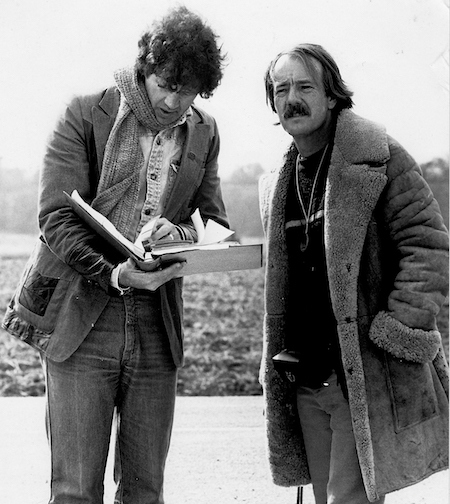
[With Bruce Beresford on Tender Mercies, 1981]
Among his very many awards are an Oscar, 2 BAFTAs, and 5 AFI awards for Best Cinematography. He has won Cinematographer of the Year twice from the Australian Cinematographers’ Society and has been inducted into its Hall of Fame. In 2018, he won the ASC International Award during the 32nd annual ASC Awards for Outstanding Achievement in Cinematography. Boyd’s 24 feature films (across fifty+ years) include Picnic at Hanging Rock, The Last Wave, Gallipoli, The Year of Living Dangerously, Starstruck, Mrs Soffel, Phar Lap, White Men Can’t Jump, Liar Liar, Dr Dolittle, Ghost Rider, Crocodile Dundee, Crocodile Dundee 11 and The Way Back. He has been shooting commercials since the sixties.
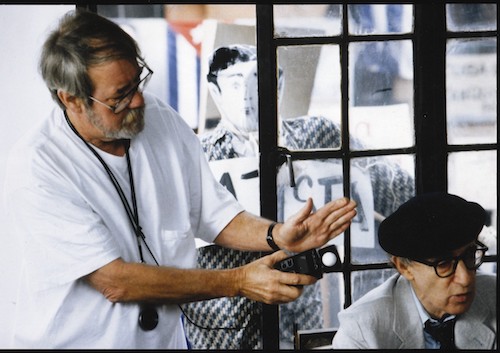
[With Woody Allen on The Company Man, 2000]
Boyd shot the famous Ansiosos y un Capuchón for 1882 with The Glue Society in 2011.
The surreal Samsung TV, Another World Awaits You, with Revolver, in 2015.
The sci-fi Foxtel Powered by Entertainment, with Filmgraphics, in 2016. The humorous, The Nation’s Hydration campaign for Mt Franklin with Jungle in 2016.
Last year, he shot the campaign, Dundee – The son of a legend returns home, with legendary commercials director, Steve Rogers, Revolver/Will O’Rourke and Biscuit Filmworks for Tourism Australia.
Last month, he shot Dad Bods for Dollar Shave Club with first time director, Tim Green, The Glue Society & Revolver Will/O’Rourke.
Film and advertising cinematography have developed steadily since Boyd’s career began. So has Russell Boyd’s prowess.
I’ve interviewed a number of older creatives over the last year. I’m yet to find one who is arrogant, jaded, or not up to date with the latest technology. I have, though, experienced talented people with a lot of wisdom, affable charm and the ability to sell their thinking. I’d always thought these four attributes were pretty important in the creative industries. Was I wrong? As for the age stereotypes? They remind me – a lot – of the labels that were inflicted on women in business until the industry realised they were being fabricated as power tools.
Russell Boyd was a delight to interview. I gather from his history that he’s also a delight to work with. Here’s what he had to say about himself and his work:
The Stable: How did you come to cinematography and what was the allure?
Russell Boyd: As a teenager growing up in in the country in Victoria, I found photography as a hobby and started thinking that perhaps a career in it could possibly be the direction towards which I should gravitate. [Boyd originally anticipated that career would be in newspapers. Instead, he landed his first job at Cinesound in Melbourne, who needed someone to help paint sets for TV commercials, project film and be a general assistant.]
In those days, 1961, Cinesound was in the final throes of making the weekly theatrical newsreel that Cinesound and Movietone had been releasing for years. The introduction of television in 1956 to Australia gradually killed weekly cinema news. Phillip Adams and Fred Schepisi made some of their commercials there for an advertising agency. I seem to remember that Fred was 17 or 18 and I was still a 16-year-old kid. [This was Boyd’s introduction to a side of cinematography that he would weave through his entire career. While at Cinesound, Boyd taught himself to shoot with a 16mm Bolex camera.]
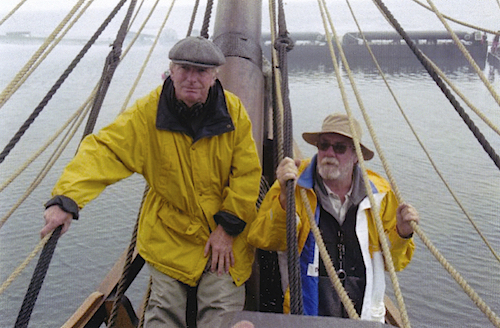
[With Peter Weir on Master and Commander, 2001]
TS: What were your early days as a young cinematographer like for you? Triumphs and mistakes?
RB: Learning the craft is an ongoing journey. There are not many corners that can be cut. Eventually, it’s a bit like a New Yorker being asked how do you get to Carnegie Hall? “Practise, practise, practise” is the answer. I became the projectionist at Cinesound but I also started shooting the occasional newsreel and decide to shoot one of them hand-held. For this I copped a bollicking from Tony Buckley who was the senior editor of the Cinesound newsreel at the time. (“Too shaky so use a tripod,” he barked.)
TS: What were the major (milestone) lessons you learned as you matured – and what triggered them?
RB: I started to understand what a powerful medium motion picture was, and that the stories motion pictures communicated could last indefinitely. I guess that drove me to drama but all along I was learning the craft of cinematography and shooting commercials between feature films in the ‘80s and ‘90s.
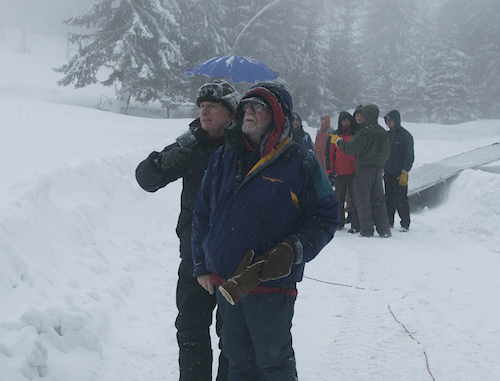
[With Peter Weir on The Way Back, 2010]
TS: What do maturity and experience bring to filmmaking? What do you know now that you wish you knew when you were twenty-something? Is there anything you’ve lost that you wish you had been able to retain?
RB: Firstly, I’ve learned to escape from the technical jungle that confronts young cinematographers. Putting that behind one allows you to work more freely with the director and other departments to create using light and lenses as tools to set the mood and tone of the work.
I’ve also learned to build my experience with new techniques and styles and to exploit them. I’ve been developing digital knowledge and adapting to new equipment that we use – adding to that knowledge – over the course of so many years.
Lastly, I’ve discovered that while younger creatives from the agencies tend to like collaborating with others of a similar age, years of experience but an impressive body of work still attracts the attention of the ones who think maturity and a great track record count for a lot.
TS: What makes a great creative? Do maturity and experience have a role?
RB: I think that creatives are born rather than trained but use their intelligence and intellect while learning and understanding their craft.

[With Scott Otto Anderson, 2016]
TS: What do young people bring to filmmaking?
Young filmmakers are emerging all the time and bring with them fresh ideas and approaches, some having learned from their peers, others with a burning desire from within. Hopefully they will advance the creative process on its evolving way.
RB: What work are you most proud of and why?
One of the films I am most proud of would have to be Peter Weir’s Gallipoli. Probably because it was partly a story of Australia’s coming of age, mate ship and the futility of war and battle. As filmmakers, we were mostly young turks, (oops, sorry), also coming of age in our mid or late 30s.
TS: Who are the greatest people you have worked with during your career and what was it about working with them?
Having spent most of my career between shooting films and commercials, there are many whose work I admire and have given me the inspiration to pick up a thread of their creative paths. With the advent of digital post production, we are now blessed with the chance to work with directors who can take the concept and visualise the end product with their own creativity and pass it on to their cinematographers, art departments and the other crafts involved.
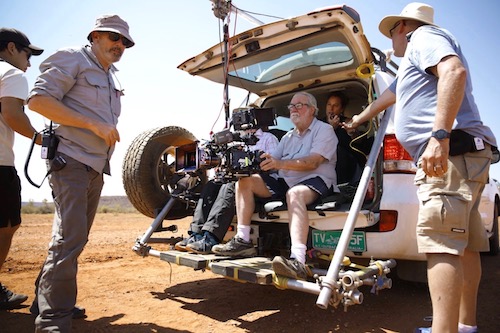
[In Alice Springs, 2018]